
9.5% Tax Hike LOOMS: Homeowners Brace for Impact
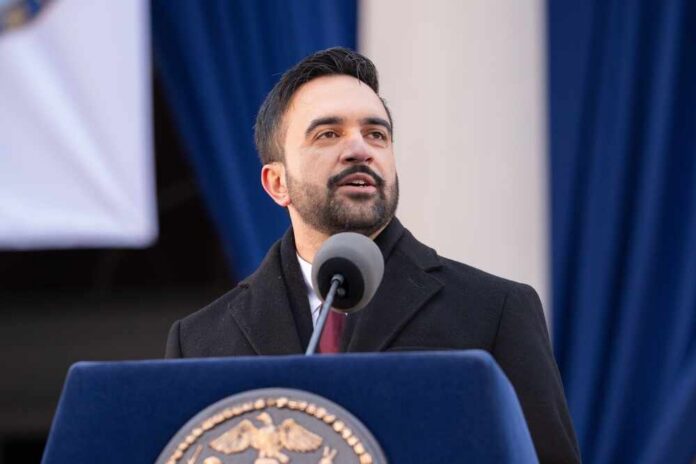
New York City’s new socialist mayor is learning the hard way that “tax the rich” slogans don’t pay the bills when Albany says no—and the bill lands on homeowners instead.
Story Snapshot
- Mayor Zohran Mamdani’s FY2027 preliminary budget assumes a 9.5% property tax increase if New York State won’t approve new taxes on high earners and corporations.
- The city says the plan is designed to close a $5.4 billion budget gap inside a $127 billion budget framework.
- Moderate City Council leaders publicly pushed back, arguing property tax hikes and reserve drawdowns should not be “on the table” during an affordability crisis.
- Queens homeowners—especially those on fixed incomes—told reporters the proposal contradicts Mamdani’s affordability messaging from the campaign.
- The budget fight highlights a central governance reality: NYC can raise property taxes locally, but needs Albany for major income-tax authority changes.
A “Last Resort” Property Tax Plan Takes Center Stage
Mayor Zohran Mamdani’s February 2026 budget rollout set up what City Hall calls “two paths” to balance New York City’s books: either Albany authorizes higher taxes on the wealthy and businesses, or the city turns to a 9.5% property tax increase. The preliminary plan totals about $127 billion and targets a reported $5.4 billion gap. The city’s framing casts property taxes as a fallback, but the assumption is already embedded in the budget math.
City Hall’s approach matters because the levers aren’t equal. NYC can adjust property taxes through local processes that hinge on City Council approval, while new income-tax authority requires state action. That split creates a political incentive to “price in” a painful local option as leverage against Albany. For homeowners, however, the distinction is academic: even a “last resort” tax hike becomes a real threat when it appears as the balancing mechanism in an official preliminary budget.
These Queens residents are not happy with Mamdani's proposal to raise property taxes https://t.co/QA0AZ3f47I via @Not_the_Bee
— ted pierce (@CaptTBoneZydeco) February 21, 2026
What Mamdani Wants From Albany—and Why the Numbers Matter
Mamdani’s preferred route emphasizes higher taxes on millionaires and corporations, including a proposed increase in the city’s millionaire income-tax rate from 3.88% to 5.88%. City and State New York reported that public debate got tangled in rhetoric over whether the change is “2%” or “2 percentage points,” a meaningful difference in how the size of the increase is understood. Analysts also noted that NYC’s tax structure is complicated, and assessments and rates don’t always translate cleanly into sound bites.
Even with messaging disputes, the basic political obstacle is clear: Albany’s consent is the gatekeeper. Gov. Kathy Hochul has provided aid—reports cite $1.5 billion—but has also resisted giving the city broad new authority to raise income taxes. That reality leaves the mayor negotiating with the state while simultaneously trying to convince New Yorkers that the burden won’t shift downward. The preliminary budget also contemplates using reserves, including rainy day and retiree trust funds, if state action doesn’t arrive.
Democrats vs. Democrats: Council Pushback and Neighborhood Blowback
The sharpest immediate resistance has come from within the mayor’s own party. Politico reported that City Council Speaker Julie Menin and Finance Chair Linda Lee—both identified as moderates—criticized the idea of a property tax hike and questioned drawing down reserves instead of finding savings. Their pushback is significant because the Council plays a decisive role in whether property tax changes survive the budget process. The public split also undercuts the notion that the proposal is merely a negotiating tactic.
Outside City Hall, Fox Business highlighted homeowner anger in Queens, where residents described the proposal as out of step with promises of affordability. Those concerns are especially acute for retirees and fixed-income homeowners who cannot simply “earn more” to cover higher tax bills. The risk to renters also looms in the background: property tax increases can feed through to higher rents, depending on building type and local market conditions. The current reports focus on the political fallout more than any finalized economic modeling.
The Bigger Lesson: Progressive Promises Meet Fiscal Limits
The budget fight illustrates a practical constraint that conservative voters have long pointed to: spending commitments and expansive programs still require stable revenue, and when top-down plans collide with reality, the government tends to reach for the broadest tax base. The city has discussed agency savings efforts—reports mention a target around $1 billion—but the preliminary budget’s central controversy remains the assumed property tax hike. As of the latest reporting, the package is not final and still awaits Council review.
For New Yorkers watching inflation and cost-of-living pressures, the immediate question is whether City Hall will scale back assumptions, identify credible spending reductions, or continue using homeowners as the pressure point in its Albany standoff. The available sources confirm the key figures—9.5% property tax assumption, a multi-billion-dollar gap, and a $127 billion budget outline—but they do not yet show an enacted increase. The next steps depend on the Council process and any late movement from state leaders.
Sources:
https://www.politico.com/news/2026/02/17/mamdani-new-york-city-property-taxes-budget-00784077