
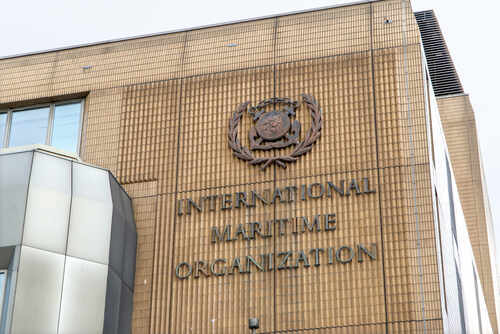
Iran’s reported “Tehran Toll Booth” scheme for the Strait of Hormuz just ran into a hard stop from the U.N.’s own shipping watchdog—because letting one regime tax the world’s energy artery could rewrite the rules of global trade overnight.
Quick Take
- The International Maritime Organization (IMO) says no coastal state has the right to block the Strait of Hormuz or charge transit fees for mere passage.
- Iran has circulated guidance to shipping companies tied to “safe passage” coordination with the Islamic Revolutionary Guard Corps, raising fears of de facto tolling.
- The Strait of Hormuz carries about one-fifth of global oil trade, so even rumors of fees or disruption can lift insurance and shipping costs.
- A U.N. Security Council effort to protect shipping reportedly stalled after Russia and China declined to support it.
- Legal debate persists because Iran is not a party to UNCLOS, but the IMO position reflects a broad international consensus on transit passage.
IMO Draws a Bright Line on Hormuz “Transit Fees”
International Maritime Organization Secretary-General Arsenio Dominguez has publicly rejected the idea that a coastal state can impose tolls on ships transiting an international strait like Hormuz. The IMO position tracks the core premise of the U.N. Convention on the Law of the Sea: international straits are governed by “transit passage,” meaning ships and aircraft may pass continuously and expeditiously without being stopped or taxed just for moving through.
The distinction matters because shipping is not just another commercial service—it is the bloodstream of modern economies. When a government treats a chokepoint as a cash register, it effectively replaces predictable rules with political leverage. For U.S. readers living through years of inflation shocks and energy price spikes, the immediate concern is familiar: disruptions in energy logistics show up quickly in household budgets, long before any diplomatic communiqués do.
Why Hormuz Is a Flashpoint for Energy Prices and Sovereignty
The Strait of Hormuz sits between Iran and Oman and handles roughly 20% of global oil trade, making it one of the world’s most sensitive maritime corridors. In practical terms, even a small increase in perceived risk can cascade into higher war-risk premiums, more expensive insurance, longer routing, and delayed deliveries. Those costs rarely stay overseas; they are passed through to consumers, manufacturers, and transportation networks worldwide.
Iran’s approach involves presenting a toll concept as a “safety fee” tied to coordination for safe passage with the IRGC. That framing attempts to blur a line UNCLOS tries to keep clear: coastal states may charge certain non-discriminatory fees for specific services—like navigation aids—but not for the basic right of passage through an international strait. Whether the world accepts that rebranding is the pivotal question.
The Legal Fight: UNCLOS, Customary Law, and Iran’s Non-Ratification
UNCLOS was adopted in 1982 and codifies rules intended to keep international sea lanes open and predictable. Iran did not ratify UNCLOS and has argued that straits provisions function as treaty rules rather than binding obligations for non-parties. Research cited in the background points to Vienna Convention arguments about when treaty provisions do—or do not—bind states that never consented. That nuance is real, but it does not automatically validate a toll regime.
What strengthens the IMO’s stance is the broad, public alignment from multiple actors. The European Commission has rejected “any payment or toll whatsoever,” and U.S. officials have condemned reported tolling as illegal and dangerous. Gulf states also have strong incentives to resist any precedent that allows a regional power to monetize or throttle a shared export route. Even if lawyers disagree about precise theories of customary law, the commercial world tends to follow the rules that are enforced and widely recognized.
Diplomacy Hits a Wall at the U.N. Security Council
A parallel attempt to build U.N. Security Council backing for protecting shipping reportedly failed after Russia and China did not support the draft, leaving it short of the votes needed to advance. That outcome matters because it signals limits on multilateral enforcement at the very moment when clarity is most needed. When major powers won’t align on baseline maritime security, private shipping firms are left making risk calculations in real time, often conservatively and at higher cost.
Iran’s continued circulation of toll-related guidance, alongside threats involving mines or blockage keeps the situation in a gray zone: not an openly declared closure, but not normal commerce either. For Americans who distrust sprawling international bureaucracies, the takeaway is straightforward: global institutions can state the rules, but they cannot always impose them—so the burden shifts back to national power, alliances, and deterrence.
What to Watch Next for U.S. Policy and Global Trade
Three practical indicators will reveal whether the dispute is cooling or escalating: whether insurers reprice Hormuz risk upward, whether shipping companies change routing or publicly report new “fees,” and whether regional states coordinate naval escorts or other protective measures. Oman rejected a toll-sharing concept despite being a UNCLOS party, suggesting that even neighbors see tolling as destabilizing rather than “orderly.”
The broader political significance is not abstract. If tolling an international strait becomes normalized, other chokepoints could face similar pressure, turning global trade into a patchwork of pay-to-pass demands. From a conservative viewpoint that prioritizes predictable rules, national sovereignty, and affordable energy, the IMO’s rejection is a needed line in the sand—even if the ultimate test will be whether free passage is defended in practice, not just on paper.
Sources:
IMO says no state has right to block Hormuz or charge transit fees
The legal question of tolling Hormuz
Illegal and should be rejected
UN global shipping watchdog rejects Iran’s bid to charge tolls on Strait of Hormuz