
New York City’s mayor just killed a bipartisan plan meant to keep Jewish students safe at schools—while letting a similar “buffer zone” law for synagogues move forward.
Quick Take
- Mayor Zohran Mamdani vetoed City Council bill Int. 175-B, which would have required NYPD security plans around educational institutions during protests.
- The measure passed 30–19 and was framed as part of a City Council plan responding to post–Oct. 7 antisemitism and intimidation near schools.
- Mamdani said the bill’s definition of “educational institution” was too broad and could chill protests on issues such as ICE, labor disputes, and Palestinian rights.
- A separate bill establishing protest buffer zones for houses of worship became law after passing with a veto-proof margin.
- The Council can still override the veto with 33 votes, meaning only a few members would need to switch.
What Mamdani vetoed—and what the bill required
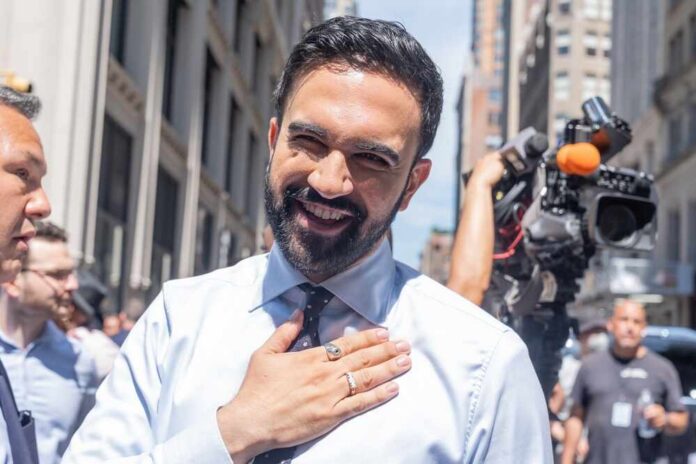
New York City Mayor Zohran Mamdani announced on April 24 that he would veto Int. 175-B, a City Council bill directing the NYPD to develop security plans around educational institutions. The stated goal was to prevent physical obstruction, intimidation, injury, or interference during protests while still protecting First Amendment activity. The bill had passed 30–19 as part of a broader City Council effort to address antisemitism and protest-related disruptions near schools.
Supporters described the measure as a practical response to a problem many parents and administrators say has become routine since October 2023: demonstrations that block entrances, surround students, or create intimidating corridors outside yeshivas, day schools, and campuses. The bill’s structure focused on planning and perimeter management rather than blanket bans, and advocates emphasized that legal protest would still be allowed. Even so, the veto stops NYPD from being required to draft the school-focused plans.
Why the mayor said “no” to schools but “yes” to worship sites
Mamdani’s stated rationale centered on scope. He argued the bill’s definition of “educational institutions” was broad enough to cover universities, museums, and teaching hospitals, potentially pulling large swaths of civic life into a security-perimeter framework. In public statements cited across reporting, the mayor warned the bill could impact protests tied to labor actions, immigration enforcement such as ICE, fossil-fuel divestment campaigns, and demonstrations related to Palestinian rights.
The contrast is what inflamed the politics. On the same track, a similar “buffer zone” bill for houses of worship (Int. 1-B) advanced with a veto-proof vote and became law. That left critics asking why a city can draw clearer lines around synagogues and churches but not around schools where children are present. The mayor’s position, as reported, is that the school bill’s breadth created constitutional and practical problems the worship bill did not.
Backlash from Jewish groups and Council leaders
Major Jewish organizations responded quickly and sharply. The Simon Wiesenthal Center said it was “deeply disappointed,” arguing that the city should prioritize protecting students from intimidation and obstruction. The Combat Antisemitism Movement said the veto confirmed long-standing fears and would leave Jewish students vulnerable. Council leaders who supported the bill framed it as a safety-and-access measure, not an attempt to silence dissent, and argued the NYPD can manage protest rights and safety simultaneously.
The override math—and what happens next
The City Council is not powerless after a mayoral veto. Because Int. 175-B originally passed 30–19, an override is mathematically within reach if members can assemble 33 votes. Reporting noted that would require only a small number of additional Council members beyond the initial coalition. No outcome was reported yet on whether an override vote has been scheduled, but the narrow gap ensures the story remains active and politically costly for whichever side is seen as blocking a compromise.
Substantively, the dispute highlights a recurring American dilemma: public order versus broad protest discretion. Conservatives tend to view safe access to schools as a basic government obligation that should not be subordinated to disruptive activism, while many civil-liberties advocates on the left fear “security plans” become selective enforcement. The unanswered question is whether the Council can craft a narrower definition that protects students and educators without expanding enforcement into every protest near a campus-adjacent institution.
Sources:
Zohran Mamdani buffer zone Jewish synagogue Israel protest
Mamdani vetoes school buffer zone bill
Mamdani vetoes school buffer zone bill, leading Jewish groups pan ‘profound failure’