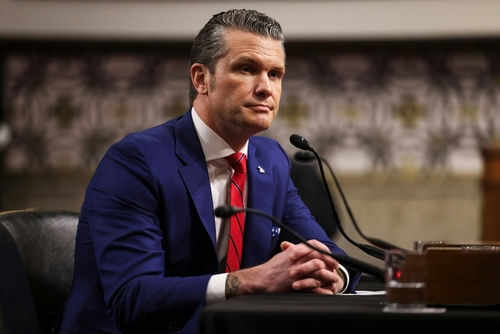
Secretary of War Pete Hegseth has issued a stark ultimatum to America’s allies: nations that continue free-riding on U.S. defense spending while failing to meet their own security commitments will face tangible consequences from the Trump administration.
Story Snapshot
- Hegseth warns allies must meet NATO’s unprecedented 5% GDP defense spending target or face unspecified consequences
- South Korea praised as “model ally” for pledging 3.5% GDP commitment while Japan receives subtle pressure to increase spending
- Policy shift marks end of decades-long U.S. subsidization of wealthy allies’ defense budgets
- Historic NATO commitment at Hague Summit raises spending requirement from previous 2% target to 5% of GDP
Trump Administration Ends Decades of Defense Subsidization
Secretary of War Pete Hegseth delivered blunt remarks at the Reagan National Defense Forum in California declaring an end to American taxpayers subsidizing the defense of wealthy allied nations. The warning followed the release of the White House National Security Strategy urging partners to assume primary responsibility for regional security. Hegseth’s comments represent a continuation of President Trump’s longstanding frustration with NATO burden-sharing, now backed by unprecedented alliance commitments requiring 5% of GDP for defense spending—more than double the previous 2% benchmark that many allies struggled to meet.
Historic NATO Spending Mandate Reshapes Alliance Expectations
The NATO Hague Summit established the groundbreaking 5% GDP defense spending commitment, with 3.5% designated for core military capabilities and 1.5% for additional security investments. This represents a fundamental restructuring of transatlantic security arrangements, with European allies assuming primary responsibility for the continent’s conventional defense under NATO Article 3. Germany and Poland received specific commendations from Hegseth for committing to the 5% threshold during his October 15 address to the Ukraine Defence Contact Group in Brussels. The shift addresses conservative concerns that American resources have been stretched thin defending nations fully capable of funding their own security.
Consequences Loom for Lagging Pacific Partners
While praising South Korea as a “model ally” for its 3.5% GDP pledge, Hegseth pointedly expressed optimism that Japan would follow suit “in a few years,” signaling current dissatisfaction with Tokyo’s defense contributions. The comments highlight the Trump administration’s determination to apply burden-sharing pressure across both European and Indo-Pacific theaters, where threats from Russia and China respectively demand robust allied military capabilities. This approach reflects the conservative principle that American strength should not be diluted through perpetual subsidization of allies who possess the economic means to defend themselves. The administration’s willingness to publicly differentiate between compliant and non-compliant partners marks a departure from diplomatic niceties that have historically masked frustrations.
Policy Represents Return to Reagan-Era Strength Doctrine
Hegseth’s remarks align with what officials describe as a “neo-Reaganite” shift away from the “rudderless wars” that followed September 11, 2001, emphasizing peace through strength rather than indefinite U.S. military overextension. The Secretary of War title itself—revived under the Trump administration—signals a more direct approach to national defense policy. At Marine Corps Base Quantico, Hegseth previewed this no-tolerance stance toward free-riding, establishing a consistent message across multiple venues. The administration argues this pragmatic rebalancing preserves American resources for protecting citizens’ life, liberty, and pursuit of happiness rather than subsidizing the security of prosperous nations.
The policy shift reflects broader frustration among Americans—both conservative and liberal—that government priorities favor international commitments over domestic needs. By demanding wealthy allies fund their own defense, the Trump administration addresses concerns that political elites have long prioritized global relationships over American taxpayers’ interests. Whether this tough stance strengthens alliances through genuine burden-sharing or strains relationships remains to be seen, but the message is clear: the era of unquestioned American defense subsidization has ended.
Sources:
‘Free-riding’ U.S. allies that don’t step up ‘will face consequences’
Remarks by Secretary of War Pete Hegseth at the Reagan National Defense Forum