
Washington just wiped out the watchdog board overseeing a $9 billion federal science budget in a single stroke—leaving taxpayers to wonder who, exactly, is minding the store.
Quick Take
- President Trump’s administration abruptly terminated every member of the National Science Board, the independent body that oversees the National Science Foundation.
- The firings were delivered on a Friday via a notice sent “on behalf of the president,” with no detailed public explanation reported.
- The board helps set NSF priorities and approves major spending, making the shakeup significant for accountability and transparency in federal research funding.
- Reporting differs on the number of members removed (22 versus 24), highlighting uncertainty even as the core action is confirmed across outlets.
What Was Fired, and Why It Matters for Federal Oversight
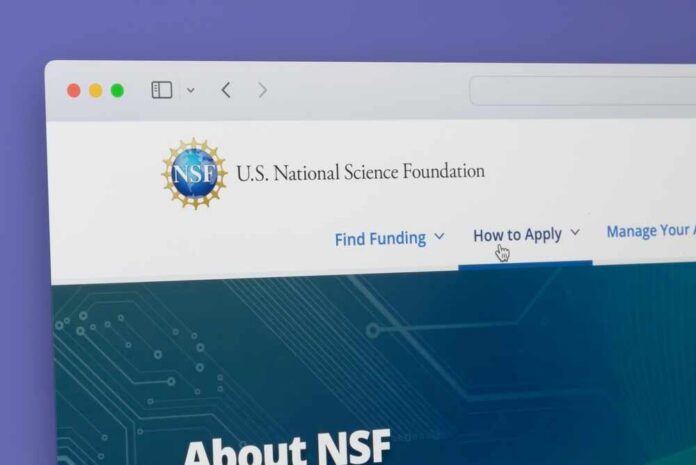
The Trump administration removed all members of the National Science Board (NSB), an advisory and oversight group tied to the National Science Foundation (NSF). Multiple outlets reported the action as a blanket termination delivered abruptly on a Friday and signed on behalf of the president. The NSB’s job is not ceremonial: it oversees NSF, helps shape priorities, and approves major expenses connected to a research budget reported at roughly $9 billion.
The practical question for Americans—left, right, and in between—is what happens when an “apolitical” oversight body is eliminated overnight. Even voters who want a tougher executive branch usually expect basic guardrails around large federal budgets. NSF-funded basic research has historically supported wide-ranging innovations, and the board exists to add a layer of review between politics and long-term scientific investments that can take years to pay off.
How the National Science Board Normally Works
The NSB was created under the National Science Foundation Act of 1950, and members typically serve staggered six-year terms. That staggered structure is designed to prevent any one administration from replacing everyone at once, preserving institutional memory and limiting political whiplash. Under normal conditions, the board’s continuity helps ensure that changes in Washington don’t instantly rewrite research priorities, grant standards, or major investment decisions at a key federal science agency.
That is why the all-at-once nature of the terminations drew attention beyond the usual partisan noise. Science.org described the move as the president firing the board, while other reporting framed it as a “purge.” The coverage also flagged a small but telling discrepancy: some reports said 22 members were fired while others said 24, suggesting either vacancies or differing counts—but not disputing that the board was cleared out.
What Critics Are Alleging—and What’s Confirmed So Far
Critics argue the move undermines independent, evidence-based oversight at NSF. The Union of Concerned Scientists described it as an attempt to silence independent scientists and clear a path for replacements they fear could be “conflicted and unqualified.” Another quoted critic used harsh language to characterize the decision and said it fit a pattern of hostility toward NSF. The White House did not provide a response.
Those are serious accusations, but the publicly confirmed facts are narrower: the firings happened; they were abrupt; they removed the entire board; and there was little public explanation attached. Without an official rationale, Americans are left to infer motives from surrounding political context. That vacuum fuels suspicion on all sides—especially at a moment when many voters already believe federal institutions serve insiders more than citizens.
Political Context: “Deep State” Distrust Meets Executive Power
Conservatives who have watched unelected bureaucracies push sweeping policies—on everything from energy to education—often argue presidents should reassert control over sprawling agencies. At the same time, mass removals of independent overseers can look like the same kind of top-down power play voters say they’re tired of, especially when it affects a multibillion-dollar checkbook. In other words, the method can collide with the message of accountability.
For liberals, the episode slots into a broader fear that government expertise is being sidelined, and they will likely cite the firings as proof that scientific institutions are being politicized. Yet the broader public frustration is more basic: when Washington makes sudden, high-impact decisions without clear explanations, trust erodes. Whether the goal was reform, reset, or replacement, the lack of transparency is what turns a personnel story into a legitimacy story.
What to Watch Next at NSF and on Capitol Hill
The immediate operational impact is that NSF is left without its normal external board oversight, at least temporarily. NSF directed questions to the White House, reinforcing that the real decisions now sit closer to presidential control. The next steps that matter are straightforward: whether new board members are nominated quickly, what qualifications they bring, and whether Congress demands clarity on how NSF’s priorities and major expenditures will be approved in the interim.
Because no announced replacements or detailed White House justification, conclusions should stay limited to what is known: a full board was dismissed abruptly, and critics warn it risks politicizing science oversight. If the administration moves to rebuild the board with credible, broadly respected experts and publishes a clear rationale, the controversy could cool. If not, the episode is likely to deepen the bipartisan sense that powerful institutions operate without adequate checks.
Sources:
Trump’s purge of National Science Board condemned as a ‘real bozo the clown move’
Trump fires all 24 members of the U.S. National Science Board
Trump Administration Fires National Science Board Members