
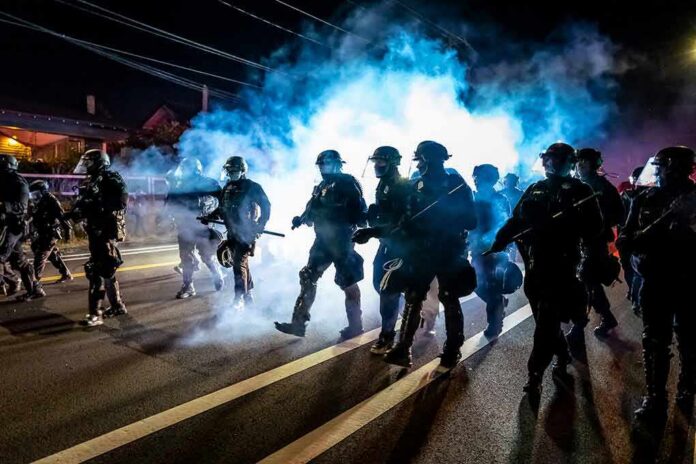
As anti-immigration riots explode on Belfast streets after a brutal stabbing, police water cannons and burning homes show how fast a failed border policy can turn into open chaos.
Story Snapshot
- A Sudanese migrant is charged with attempted murder after a savage knife attack in Belfast, leaving a local man with life‑changing injuries.[1][4]
- Violent anti‑immigration protests erupt across loyalist areas, with masked men torching cars, buses, homes, and shouting “foreigners out.”[1][3][5]
- Police deploy armored vehicles and blast water cannons as rioters hurl bricks, bottles, and flares at officers during a second night of unrest.[2][5]
- Media and officials rush to condemn “racist riots,” while deeper anger over migration, crime, and government failure continues to boil.[1][3][5]
Brutal Stabbing Lights the Fuse Under Migration Anger
Police in Belfast say a man from Sudan, described as an asylum seeker or refugee, was charged with attempted murder after a horrific street stabbing.[1][3][4] Video confirmed by major outlets shows the attacker slashing another man in the head and neck with a kitchen knife, leaving him with serious injuries to his eyes, face, and back.[1][4] Reporters say the victim, a man in his 40s, was rushed to the hospital in critical condition, with some describing the assault as close to an attempted beheading.[1][3][4]
Authorities confirm the suspect came from Sudan on a temporary visa route, after traveling through Dublin, which has fueled anger over weak border control and migrant vetting.[4] Police stress there is no confirmed terror link yet, but they admit the motive is still under investigation.[1][3] While officers and political leaders urge calm, the graphic stabbing footage spreads fast on social media, with citizens asking why an unstable foreign national was on the streets at all.[1][2][4]
Commentators note this stabbing comes on top of wider unease about crime tied to recent arrivals and the sense that elites ignore local fears.[4][5] Many residents say they accept legal immigration but feel betrayed when violent offenders are waved through the system, then protected by the same political class that lectures them on tolerance.[3][4] That long‑building resentment helped turn one shocking crime into a city‑wide flashpoint, not just a single police case.[1][3]
Riots, Arson, and Water Cannons on Belfast Streets
After the stabbing, far‑right and anti‑immigration figures called for mass protests online, summoning crowds into the streets of Belfast and beyond.[1][2][5] Reporters on the ground describe hundreds of masked men marching through loyalist areas, carrying bottles and bricks, shouting “foreigners out,” and setting trash cans and vehicles on fire.[1][3] Video shows a bus, cars, and even homes torched in neighborhoods with large immigrant populations, forcing families to flee in the night.[1][3][5]
The Police Service of Northern Ireland says protesters blocked roads and attacked officers with bricks, rocks, bottles, fireworks, and other improvised missiles.[2][5] Aerial and street‑level footage shows two small fires burning near police lines as crowds push forward, some trying to damage property and intimidate residents.[1][5] Fire crews report dozens of callouts, while first responders escort people, including migrants, out of burning or threatened homes for their own safety.[1][3]
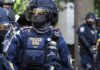
Facing that violence, police deploy armored Land Rovers and at least one water cannon vehicle for the first time in several years.[5] Footage from multiple outlets shows the cannon blasting powerful streams of water toward advancing rioters, driving them back from the lines and from nearby fires.[1][4][5] Officials say they used the water cannon as a public‑order measure after repeated attacks with missiles, with reports of at least a dozen injured officers and a growing number of arrests.[2]
Security First, But Where Is the Full Truth on Force and Policy?
Most news outlets frame the crowds simply as “rioters,” stressing the arson, racist chants, and violence against police while showing dramatic water‑cannon clips.[1][2][5] That coverage naturally nudges viewers to see the police tactics as necessary, long before any independent review can judge whether force levels were truly proportionate.[1][2] Yet the record so far is heavy on TV narration and light on hard documents like command logs, body‑camera footage, or formal use‑of‑force reports.[2][5]
There is no public release yet of the detailed operational orders that explain when the water cannon could be used, what lesser options were tried first, or how long it ran.[2][5] Without that, citizens only see one part of the story: a clear riot and a hard response. A serious democracy needs to know more, including the exact scale of injuries, property damage, and charges linked to those on the receiving end of police tactics.[2] That kind of transparency helps honest officers and keeps future abuses in check.
🚨🇬🇧 BREAKING: Police have started clashing with protesters in Belfast using water cannons to backup groups of youths.
Intensity of protest is getting more and more following stabbing incident.
Source: Sky News pic.twitter.com/QJEoSuWafL
— Nova Intel (@intel_nova) June 11, 2026
Behind all this sits the deeper question our own country faces: what happens when leaders push mass migration faster than communities can absorb, then dismiss any concern as hate?[3][4][5] In Belfast, anger over a savage knife attack mixed with years of frustration and broke out as ugly street justice and mob rule, which conservatives should reject.[1][3][5] At the same time, unchecked migration policies, weak screening, and slow deportations helped light the match, and that is a warning every Western capital should take seriously.[1][3][4]
Sources:
[1] YouTube – Police blast water cannons at Belfast protesters as unrest flares …
[2] Web – As it happened: Water cannon used on Belfast protesters
[3] Web – Belfast latest: Police use water cannon against protesters – as knife …
[4] Web – Belfast anti-immigration riots enter Day 2 after knife attack by …
[5] YouTube – police use water cannons against rioters in Northern Ireland