

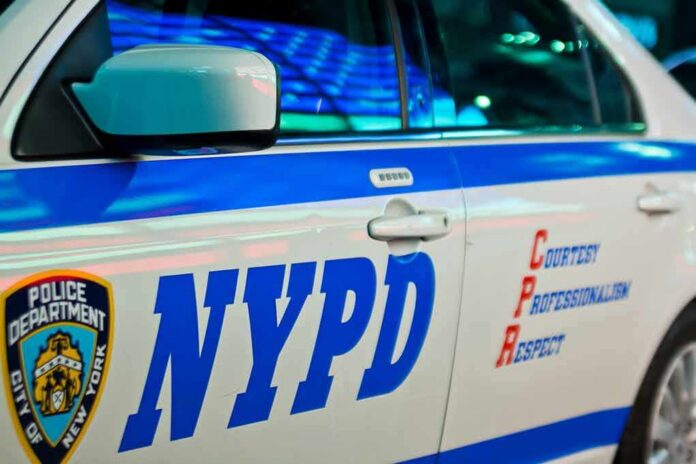
Two men were stabbed in broad daylight on Manhattan’s Upper West Side after, witnesses say, the attacker yelled “Allahu Akbar,” raising fresh questions about hate crimes, public safety, and whether officials are hiding behind vague talk of “mental health” instead of fixing a system that keeps failing ordinary people.
Story Snapshot
- NYPD says suspect Raul Morales stabbed an Asian man and a Jewish man minutes apart and allegedly shouted “Allahu Akbar” during both attacks.
- Police and city leaders are probing the case as a possible antisemitic hate crime, but they also say mental health “may have been a factor,” leaving motive officially unsettled.
- Both victims survived, yet the attacks fit a wider pattern of unprovoked street violence that makes many New Yorkers feel the government cannot or will not keep them safe.
- Media and officials quickly framed the case around ideology and identity, even as key documents and evidence remain out of public view, feeding anger toward an untrusted “elite” system on both left and right.
What Police Say Happened on the Upper West Side
New York City police say that on a Thursday afternoon, just after 1:30 p.m., a man attacked two strangers on the Upper West Side in separate stabbing incidents. Officers first found a man with a stab wound near Central Park West; minutes later, they found another victim several blocks away near Amsterdam Avenue. Authorities identified the suspect as 51-year-old Raul Morales and said he was arrested nearby and linked to both assaults, with no other suspects being sought.
Police and local reports say one victim is an Asian man and the other a Jewish man, attacked while simply walking in the neighborhood. One report says the Jewish victim was heading toward his synagogue when he was stabbed, underscoring fears of targeted religious violence. New York City Police Department officials described the attacks as unprovoked and happening in broad daylight, the kind of random street danger that has become a grim, familiar story for many city residents.
The “Allahu Akbar” Allegation and Hate Crime Questions
New York City Police Commissioner Jessica Tisch stated that, according to victim and witness reports, Morales yelled “Allahu Akbar” during both attacks. Local and national outlets echoed that line, and one Fox 5 New York update cited police saying Morales shouted the phrase before the stabbings. Because one victim is Jewish and one is Asian, the New York City Police Department Hate Crimes Task Force and counterterrorism units are investigating whether the assaults were motivated by antisemitism or other forms of bias.
City leaders, including the New York City Council speaker, publicly described the incident as appearing to be an antisemitic attack, even while stressing that investigators were still working to confirm motive. At the same time, police spokespeople told reporters that “everything is still fluid” and that formal hate crime designations would depend on further review by the Manhattan District Attorney’s office. This mix of strong public language and official caution leaves many citizens unsure whether they are hearing clear facts or political messaging crafted for the news cycle.
Mental Health, Motive, and a System People Do Not Trust
Alongside the hate crime angle, Commissioner Tisch also said the initial investigation suggested mental health may have been a factor, even though the suspect had no known mental health history with the New York City Police Department. Fox 5 New York repeated that police line, saying officers believed “mental health may be a factor” in the case. Yet no psychiatric evaluation, prior treatment record, or detailed behavioral report has been made public, so that explanation remains more of a hint than a proven cause.
This uncertainty is familiar to many Americans who feel stuck between two unsatisfying stories. On one side, they see violent incidents quickly framed as hate crimes, terrorism, or “extremism,” often before the full facts are in. On the other side, they hear vague references to mental health that sound like a catch-all excuse for a system that failed to intervene earlier or keep dangerous people off the streets. Both narratives can feel like ways for officials and media elites to avoid deeper questions about policing, prosecution, and social services.
Broader Fears About Safety, Bias, and Government Priorities
The Upper West Side stabbings hit several raw nerves at once. Jewish communities, already worried about rising antisemitic incidents, see a man in religious dress or heading to synagogue allegedly attacked after a phrase long associated with extremist violence was shouted. Asian Americans, who have faced waves of bias and assault in recent years, see yet another case where someone who looks like them is stabbed on a city street in daylight, with motive described as “under investigation.”
We are dismayed by the horrifying attacks on the Upper West Side in New York City earlier today, in which an Asian man and a Jewish man wearing a kippah were stabbed in broad daylight by an attacker who, according to reports, yelled "Allahu Akbar."
We are grateful to the Shomrim…
— The Nexus Project (@NexusProjectUS) July 24, 2026
For many conservatives and liberals alike, the case feeds a shared sense that the government talks more than it acts. People hear about specialized task forces, ongoing investigations, and press conferences. They watch crime scene tape roll out and social media fill with statements from politicians and advocacy groups. Yet they also see repeat violence, unclear follow-through, and a steady pattern where the first dramatic headline rarely matches the final legal outcome. That gap between words and results deepens suspicion that an unaccountable “deep state” cares more about spin than safety.
Sources:
townhall.com, abcnews.com, timesofisrael.com, youtube.com, facebook.com, jns.org