
One person died and two were hurt after a photography flight helicopter fell into Biscayne Bay near Miami, drawing a fast multi-agency response and a federal probe.
Story Highlights
- Officials say a Robinson R44 II crashed near Bill Baggs State Park off Key Biscayne late morning.
- Rescuers pulled two survivors and sent them to a trauma center; one occupant died at the scene.
- Investigators say the flight was likely for photography; the exact cause is not yet known.
- The National Transportation Safety Board and Federal Aviation Administration opened investigations.
Crash And Casualties Confirmed By Multiple Agencies
Miami-Dade Fire Rescue said crews rushed to Biscayne Bay after 11:20 a.m. local time, near Bill Baggs Cape Florida State Park off Key Biscayne. The United States Coast Guard said three people were aboard. Officials confirmed one person died, and rescuers moved two adult survivors to a trauma center for advanced care. Authorities said the helicopter was a Robinson R44 II, a common light helicopter used for short flights and aerial work around South Florida.
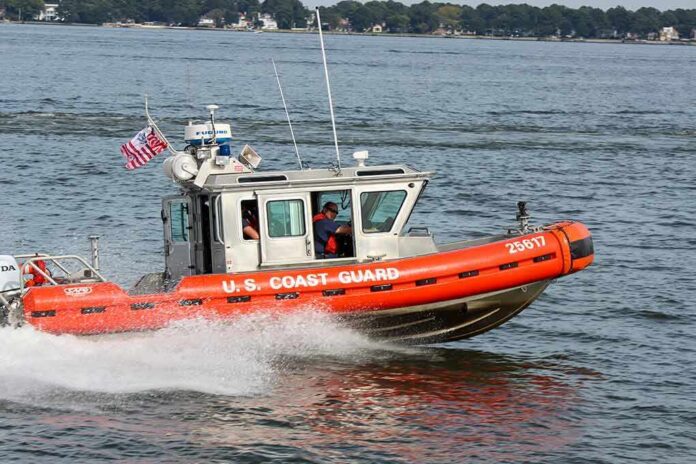
The Miami-Dade Sheriff’s Office said the aircraft went down shortly before noon in view of park areas and nearby boaters. Local television showed rescue boats and a law enforcement canopy at the scene as crews secured the area. Reporters on site described a quick handoff from boats to a landing zone for airlift to the main trauma facility, which matches standard steps for water rescues with serious injuries. Officials did not report any injuries to people on the water or on shore.
What Investigators Are Examining Now
The National Transportation Safety Board (NTSB) said early information shows the helicopter appeared to be on a photography flight when it crashed. The NTSB and the Federal Aviation Administration (FAA) each opened inquiries, with the NTSB leading the safety investigation and the FAA supporting regulatory work. The Miami-Dade Sheriff’s Office homicide bureau took the death investigation, which is routine when a fatality occurs. Officials have not identified a cause and warned that full findings will take time.
Investigators commonly look at weather, maintenance, pilot records, operator procedures, and any flight-track or witness videos. Reports linked the aircraft’s registration to Global Aerials Inc., and local coverage tied the flight to filming fast boats at a “poker run,” a popular marine event format. That aligns with the NTSB’s photography-flight description but remains preliminary while evidence is gathered, including wreckage exams and interviews. Agencies did not release a timeline for a preliminary report.
Rescue Timeline And Medical Transport
Miami-Dade Fire Rescue reported the call at 11:26 a.m., then moved two trauma-alert patients to a shore landing zone for air transport to the main trauma center. The United States Coast Guard confirmed the fatality and coordinated on-water response with county units and park authorities. Early reports varied on injury severity, which is common in breaking events, but later updates said both survivors were stabilized at the hospital after initial treatment. Names were withheld until next-of-kin were notified by law enforcement.
One Killed, Two Hurt in Helicopter Crash Off Key Biscayne
A small helicopter crashed into Biscayne Bay off Key Biscayne, Florida, on Wednesday morning, killing one person and injuring two others, officials said.
The Robinson R44 helicopter was on a photography flight filming… pic.twitter.com/lpPK0n7wly
— American Voice Rising (@amvoicerising) November 5, 2026
Authorities asked boaters and park visitors to avoid the crash area as divers and recovery teams worked around debris. That step protects evidence for investigators and reduces risk to the public. The aircraft’s position in shallow water and near active boat traffic required careful staging, which can slow recovery but helps preserve key parts like the engine, rotor mast, and controls for later analysis by the NTSB. Officials said more details would follow after recovery and initial examinations.
Why This Matters Beyond One Tragic Crash
South Florida hosts many low-level helicopter flights for news, photography, tours, and marine events. Busy airspace, fast-changing coastal weather, and crowded waterways raise the stakes when something goes wrong. When agencies share clear facts fast, families and the public get answers and safety gaps can be closed sooner. The NTSB’s past work shows that fixes after crashes—better training, maintenance checks, or route design—can prevent future loss of life once causes are found.
Sources:
youtube.com, apnews.com, nbcmiami.com, miamiherald.com, ketv.com, wlrn.org, wptv.com, wesh.com