
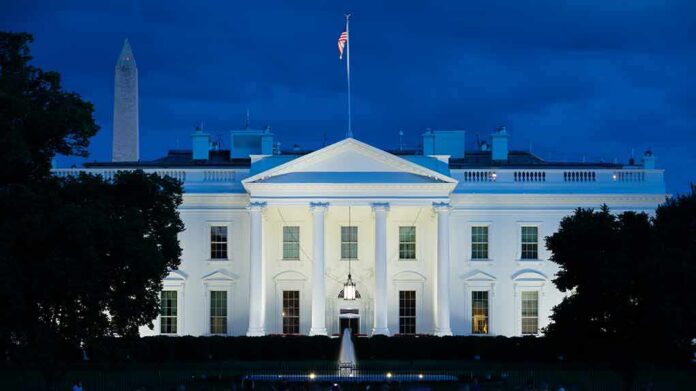
A car slammed into a security barrier steps from the White House on November 9, triggering a lockdown and a physical struggle between the driver and security officers while President Trump was reportedly inside.
Quick Take
- A silver sedan struck a signpost or security barrier at the north end of Lafayette Square, directly across from the White House.
- The Secret Service detained the driver after what witnesses described as a physical confrontation.
- Journalists in the White House briefing room were ordered to stay inside during the lockdown.
- Officials have not released the driver’s identity, motive, or whether any charges will be filed.
- The lockdown was later lifted after the Secret Service searched the vehicle.
Vehicle Strikes Barrier Near Presidential Complex
A silver sedan drove onto the paved walkway at the northern edge of Lafayette Square on November 9 and struck a signpost or security barrier just outside the White House grounds. The crash happened in a heavily guarded area that sits directly across from the presidential complex. Video from the scene showed smoke coming from the car shortly after impact.
A law enforcement official told NBC News that the situation was contained once security personnel moved in. Witnesses described a physical struggle between the driver and officers at the scene. The Jerusalem Post reported that both Secret Service agents and National Guard personnel were involved in that confrontation before the driver was taken into custody.
Press Corps Ordered to Shelter in Place
Secret Service agents told reporters working inside the White House to stay in the briefing room while the situation unfolded. Multiple outlets confirmed that the press area was locked down as part of the broader security response. The restriction affected journalists covering the White House that day, though reports differ on exactly how long it lasted.
News accounts used slightly different terms to describe what was restricted, some calling it a press-area lockdown and others describing it as a lockdown of the wider White House area. No single official timeline has laid out exactly when the restrictions began, which parts of the complex were affected, or the precise moment they ended, leaving the scope somewhat loosely defined across reports.
Driver Detained, Questions Left Open
Officials confirmed the driver was taken into custody, but they have not released the person’s name, age, or background. It also remains unclear whether the crash was intentional or accidental, and whether anyone was hurt. The Secret Service had not issued a public statement addressing those specifics as of the initial reporting window.
Anadolu Agency and other outlets reported that the Secret Service confirmed taking an individual into custody but offered no further detail on the person’s intent. No charging decision or arrest record has been reported. That gap is common in the earliest hours after a security incident at a protected site, before investigators finish piecing together evidence.
Lockdown Lifted After Vehicle Search
The lockdown near the White House ended after Secret Service personnel searched the vehicle involved in the crash. A report citing the White House press pool and ABC News said the all-clear came once that search was complete, allowing normal operations in the area to resume.
A Familiar Pattern at a Guarded Address
Vehicles striking barriers near the White House are not new. A 2018 incident saw a woman drive into a barrier near the complex, prompting an hour-long lockdown before her arrest. Earlier incidents in 1974 and 1963 involved cars breaching or hitting White House gates. In each case, security measures like detention and lockdowns confirmed a protective response, not the driver’s intent.
Officials who reviewed past perimeter breaches found that a large share of people who tried to get onto White House grounds had histories of mental illness or personal crisis rather than plans for an attack. That pattern does not resolve what happened in this case, but it shows why investigators typically wait for toxicology, vehicle data, and interviews before drawing conclusions about motive.
The incident adds to a long list of security scares that have tested protocols around the White House over the decades. Each one raises the same underlying question for Americans across the political spectrum: whether the agencies charged with guarding the nation’s most visible address can balance public access with rapid, decisive protection when seconds matter most.
Sources:
townhall.com, nbclosangeles.com, store.jpost.com, indiatoday.in, mobil.aa.com.tr, jfeed.com, okcfox.com, academic.oup.com