

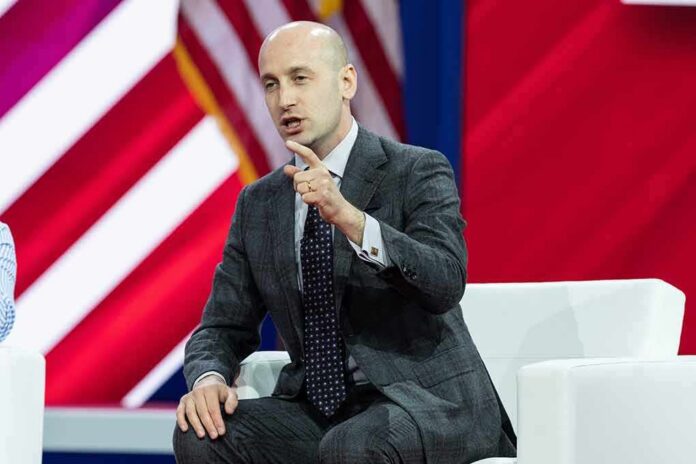
President Trump named Stephen Miller White House chief of staff and set a start date within days, signaling a fast reset at the center of power.
Story Snapshot
- Trump said Stephen Miller will become chief of staff on Monday, November 9, 2026.
- Susie Wiles is stepping down and moving to Trump’s political operation, Trump said.
- Major outlets reported the change and identified Miller’s current senior role.
- The switch follows Republican midterm losses that shift power in Congress.
Trump Sets Miller to Succeed Wiles Next Week
President Trump announced that Stephen Miller will become White House chief of staff on Monday, November 9, 2026. Trump posted the news and praised outgoing chief of staff Susie Wiles, saying she will move to the Trump Political Operation. NBC News reported the change and identified Miller as deputy chief of staff for policy and a homeland security adviser, confirming his senior status inside the White House. The announcement framed the handoff as planned and near term.
Trump’s statement marked a clear shift in the hub that manages his time, advice, and policy flow. The chief of staff sits at the point where staff coordination meets political strategy. Scholars describe the job’s core roles as administrator, adviser, guardian of the president’s time, and proxy who acts for the president when needed. A new chief often brings a new process for how decisions reach the Oval Office, even if the main goals stay the same.
Context: Timing After Republican Midterm Setback
The personnel move followed Republican midterm election losses, which cost the party control in Congress, according to coverage that linked the timing of the change to that shift in power. That context matters because a chief of staff can drive reset efforts after electoral shocks. The office can tighten message discipline, focus outreach to lawmakers, and change how agencies coordinate with the White House to push priorities when votes are harder to find.
Major outlets treated the change as a formal succession plan rather than a rumor. Reporting by NBC News, the Associated Press, and CBS News said Miller would replace Wiles and that Wiles’s Friday marked her last day as chief of staff. The reports matched Trump’s own dated post naming Miller and setting the effective date the following Monday, which gave a clear timeline for the transition.
What Miller’s Background Signals for Policy and Management
Stephen Miller served as deputy chief of staff and as a senior adviser on policy and homeland security before this move, according to reporting that outlined his portfolio. That background suggests he knows the policy machinery and key agencies well. Chiefs of staff must control access, set staffing plans, and direct information flow to the president. Research shows the job blends management and political judgment, and turnover is common due to intense demands.
🚨 TRUMP on new Chief of Staff Stephen Miller: “Stephen’s been with me from the BEGINNING. He GETS IT.”
Starting Monday, he runs the White House.
LET’S GO! pic.twitter.com/9jblVkVZTH
— The Conservative Caucus (@TCCaucus) November 6, 2026
Wiles’s next role in the “Trump Political Operation” was not defined in formal terms in the announcement. That leaves open the exact title, structure, and scope for her work. But moving a seasoned manager from the West Wing to the political side often aims to shape messaging, fundraising, or campaign planning while the chief of staff focuses on daily governing. Either way, the change puts process and personnel at the center of how the administration adapts to a tougher Congress.
Sources:
wsj.com, nbcnews.com, bbc.com, onlinelibrary.wiley.com