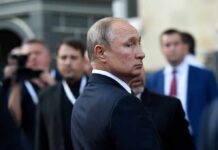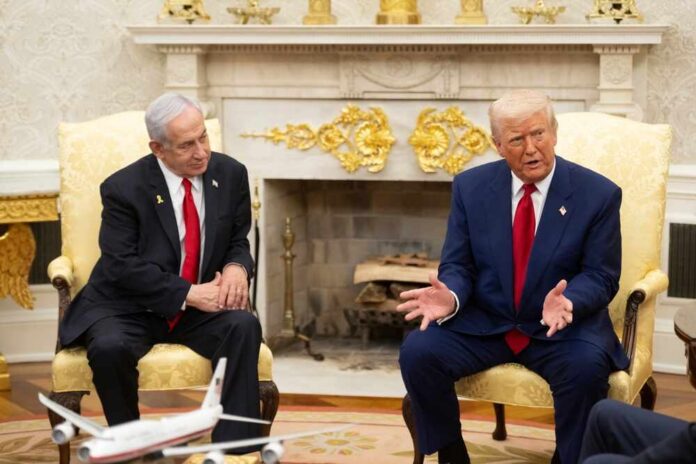
President Trump’s public declaration that Israel was “PROHIBITED” from bombing Lebanon didn’t just shock Netanyahu—it exposed how fast high-stakes foreign policy can turn into government-by-post.
Quick Take
- Trump announced a 10-day Israel–Lebanon ceasefire, then followed with a blunt public warning that Israel must stop strikes.
- Axios reported Netanyahu and top advisers were caught off guard, learning about the shift through media rather than formal channels.
- U.S. officials later clarified the ceasefire framework: offensive operations are barred, but self-defense against imminent or ongoing threats remains allowed.
- The episode raises questions about alliance coordination, reliability of messaging, and how policy is communicated in real time.
Trump’s “PROHIBITED” message stunned an ally—and set off a scramble
President Donald Trump publicly escalated pressure on Israel after announcing a 10-day ceasefire between Israel and Lebanon. The next day, he posted on social media that Israel would not be bombing Lebanon anymore and said Israel was “PROHIBITED” from doing so by the United States, adding, “Enough is enough!!!” Axios reported Israeli Prime Minister Benjamin Netanyahu and advisers were “personally stunned,” and quickly sought clarification.
Israeli officials’ central concern was that Trump’s wording appeared to go beyond the written ceasefire terms released by the U.S. State Department. Israeli leaders believed the text preserved Israel’s right to respond to planned, imminent, or ongoing attacks—while restricting offensive operations against Lebanese targets. When a public presidential directive seems to overrule a document negotiated through normal channels, confusion is predictable.
What the written ceasefire reportedly allowed—and what it restricted
The State Department’s published framework, as described in multiple reports, drew a line between offensive operations and self-defense. Israel reportedly committed not to carry out offensive strikes on Lebanese sites—including civilian, military, and state targets—while retaining authority to act against imminent or ongoing attacks. After Axios pressed the administration, a U.S. official reinforced that interpretation, indicating Trump’s broad phrasing did not erase self-defense provisions embedded in the agreement.
This distinction matters because Israel’s military planning depends on definitions, not slogans. A ceasefire that bans “offensive” action but permits responses to active threats requires clear thresholds for what counts as “imminent” or “ongoing.” If those definitions are communicated inconsistently—one way in a formal text, another way in public statements—military and diplomatic leaders risk miscalculation. For American voters, it also raises a governance issue: who sets policy—documents or posts?
Why the communication breakdown is the real headline
Several accounts emphasized that Israeli leadership learned of Trump’s hardline posture through media reports rather than formal diplomatic notification. That is a major departure from how sensitive U.S.–Israel military coordination has typically worked, where private channels and detailed understandings reduce surprises. One reported reaction inside Israel’s orbit was that the moment raised serious questions about coordination between allies, especially when operational decisions can change by the hour.
For conservatives who prefer disciplined statecraft and limited, accountable government, the episode reinforces a familiar frustration: institutions often look secondary to personalities and rapid-fire messaging. Supporters can view Trump’s tactic as direct leverage to stop a widening conflict; critics can view it as an avoidable procedural rupture. Either way, the core fact remains that allied officials reportedly scrambled for clarity after a public message implied a tougher restriction than the written terms.
Political and strategic stakes for Washington—and for skeptical Americans
Trump’s comments landed amid broader U.S. regional diplomacy, including reported efforts to push for a ceasefire while pursuing other negotiations in the region. The immediate effect was uncertainty: whether Trump’s rhetoric superseded the agreement text and what enforcement would look like in practice. Over time, the larger risk is precedent—if allies start treating formal agreements as provisional until the next viral statement, confidence in U.S. commitments can erode.
Netanyahu Left 'Personally Stunned' By Trump Rhetoric Prohibiting Lebanon Strikes
"Israeli Prime Minister Benjamin Netanyahu and his inner circle were reportedly blindsided – left "stunned" – after President Trump dropped a surprise line effectively clipping Israel's wings in…
— Arjay Stevens (@arjaystevens) April 19, 2026
Americans across the spectrum—especially those who already believe “the system” serves insiders over citizens—tend to read episodes like this as another sign of dysfunction at the top. Conservatives may welcome a president using U.S. leverage to prevent an open-ended war, while still demanding clearer lines of authority and communication. Liberals may oppose Trump’s approach for different reasons, but often arrive at the same conclusion: Washington’s machinery struggles to govern consistently, even with friendly allies.
Sources:
https://www.axios.com/2026/04/17/lebanon-strikes-israel-trump-prohibited