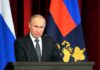

CNN’s conservative commentator Scott Jennings clashed with fellow panelists over characterizing U.S.-Iran military actions, exposing deep divisions on how Americans should understand ongoing Middle East conflicts.
Story Snapshot
- Jennings defended Trump supporters’ trust in handling Iran conflict, calling military actions a “situation” rather than a “war”
- CNN panelists Josh Rogin and Bakari Sellers criticized Jennings for downplaying the severity of U.S. military engagement
- The exchange highlighted public frustration with undeclared conflicts and semantic games politicians play about military action
- Viral clips from the debate continue fueling partisan narratives about media bias and war messaging
Debate Over Iran Conflict Terminology
Scott Jennings appeared on CNN’s NewsNight with Abby Phillip to discuss ongoing U.S.-Iran hostilities. Jennings characterized the military engagement as a “situation” rather than declaring it a full-scale war, arguing that MAGA supporters trust President Trump to handle the conflict decisively. His characterization immediately drew fire from fellow panelists who accused him of minimizing the gravity of military action against a sovereign nation. This semantic debate reflects broader American frustration with how government officials frame military engagements to avoid accountability.
Josh Rogin, a CNN analyst and foreign policy expert, challenged Jennings by citing historical patterns of post-World War II conflicts. Rogin noted that prolonged military engagements like Vietnam, Iraq, and Afghanistan all became deeply unpopular with the American public regardless of how they were initially labeled. His point underscored a critical concern shared across the political spectrum: elected officials often use careful language to launch military actions without congressional declarations of war, circumventing constitutional processes designed to ensure public debate before committing American lives and resources.
Panelists Challenge Conservative Defense
Bakari Sellers, a CNN contributor and former South Carolina state legislator, accused Jennings of using sanitized language that alienates everyday Americans who bear the real costs of military conflict. Sellers argued that families of deployed service members and communities affected by defense spending experience these engagements as wars regardless of official terminology. His critique resonated with growing bipartisan skepticism toward Washington’s endless military commitments abroad while domestic problems like infrastructure decay and economic inequality receive insufficient attention from the political class.
The exchange illustrated how establishment media panels often feature outnumbered conservative voices facing coordinated pushback from multiple panelists. While CNN positions itself as balanced by including commentators like Jennings, the format frequently creates scenarios where one conservative defends positions against several critics simultaneously. This dynamic feeds perceptions among many Americans that major media outlets serve as echo chambers for establishment viewpoints rather than platforms for genuine debate about government accountability and constitutional governance.
Broader Implications for Public Trust
The debate over labeling military actions reflects deeper problems with how Washington communicates with citizens. Since World War II, presidents from both parties have deployed American forces into conflicts without formal declarations of war, relying on broad authorizations and executive authority. This practice bypasses the constitutional requirement for Congress to declare war, concentrating power in the executive branch and limiting public input on life-and-death decisions. Americans across the political divide increasingly recognize this pattern as symptomatic of a government more concerned with preserving institutional prerogatives than adhering to founding principles.
Jennings’ reference to polling showing MAGA support for Trump’s Iran approach highlighted another troubling reality: foreign policy has become dangerously partisan. Rather than evaluating military actions based on national interest and constitutional authority, Americans increasingly support or oppose conflicts based on which party controls the White House. This tribalism prevents the kind of sustained public scrutiny that might force elected officials to justify open-ended military commitments. Whether framed as wars or situations, these engagements drain resources, cost lives, and expand executive power while Congress and the American people watch from the sidelines.
Sources:
CNN’s Scott Jennings lambasted by Abby Phillip panelists over Iran war comment
CNN’s Scott Jennings humiliated as panelist uses his own words against him