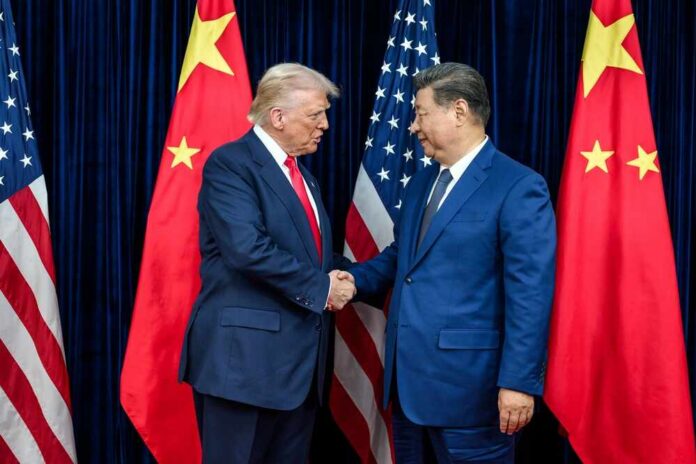
China stands poised to arm Iran with deadly shoulder-fired missiles during a fragile U.S. ceasefire, directly threatening American pilots and testing President Trump’s resolve ahead of a critical summit with Xi Jinping.
Story Highlights
- US intelligence detects China preparing FN-6 MANPADS shipments to Iran within weeks, routed through third countries to hide origins.
- President Trump warns China of “big problems” and 50% tariffs on suppliers, following a five-week US-Iran war and two-week ceasefire.
- China denies all allegations, calling reports “fabricated” while claiming credit for brokering the ceasefire.
- MANPADS pose asymmetric threats to low-flying US aircraft, as seen in recent F-15 downing.
Intelligence Reveals Imminent Shipments
US intelligence assessments, based on three sources, indicate China prepares to deliver shoulder-fired anti-aircraft systems like the FN-6 MANPADS to Iran in coming weeks. These lightweight weapons, weighing 20 kg, feature heat-seeking guidance and friend-or-foe identification. Shipments may route through third countries to evade detection. This development unfolds amid ceasefire talks in Islamabad, allowing Iran to rebuild defenses after a five-week war with the US. Such transfers heighten risks to American low-altitude operations, echoing Cold War-era threats to ground forces from fighter jets.
Trump’s Tariff Threat and Ceasefire Fragility
President Donald Trump specifically warned China against the shipments, stating, “If China does that, China’s going to have big problems.” Last week, hours after agreeing to a two-week ceasefire with Iran, Trump announced 50% tariffs on any country supplying weapons to Tehran, with no exemptions. The ceasefire, partly brokered by China, remains precarious. Iran previously downed a US F-15 using a similar shoulder-fired missile, underscoring MANPADS effectiveness in mountainous terrain against helicopters and jets.
China’s Denial Amid Economic Ties
Chinese embassies in the US and Israel rejected the intelligence as “fabricated” and “untrue,” asserting China never supplied weapons and urging restraint from baseless claims. Beijing emphasizes its role as a responsible power promoting de-escalation. Yet, experts note China’s heavy reliance on Iranian oil drives closer ties, potentially motivating covert support. US officials accuse Chinese firms of prior dual-use transfers, including navigation components, complicating enforcement amid sanctions.
Strategic Risks to US Interests
These MANPADS represent an asymmetric threat, pairing with radars for layered defenses effective at high altitudes. Short-term, shipments risk collapsing the ceasefire and sparking renewed conflict, endangering US and Israeli pilots. Long-term, they strain US-China relations before the Trump-Xi summit, invite trade wars via tariffs, and bolster Iran’s arsenal. Regional civilians face escalation dangers, while global energy markets brace for oil disruptions from China-Iran links. Both conservatives and liberals see this as elite powers prioritizing geopolitics over American safety and founding principles of sovereignty.
Report: China Supplying Iran with Anti-Aircraft Weapons to Aid in Fight Against US https://t.co/lc0fOMDWkt #gatewaypundit via @gatewaypundit
— Rosetta Atchley (@RosettaAtchley5) April 14, 2026
Broader Implications for American Security
Proliferation of FN-6 systems tests US deterrence in the Middle East, where low-flying missions remain vital. Intelligence consistency across outlets confirms preparations, though no deliveries are verified, and China’s denials create uncertainty. Trump’s America First approach leverages economic pressure to protect troops, resonating with frustrations over foreign entanglements and government failures to prioritize citizens. This highlights deep state-like maneuvers abroad, eroding trust in international actors and underscoring the need for strong leadership.
Sources:
China plans to ship air defense systems to Iran, US intelligence says
US Intelligence Suggests China May Supply Anti-Aircraft Systems to Iran