
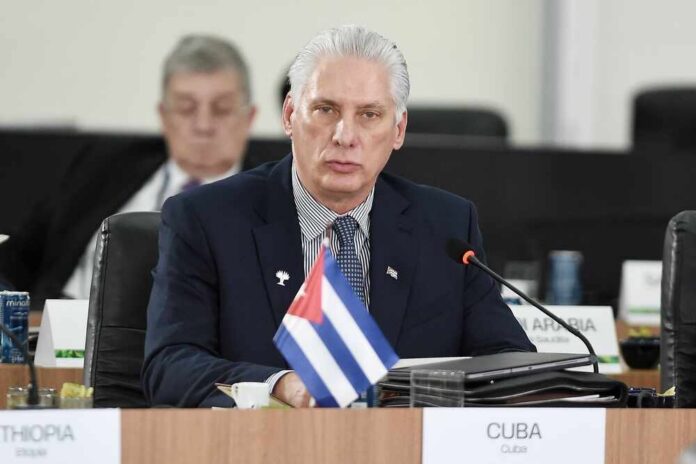
Cuba’s communist leader is invoking Bay of Pigs-era defiance again—this time claiming the island is “ready” to fight the United States, even as no imminent U.S. attack has been confirmed.
Quick Take
- Miguel Díaz-Canel used a major revolutionary anniversary rally to say Cuba does not want U.S. aggression but is preparing to “defeat” it if it happens.
- In a U.S. TV interview, Díaz-Canel warned there is “no justification” for an attack or for efforts to remove him, and said Cubans would resist even at the cost of their lives.
- The underscores how authoritarian governments often lean on foreign-threat narratives when their domestic economies and legitimacy are under strain.
Díaz-Canel Revives a Familiar Crisis Narrative
Miguel Díaz-Canel delivered his warning on April 16 in Havana during a rally marking the 65th anniversary of Fidel Castro’s declaration of the Cuban Revolution’s socialist character—timed to echo the symbolism of the Bay of Pigs era. Díaz-Canel said Cuba does not seek conflict but has a duty to prepare for possible aggression and to confront it if necessary. The event drew supporters as Cuba faces “extremely challenging” conditions.
Díaz-Canel then carried the message directly to an American audience through an interview aired on NBC’s “Meet the Press,” reinforcing that he views any U.S. military action or attempt to depose him as unjustified and likely costly. Reports describe him framing Cuban resistance as total, suggesting the country would fight rather than surrender. The main factual point across coverage is consistent: the Cuban government is elevating its threat messaging, not announcing new battlefield moves.
No Verified Trigger—Just Escalated Rhetoric
The current reporting does not identify a specific new U.S. operation, troop movement, or official plan to attack Cuba. Instead, outlets describe a surge in Cuban leadership rhetoric paired with references to longstanding tensions: the U.S. embargo, Cuba’s decades of hostility with Washington since 1959, and the historical memory of Bay of Pigs and the Cuban Missile Crisis. One report references Trump having floated language interpreted as a “friendly takeover,” but the sources presented offer limited detail on what policy action, if any, followed.
That distinction matters for Americans who want clarity rather than panic. Political leaders sometimes talk in ways designed to shape perceptions, not to describe imminent reality. Based on the research provided, the strongest, best-supported claim is simply that Díaz-Canel is trying to deter pressure and rally domestic unity by invoking the idea of external threat. What is not established in the sources is a clear, confirmed U.S. military timeline or a defined set of U.S. objectives that match Díaz-Canel’s warnings.
Domestic Pressure Inside Cuba Sits Behind the Messaging
Multiple reports tie the rally’s tone to Cuba’s internal strain—economic hardship, shortages, and a society that has seen major unrest in recent years, including significant protests in 2021 that were met with repression. When everyday life is difficult, regimes often lean on nationalism and “siege” rhetoric to redirect anger outward. In this case, Díaz-Canel’s posture also reinforces the Communist Party’s claim that it is defending sovereignty, even as many Cubans continue to face harsh conditions and limited political freedom.
What This Means for U.S. Policy Under GOP Control
With Republicans controlling the White House and Congress in 2026, the main U.S. policy question is how to defend American interests without stumbling into unnecessary escalation. The reporting does not show an active U.S. war plan, but it does show Cuba’s leadership trying to frame Washington as an imminent threat. For conservatives skeptical of endless foreign entanglements and overspending, the obvious priority is avoiding open-ended commitments while maintaining credible deterrence and protecting the homeland.
The broader takeaway, though, hits a nerve across the political spectrum: ordinary citizens often pay the price for elite political incentives on both sides of a conflict. Cuban families bear the burden of their government’s repression and economic controls, while U.S. taxpayers would bear the burden of any avoidable confrontation. With limited hard detail on actual U.S. steps beyond rhetoric described in the sources, the most responsible conclusion is that this is a propaganda-heavy moment—one that could still become dangerous if misread or politically exploited.
Sources:
Cuba’s president says island does not wish for US aggression but ready to fight if needed
Cuba’s president warns against US attack
Cuba president says US targeting island, removing him