NYC Mayor Zohran Mamdani’s $70 million plan to create government-run grocery stores moves forward next year, sparking fierce opposition from bodega owners who warn the socialist-style intervention will devastate their family businesses across the city.
Story Snapshot
- First city-owned supermarket scheduled to open in 2027 at Market and El, with five total stores planned by 2029
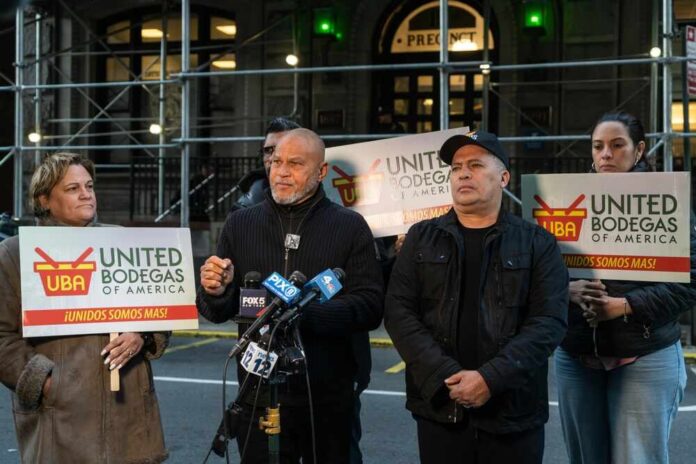
- United Bodegas of America calls the $70 million taxpayer-funded initiative a “foolish idea” that threatens to eliminate neighborhood corner stores
- Mamdani’s campaign promise now becomes reality during first 100 days as mayor, raising concerns about government competing with private enterprise
- Bodega advocates warn the subsidized stores could “spread” and systematically displace immigrant-owned businesses that form the backbone of NYC neighborhoods
Government Supermarkets Launch Despite Business Owner Outcry
Mayor Zohran Mamdani announced his administration will open New York City’s first government-operated grocery store in 2027, fulfilling a controversial campaign pledge that has bodega owners bracing for what they view as unfair government competition. The Democratic Socialist mayor outlined plans for five city-run supermarkets by the end of his term in 2029, backed by a proposed $70 million taxpayer investment. The first location at Market and El will test whether municipal grocery operations can deliver on promises of lower prices while competing directly with private businesses that have served neighborhoods for generations.
Bodega Owners Sound Alarm on Subsidized Competition
Fernando Mateo, spokesperson for the United Bodegas of America, condemned the initiative as fundamentally misguided and economically destructive to small business owners. Mateo expressed deep concern that the concept “may spread” beyond the initial five locations, creating an expanding network of taxpayer-subsidized stores that private businesses cannot compete against. The backlash reflects broader frustrations among working-class immigrant entrepreneurs who built their livelihoods without government handouts, only to face municipal authorities tilting the playing field against them. This represents a concerning trend where bureaucrats believe they can run businesses better than the people who risk their own capital and work around the clock to serve their communities.
Socialist Experiment Raises Fundamental Economic Questions
The city-run grocery plan epitomizes a troubling expansion of government overreach into markets that have functioned for decades without municipal intervention. While Mamdani frames the initiative as providing affordable food options, the reality involves government officials using taxpayer dollars to compete directly with private citizens who receive no such subsidies. Bodegas operate on thin margins, pay property taxes, and employ family members who work extended hours to make ends meet. Government stores face none of these constraints, creating an uneven playing field that rewards political ideology over entrepreneurial merit and hard work.
This initiative raises fundamental questions about the proper role of government in a free market economy. Rather than addressing regulatory barriers, high taxes, or crime that genuinely impede small businesses, city officials have chosen to become direct competitors. The approach mirrors failed socialist experiments throughout history where government-run enterprises displaced private initiative, ultimately resulting in less choice, lower quality, and higher costs for consumers. New Yorkers who value economic freedom and the American tradition of entrepreneurship should watch closely as this plan unfolds, recognizing it as a test case for whether municipal governments will respect the boundary between public service and private enterprise.