
A Pakistan Army helicopter has crashed in disputed Kashmir, and the world is again reminded how fragile stability is when weak, unaccountable regimes control a nuclear-armed military on India’s border.
Story Snapshot
- A Pakistan Army Mi-17 helicopter crashed near Muzaffarabad in Pakistan-controlled Kashmir, killing everyone on board.
- The Pakistan military blamed a “technical fault” during take-off and ordered an internal inquiry, but no full report is public yet.
- The crash happened amid major anti-army protests in the region, fueling questions and speculation about what really happened.
- The incident highlights long-running safety, transparency, and accountability problems in Pakistan’s powerful military establishment.
Deadly Crash In A Tense, Unstable Region
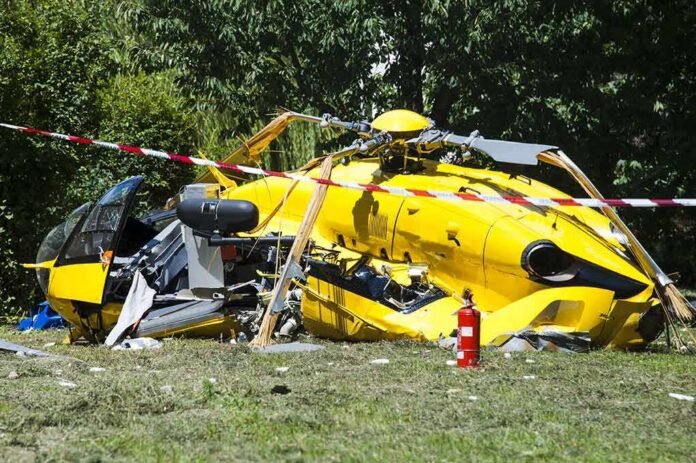
A Pakistan Army Mi-17 helicopter crashed near Muzaffarabad in Pakistan-controlled Kashmir, with the military confirming that all personnel on board were killed.[1][2] The aircraft went down during take-off from a helipad after what the army called a “technical fault.”[1][4] Witnesses told reporters the helicopter lifted off, then veered and burst into flames as firefighters rushed to fight the blaze.[2] Rescue and recovery teams reached the crash site quickly, but officials said there were no survivors.[1][4]
Reporting from different outlets shows early confusion over how many people died in the crash, with figures ranging from 21 to 22 soldiers and crew.[2][3] The army’s first statement said only that “all personnel on board” had been martyred, without giving a number.[1][4] Later security sources told international media that 22 personnel had been killed, while several video reports repeated a figure of 21.[2][3] That shifting death toll has raised questions about how clearly Pakistan’s leaders are sharing basic facts.
Official Story: “Technical Fault” And Secretive Inquiry
The Pakistan military’s media wing said the Mi-17 crashed “during take-off due to technical fault” and promised a board of inquiry to find the exact technical cause.[1][4] This mirrors language used after earlier Pakistan Army helicopter crashes, which were also blamed on mechanical or technical failures.[9] In this case, officials have not released details about which system failed, any maintenance history, or whether pilots sent a distress call. Public reporting so far does not include a full accident report or engineering analysis.[1][2]
International and regional media repeated the army’s technical-fault explanation, but none cited independent proof to back it up beyond the military’s statement.[1][2][4] Reports based on a Reuters witness describe a helicopter that caught fire while taking off, but eyewitness accounts alone cannot confirm a mechanical failure.[2] Without open evidence from maintenance logs, wreckage inspections, or flight data, the “technical fault” claim rests entirely on what Pakistan’s own generals choose to say. That lack of transparency is a familiar problem when powerful institutions investigate themselves.
Crash Amid Protests, Speculation, And Regional Risk
The helicopter went down near Muzaffarabad while the area was already on edge from protests and strikes led by the Joint Awami Action Committee, a recently banned alliance in Pakistan-controlled Kashmir.[1][8] Social media posts and broadcasters highlighted that the crash happened as unrest against the Pakistan Army and its leadership was growing.[3][8] Some commentary described the circumstances as “suspicious” and raised the idea of hostile action, though no public evidence has confirmed that possibility so far.[6][8]
A Pakistan Army Mi-17 helicopter crashed near Muzaffarabad. The military attributes the crash to a technical fault. All personnel on board were killed. https://t.co/YPPMd4cpsy
— MindMatrix (@MindMatrix19) June 11, 2026
Because Pakistan has not released a detailed, independent investigation, speculation has rushed into the gap.[3][6] Some reports suggested the helicopter may have attempted an emergency landing, while others spoke of a sudden loss of control right after take-off.[5][6] These mixed early accounts, along with conflicting casualty numbers, risk eroding trust not only in the explanation for this crash but in official statements from Islamabad more broadly. For Americans watching a volatile nuclear neighbor, that should be a concern.
Why This Matters For American Conservatives
For readers in the United States, this story is not just about one tragic crash in a faraway valley. It is about what happens when a powerful military operates with little accountability, weak civilian oversight, and limited respect for open inquiry.[2][9] Pakistan’s habit of putting out quick “technical fault” explanations, without public evidence, shows how closed systems dodge scrutiny. That stands in sharp contrast to how aviation disasters are handled in America, where independent boards review accidents and facts are shared with the public.
At the same time, this helicopter crash happened in a region where protests, blackout orders, and force against civilians are common tools of control.[1][3] When unrest is high and facts are hidden, rumors and radical groups gain ground. That creates more risk for India, our key democratic partner, and more space for hostile actors to operate near vital trade routes. For a Trump-era America that is trying to cut endless foreign entanglements while staying strong, understanding these fault lines helps shape smart, America-first policy.
Sources:
[1] YouTube – Pakistan army helicopter crashes in Kashmir, killing all on board
[2] Web – No survivors as Pakistan Army Mi-17 helicopter crashes near …
[3] Web – Pakistan Army Helicopter Crashes During Take-Off In PoK, All On Board …
[4] Web – Military helicopter crash in Pakistani Kashmir killed all 22 personnel …
[5] Web – Pakistan army Mi-17 helicopter crashes near Muzaffarabad, crew killed
[6] Web – President, PM express grief over Pakistan Army MI-17 helicopter crash
[8] Web – India Today | A Pakistan Army Mil Mi-17 helicopter crashed near …
[9] Web – Pakistan army helicopter crashes in Kashmir, killing all on board