

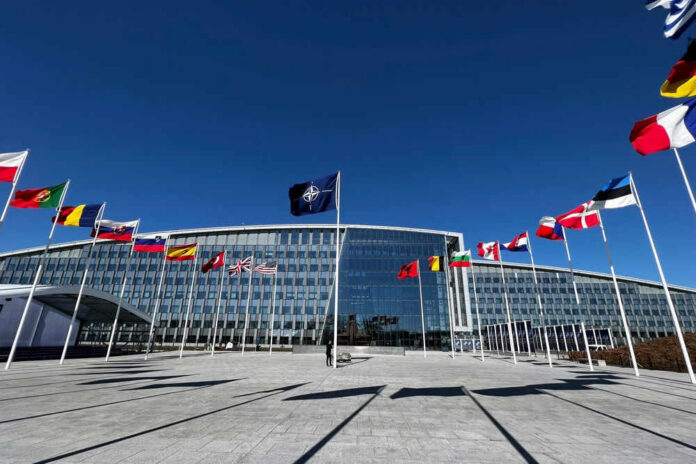
On the eve of the Ankara summit, NATO leaders are pushing a new five-percent defense pledge while President Trump warns that “real allies” pay up or the United States walks.
Story Highlights
- NATO adopted a five-percent of gross domestic product defense framework, but leaders still demand credible plans to hit it.
- Trump said the United States could leave NATO if allies are not “real allies,” intensifying pressure on burden-sharing.
- European defense spending has surged since 2024, with credit given to U.S. pressure, yet gaps remain in delivery and timelines.
- The debate revives a core question for voters on left and right: Is Washington protecting security or protecting the status quo?
What Leaders Agreed To And What Is Still Missing
NATO members endorsed a five-percent of gross domestic product defense investment concept that splits core defense and wider security needs. The alliance also set an annual cycle for members to file plans that show how they will get there. NATO’s own materials describe this structure and the burden-sharing logic behind it. Ahead of the summit, NATO’s chief urged allies to present credible paths to meet the target, which shows the promise is not yet the reality across capitals.
Trump’s message before wheels down in Turkey is blunt. He said if allies are not “real allies,” then “we’re out of here.” The line aims to force faster spending and support on Ukraine and Middle East policy. He has also voiced anger at several major European partners for what he calls weak backing in recent crises. That rhetoric energizes his base and alarms European leaders who rely on U.S. power to deter Russia.
Spending Is Up, But Delivery And Trust Are In Question
European spending has climbed since 2024, with the alliance’s top official earlier crediting U.S. pressure for a “staggering increase” that moved Europe closer to U.S. levels for the first time in decades. Independent trackers report more allies crossing the old two-percent mark as they rearm for a tougher era. Still, money on paper does not equal ready brigades, stocked depots, or air defense layers. NATO’s call for credible plans shows a gap between pledges and real capability.
History also cuts both ways. After the September 11 attacks, NATO invoked Article 5, patrolled North American skies, and backed U.S. missions. That record underlines alliance value when it counts. At the same time, research on abandonment threats finds they can raise European support for higher defense spending while also eroding trust in U.S. reliability over time. Voters see the tradeoff: more money from Europe, but more doubt about American staying power.
The Stakes For U.S. Taxpayers And Security
For many conservatives, the fight is about ending free-riding and cutting federal costs. For many liberals, the fear is a faster drift toward great-power conflict if deterrence weakens. Both camps share a deeper worry: Does Washington chase defense targets without clear audits, timelines, or proof that higher spending makes America safer? NATO’s five-percent push lacks an enforcement tool, and leaders are still asking for credible plans, not delivering verified results.
Trump’s threat to reduce troops or exit the alliance raises practical questions that neither side has fully answered. What is the timeline? How would Europe backfill U.S. logistics, intelligence, and missile defense if American units leave? Advocates say cuts force Europe to step up. Skeptics warn that sudden shifts invite risk and reward contractors who thrive on churn. Until there are public plans and audits, many citizens will see more pressure than proof.
What To Watch Next
Watch for three concrete signals after Ankara. First, country-by-country roadmaps with dates, units, and industrial orders, not just budget lines. Second, an audit of who is meeting milestones and who is not. Third, a U.S. plan that spells out conditions for any troop changes and how core missions—nuclear deterrence, air defense, and logistics—would continue if force levels drop. Without those, leaders are asking the public to trust a process that has burned them before.
Sources:
youtube.com, facebook.com, brandonsun.com, sipri.org, pbs.org