
A Pennsylvania State Trooper was killed on a routine truck inspection after another rig suddenly veered off the highway, and now a trucker facing homicide charges is at the center of a fierce fight over public safety, immigration, and government failure.
Story Snapshot
- A 33-year-old truck driver, Michael Bon, is charged with homicide by vehicle and related crimes after his tractor-trailer hit and killed Trooper Michael Pahira during a traffic stop on Interstate 81.
- Court records show Bon was arraigned in Schuylkill County and is held on $700,000 bail, with a hearing set for July 16.
- Official crash paperwork says Bon had a valid Class A commercial license and a Florida-registered truck, but gives no clear reason for why his truck suddenly left its lane.
- The crash fits a larger pattern where officers are killed doing roadside enforcement, while media and political leaders focus more on immigration and blame than on fixing deeper safety and enforcement problems.
What We Know About the Deadly Crash on Interstate 81
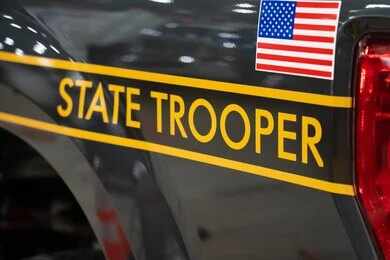
Pennsylvania State Trooper Michael Pahira, age 44, was killed while doing what many officers do every day: inspecting a tractor-trailer on the shoulder of Interstate 81 in Cass Township, Schuylkill County. Around 7 a.m., he had his emergency lights on and was checking another truck when a semi driven by 33-year-old Massachusetts resident Michael Bon allegedly veered off the highway. According to police accounts, Bon’s truck struck the trooper’s vehicle, pushed it into the stopped truck, and then hit Pahira himself, causing fatal injuries.
Crash paperwork shared by local media says Bon held a Class A commercial driver’s license from Massachusetts and was operating a Freightliner registered in Florida, loaded with clothing. That matters because social media posts and some commentators have claimed he had no commercial license, but the documents directly contradict that claim. The same paperwork reports highway speeds around 70 miles per hour for both trucks, which made the impact especially severe, yet it does not list any obvious mechanical problem or road hazard that would explain why Bon’s truck suddenly left its lane.
The Charges Against the Driver and the Push for Accountability
After the crash, a judge in Schuylkill County arraigned Bon on multiple criminal counts, including homicide by vehicle, manslaughter, and reckless driving, among a total of ten charges connected to Pahira’s death. Video from local news shows Bon being moved from a Pennsylvania State Police barracks in a wheelchair after the arraignment, suggesting he was also hurt in the collision. Court records say he is held on $700,000 bail, a high amount that signals prosecutors and the judge see him as a serious risk or believe the alleged crimes are extremely severe.
Bon is due back in court on July 16, when lawyers and the judge will start digging into more evidence and deciding what happens next. That next step matters because, so far, the crash paperwork clearly states what happened — a truck veering and a trooper killed — but does not say why it happened. There is no public report yet of brake failure, steering failure, or a medical emergency, and no released toxicology results that might show alcohol or drug impairment. Those gaps leave room for arguments on both sides: prosecutors framing this as criminal recklessness, defense attorneys pointing to possible mechanical or medical causes.
Immigration, Media Narratives, and a Distrustful Public
While investigators study the crash mechanics, much of the public conversation has jumped to immigration. Local reporting notes federal officials say Bon is a Haitian national who has been in the United States illegally since 2025, and headlines highlight “illegal immigrant truck driver” as the defining label. Social media accounts repeat that phrase again and again, sometimes adding unproven claims about his training, his license, or his employer, even when official paperwork shows he had a valid commercial license.
Haitian National Living Illegally in U.S. Since 2025 Charged in Fatal Crash Killing Pennsylvania State Trooper
Cass Township, Schuylkill County, Pennsylvania — On July 1, 2026, at approximately 7 a.m., Pennsylvania State Trooper Michael E. Pahira Jr., 44, was killed on… pic.twitter.com/tEX1Py3dtd
— Police Incidents (@PoliceIncident) July 4, 2026
This style of coverage hits a raw nerve for both conservatives and liberals who already believe the federal government is failing to control the border, enforce trucking rules, or protect working-class Americans. Many on the right see this case as proof that illegal immigration and weak enforcement can cost the lives of people who serve and protect. Many on the left look at the same facts and see a system that relies on cheap, vulnerable labor, then uses criminal charges and media blame instead of fixing road safety and labor rules. In both views, distant elites talk in sound bites while ordinary people bury loved ones.
Roadway Deaths of Officers and the Bigger Safety Problem
This tragedy is not rare. National figures show that crashes involving motor vehicles are the single leading cause of law enforcement line-of-duty deaths, often making up about one-third of officer fatalities in a given year. A detailed study of “struck-by” incidents found that many officers die exactly the way Trooper Pahira did — on foot, on the roadside, hit by passing vehicles while doing traffic enforcement. From 2015 to 2019, dozens of officers were killed this way, with roughly half of those crashes considered accidental, not intentional attacks.
These numbers tell a hard truth: every time a trooper steps out of the car on a busy highway, they are gambling with their life. At the same time, truck driving itself is one of the deadliest jobs in America, with long hours, strict deadlines, and constant pressure from employers and shippers. That mix — tired or rushed drivers, crowded roads, and officers working only a few feet from high-speed traffic — creates a system where one mistake or one unseen problem can be fatal. Yet Congress and state governments rarely treat roadside safety with the urgency they bring to talking points about immigration or “law and order.”
Government Priorities, Public Anger, and What Comes Next
In the days after Trooper Pahira’s death, state leaders praised his service and vowed justice, and law enforcement groups rallied around his family, as they should. But many citizens, across party lines, look at the wider picture and see a pattern: government leaders make emotional speeches yet leave the same risky systems in place. Border policy remains tangled, trucking oversight is stretched thin, and basic “slow down, move over” rules are broken every day as drivers rush past police stops.
For people who already think the “deep state” cares more about careers than the common good, this case feels like one more example. An officer who spent twenty years protecting others is dead. A truck driver, allegedly here illegally and now facing homicide charges, sits in jail. The public gets competing stories about who to blame, but very little evidence that leaders in Washington or Harrisburg will use this loss to make highways safer, strengthen enforcement that works, or rebuild trust. Until that changes, more officers, drivers, and families will pay the price.
Sources:
townhall.com, wjactv.com, facebook.com, archives.gov, youtube.com