
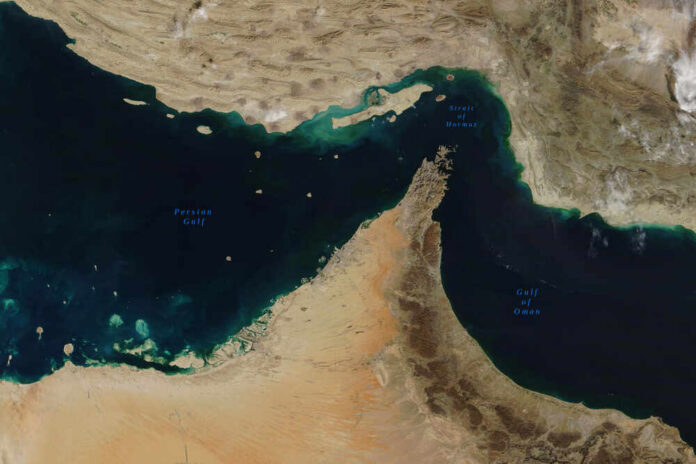
Iran says tankers must use routes it approves through the Strait of Hormuz, escalating a dispute over navigation rights in one of the world’s most important shipping lanes.
Story Snapshot
- Iran’s military command says only Iran‑approved routes may be used in the Strait of Hormuz and warns of a “forceful response” against tankers that do not comply.
- Tehran has built a de facto “safe corridor” inside its waters, where some ships are vetted and at least one reportedly paid about $2 million to pass, creating a tollbooth for global energy.
- The United States, Oman, and a United Nations maritime agency back a rival route near Oman’s coast and insist Iran cannot charge tolls or control traffic in an international strait.
- International law experts say mandatory tolls and forced rerouting in Hormuz break long‑standing rules that protect free transit through key chokepoints.
Iran’s Warning: Use Our Routes Or Face Force
Iran’s joint military command has warned that all oil tankers in the Strait of Hormuz must use routes it approves or face an “immediate and forceful response” from its armed forces. The statement says any failure to follow Iran’s designated path or its navigation rules will “endanger” violators’ security, and it singles out United States military flights and interference as direct threats to Iran’s sovereignty. In simple terms, Iran is telling the world’s energy shippers: our map rules this waterway, and our forces will enforce it.
Iran’s naval forces have backed this threat with radio warnings and a new navigation map that pushes traffic closer to Iranian shores. Shipping reports describe oil and gas carriers being told that “only routes authorized by Iran” are allowed and that communication with Iranian units is now “compulsory” for safe passage. For ordinary Americans, this means one foreign military claiming power to decide which tankers move and how, in a corridor that helps set gasoline prices, heating costs, and the broader cost of living.
A De Facto Tollbooth In A Global Lifeline
Behind these warnings sits a new system: Iran has created a de facto “safe corridor” through its territorial waters where ships can pass after vetting, coordination, and, in at least one case, a reported payment of about $2 million. Only a handful of vessels have used this narrow route by Larak Island, where they can be stopped and inspected by Iran’s Revolutionary Guards. Analysts say Iran now allows limited, supervised passage for “friendly” states while other traffic is deterred or delayed, giving Tehran leverage over who gets energy and at what risk.
Legal experts argue this tolling and selective control clash with the basic rules of the sea. Since World War II, major natural straits like Suez and Gibraltar have operated under a “transit passage” idea, where ships enjoy free and continuous movement without paying mandatory transit fees. Fees are allowed only for optional services like tugs or pilots, not for the simple right to move through the water. If Iran’s model stands, it sets a precedent that other coastal powers could copy, turning global trade lanes into cash machines for governments and deepening the sense that rules are written by the powerful, not for the people.
United States And Allies Push Back With Law And Routes
The United States government, Gulf Arab states, and many shipping firms reject Iran’s claim to control Hormuz traffic and charge tolls. United States officials say the Strait acts as an international strait where ships have a right to “transit passage” under global maritime law, and they argue Iran cannot legally reroute traffic into its waters or demand tolls for passage. President Trump and senior officials have called any such tolls “illegal” and warned that tankers paying Iran could face United States seizure on the high seas, showing how quickly a shipowner’s decision can become a global incident.
On the water, Oman and a United Nations maritime agency have laid out an alternative route hugging Oman’s coast, and convoys of tankers have started using it despite Iranian threats. In one case, a vessel named Stoic Warrior led other tankers along the United Arab Emirates and Oman shoreline, following this new corridor with backing from United States air cover and insurance guidance. Shipowners now face two sets of orders: Iran telling them to move close to its coast and pay up, and Western militaries and insurers steering them toward a free route near Oman. That confusion feeds the broader feeling that global “rules” are mostly power plays.
International Law Fight: Innocent Passage Vs. Transit Passage
Iran defends its actions by claiming it applies an older “innocent passage” rule that lets a coastal state deny entry to ships it sees as hostile, including those tied to the United States and Israel. Western scholars and many governments answer that a newer “transit passage” regime now covers Hormuz, giving all ships — even warships and aircraft — the right to rapid, uninterrupted passage. A recent United Nations Security Council resolution went further, condemning Iran’s attacks and threats against navigation in Hormuz as a breach of international law and a danger to global peace.
For readers frustrated with elites and distant legal battles, the stakes are simple. A foreign regime under heavy sanctions is trying to turn a shared global artery into its own revenue stream and pressure tool, while major powers answer with blockades, escorts, and threats of seizure. Both sides talk about “freedom of navigation,” yet ordinary people see rising energy prices, constant war talk, and a sense that no one is really guarding the common good. The Hormuz showdown is not just about ships; it is about who writes the rules of the world economy and whether those rules still protect everyday workers, savers, and families.
Sources:
military.com, lloydslist.com, cnbc.com, yahoo.com, facebook.com, inss.org.il, internationallaw.blog, brookings.edu, crisisgroup.org, digital-commons.usnwc.edu