
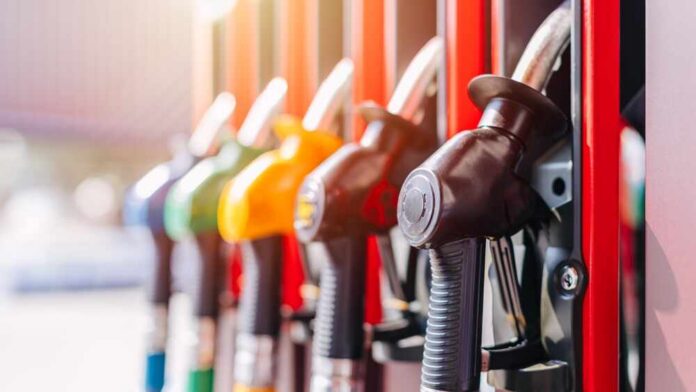
When the White House orders prosecutors to police the price at your pump, the line between justice and politics gets dangerously thin.
Story Snapshot
- President Trump told the Department of Justice to investigate alleged gas price gouging after crude fell.[8]
- The order named no specific companies and offered no evidence of illegal intent.[4]
- Industry groups say prices lag oil because of refining limits and existing inventories.[10]
- Experts report prices are falling in most states, muddying the “gouging” claim.[12]
What The President Demanded And Why It Hit A Nerve
On June 24, President Trump said he told the Department of Justice to “immediately” look into alleged gouging at gas stations. He argued crude oil prices were dropping fast while pump prices were not falling enough. He posted the charge on his social platform and called the gap “totally illegal.” The move touched a core pocketbook issue that angers both parties. Many Americans feel the system protects the powerful while families pay more.[8]
The Department of Justice did not list targets or share evidence of a crime. Reports said the order did not name specific companies like ExxonMobil or Chevron. That matters because price fixing and unfair trade claims require concrete proof, not suspicion. Without clear targets, the probe looks broad and political to critics. Supporters counter that pressure can force transparency and speed relief at the pump.[4]
How Gas Prices Are Actually Set In The Real World
Energy analysts say one fact drives the pump: crude oil sets much of the cost. The American Petroleum Institute cites data showing the global oil market leads the way, and no single company controls the price you pay. It also says prices fall slower than they rise because stations must sell higher-cost fuel already in their tanks. That lag can look like gouging even when it is normal market behavior.[10]
Peer-reviewed research backs the “prices fall slower” pattern. Economists have documented that retail gasoline responds faster to oil price spikes than to drops. This lag varies by region and time. The pattern, often called “asymmetric pass-through,” helps explain why drops at the pump can trail declines in crude by weeks. That does not prove every price is fair, but it shows a repeatable, measured effect across markets.[11]
What Current Data Shows About Prices Right Now
Recent coverage highlighted falling pump prices across most states. A national broadcast cited data that forty-six states saw declines over the past week, with the national average sliding at a pace slightly faster than during the 2022 peak downturn. This picture cuts against claims of a widespread, active gouging wave today. It suggests consumers are seeing relief, even if not as fast as many want.[12]
𝐓𝐑𝐔𝐌𝐏 𝐍𝐀𝐌𝐄𝐒 𝐄𝐗𝐗𝐎𝐍𝐌𝐎𝐁𝐈𝐋, 𝐂𝐇𝐄𝐕𝐑𝐎𝐍, 𝐒𝐇𝐄𝐋𝐋, 𝐀𝐍𝐃 𝐁𝐏 𝐈𝐍 𝐃𝐎𝐉 𝐏𝐑𝐈𝐂𝐄-𝐆𝐎𝐔𝐆𝐈𝐍𝐆 𝐏𝐑𝐎𝐁𝐄 𝐀𝐒 𝐎𝐈𝐋 𝐇𝐈𝐓𝐒 $𝟔𝟗
Big Oil thought it could quietly pocket the spread between crashing crude and the pump — and that nobody would notice.… pic.twitter.com/Z9XbwvOE62
— M.A. Rothman (@MichaelARothman) June 29, 2026
Longer records from federal data also show prices move with supply, demand, and refining issues over time. The Energy Information Administration outlines how crude costs, taxes, distribution, and refining capacity shape the final price. When refineries run tight, or when storms or global shocks hit, margins can jump. When crude falls, it still takes time for cheaper fuel to reach local tanks. That timing gap often fuels political fights.[14]
Why The Department Of Justice Order Raises Independence Fears
Legal experts and some lawmakers warn that public orders to the Department of Justice can blur agency independence. One report called this a departure from a long tradition that keeps criminal probes at arm’s length from politics. Even people who want lower prices may worry about setting a precedent where leaders publicly direct prosecutors at will. That concern unites many who feel the “system” already serves insiders first.[4]
Past federal reviews add another check on expectations. Trade watchdogs have run many probes into gasoline pricing after price spikes. Those reviews usually found market forces, not illegal collusion. That history does not close the case today. But it sets a high bar for proving gouging and shows why sweeping claims often fade once data and documents are tested. It also shows why transparency and clear methods matter.[10]
What To Watch Next To Judge The Claim Fairly
Watch for subpoenas and hard evidence. If investigators uncover internal messages or algorithms that hold prices up without cause, the gouging case gets stronger. If agencies release margin data that matches history during the crude drop, the market story holds. Also track how fast local prices fall compared with crude in your region. A clear, measured pass-through will signal normal lags, not a scheme. Right now, firm proof is still missing.[8]
Americans are right to demand fair prices and honest markets. They are also right to expect independent law enforcement and facts before force. The next few weeks will test both. If the probe brings sunlight without political theater, consumers win. If it turns into a headline without proof, trust in institutions takes another hit. Either way, the data—not the posts—should decide what comes next.[12]
Sources:
[4] Web – Trump accuses oil companies of gas price ‘gouging,’ calls for DOJ …
[8] Web – President Trump has asked the DOJ to look into gas price ‘gouging …
[10] Web – Trump says he ordered DOJ to probe gas price ‘gouging’
[11] Web – How Gasoline Prices Are Determined – American Petroleum Institute
[12] Web – Price pass-through in US gasoline markets – ScienceDirect
[14] Web – Gas Prices Explained – US Oil & Gas Association