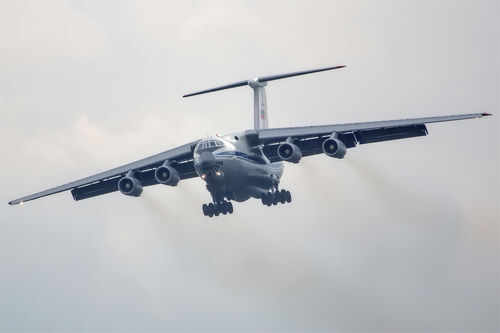
China’s new Y-20B transport plane, now powered by fully domestic WS-20 engines, quietly marks a major shift in who controls the world’s biggest military airlifters.
Story Snapshot
- China is fielding the Y-20B heavy transport aircraft with four home-built WS-20 engines, ending reliance on Russian powerplants.
- A Chinese Air Force unit reports every engine, electronic part, and line of software code on the Y-20B is now made in China.
- The WS-20 high-bypass turbofan boosts payload and range, pushing the Y-20B into the top tier of global heavy airlifters.
- Only China and Russia are now mass-producing aircraft in this heavy transport class, as the United States’ C-17 line has shut down.
China’s Heavy-Lift Breakthrough: What the Y-20B Actually Is
China’s Y-20B is a large military transport aircraft that can carry tanks, trucks, and troops over long distances. It is an upgraded version of the earlier Y-20A and is now powered by four WS-20 high-bypass turbofan engines that China developed at home. State media reports say these engines lower fuel use and increase range and payload, giving the plane “superior long-range strategic airlift capability.” This moves China into the small club of nations that can design, build, and power such heavy aircraft on their own.
A mechanic from the first regiment to receive the Y-20B told China Daily that “every electronic component, every line of software code, and every engine is made in China.” He described the WS-20 as “fully independently designed and manufactured,” with all electronic components domestically produced. That statement, published in an official outlet, is meant to send a clear message: Beijing wants the world to see this aircraft as a symbol of full aerospace independence, not a copy that still depends on foreign parts.
The WS-20 Engine: Ending Dependence on Russia
For years, China’s original Y-20 transport relied on Russian D‑30KP‑2 engines, which limited performance and tied Beijing to Moscow’s supplies. The WS-20 was built to break that dependency. It is a high-bypass turbofan based on the core of China’s WS‑10A fighter engine, tuned for heavy transport use. Reports describe thrust in the roughly 31,000 pound range, putting it in the same general class as engines that power Western transports. Developing such an engine has taken over two decades of testing and redesign.
Chinese and foreign analysts now say WS-20 is in mass production and installed across the growing Y-20B fleet. According to Chinese television, the new engines have “solved the problem of relying on imported core power systems” and deliver lower fuel burn, longer range, greater payload, and higher flight efficiency. Western defense commentary backs this up, noting that the Y-20B’s payload now reaches about 66 to 70 tons, which places it alongside the world’s heaviest active transport aircraft. For everyday Americans, that means China can move armored vehicles and large cargo across oceans without asking anyone else for help.
Production Pace and the Global Heavy Airlift Race
Heavy transports are not just big planes; they are the backbone of global military reach. A YouTube analysis focused on heavy-lift aircraft notes that only China and Russia are now producing this class in series, since the United States stopped building new C‑17s. China has reportedly built around 95 Y‑20 series aircraft since 2013 and aims for a fleet of more than 200. Some Chinese and foreign observers expect Y‑20B to replace the older Y‑20A in production, turning it into China’s standard heavy lifter.
Chinese media have showcased “elephant walk” videos, where multiple Y‑20B aircraft taxi together to show strength and readiness. These displays are aimed at both foreign audiences and China’s own citizens. They underline that while Washington struggles with aging fleets and budget fights, Beijing is pouring money into big, visible tools of power. For Americans who worry that elites in Washington talk tough but let basic capabilities fade, these numbers feed a sense that someone else is now building, while we argue.
Tech Autonomy, Espionage Concerns, and What It Means for the U.S.
China’s work on WS-20 fits a larger push for “aviation self-reliance.” Chinese firms are also racing to replace foreign engines on the C919 passenger jet with a domestic CJ‑1000 powerplant. A policy study notes that the Chinese Communist Party under Xi Jinping is focused on growing advanced industries at the expense of Western technology leaders, using state backing and aggressive industrial policies. That same drive shows up in engines like WS‑20, which cut off leverage the United States once had through exports and sanctions.
China has unveiled new footage showcasing the full Y-20 transport aircraft family, including the Y-20A, Y-20B, and YU-20 tanker. The video also highlights the YU-20 refueling an H-6N bomber in mid-air, demonstrating China's expanding long-range operational capability.
Powered by… pic.twitter.com/9oN1Y1s1HG
— Srijan Pal Singh (@srijanpalsingh) July 2, 2026
American reports have long warned that China acquires aerospace know-how through both “forced technology transfer” and espionage. Those practices helped China close key gaps, but the Y‑20B marks a new stage: the engine at its core is now claimed to be fully domestic. For voters on both the right and the left who already distrust Washington’s handling of trade, defense, and industrial policy, this story feeds a shared worry. While U.S. leaders bicker and protect their careers, a rival power is building giant aircraft that change the balance of military logistics, and ordinary Americans are left hoping someone in charge is paying attention.
Sources:
19fortyfive.com, globaltimes.cn, youtube.com, globalsecurity.org, chinadaily.com.cn, militarywatchmagazine.com, reddit.com, facebook.com