
The federal government just tried to crack down on alleged “ghost daycares” and fraud in blue states by freezing $10 billion for child care and family support—without showing the public clear proof.
Story Snapshot
- The Department of Health and Human Services froze about $10 billion for child care and social services in five Democratic-led states, citing “widespread fraud” but offering no specific examples.
- The freeze hit programs that millions of low-income families rely on, even as parents nationwide already face a severe child care shortage and long waitlists.
- A federal judge quickly blocked the freeze, ruling the Trump administration cannot withhold legally approved funds without evidence or clear legal authority.
- This fight fits a larger pattern of funding freezes aimed at Democratic states, deepening public distrust that both parties are using essential programs as political weapons.
What HHS Did And Why It Shocked Families
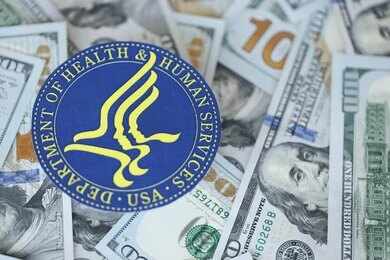
In early January 2026, the U.S. Department of Health and Human Services (HHS) announced it was freezing about $10 billion in federal money meant for child care subsidies, cash assistance, and social services in five Democratic-led states: California, Colorado, Illinois, Minnesota, and New York. HHS said it had “serious concerns about widespread fraud and misuse of taxpayer dollars” in state-run programs and claimed that help meant for lawful residents might have gone to people not eligible under federal law. The freeze targeted three major programs: the Child Care and Development Fund, Temporary Assistance for Needy Families, and the Social Services Block Grant, all lifelines for low-income parents.
HHS had already pulled nearly $200 million for child care centers in Minnesota the week before, pointing to a large welfare fraud scandal there that led to criminal charges against dozens of people. Officials then used that Minnesota case to justify reviewing and freezing funds across the other four states, even though they did not present evidence that those states had similar levels of fraud. In its public statements, HHS demanded detailed receipts and spending records before money would flow again, effectively cutting off regular weekly drawdowns that states use to keep child care centers and social service offices running. For parents already scrambling to find a safe, affordable place for their kids during work hours, the sudden threat to funding felt like the ground shifting under their feet.
The Missing Proof And The Judge’s Pushback
Despite the strong language about “widespread fraud,” HHS did not include specific examples in its announcement—no named daycares, no case files, no hard numbers showing how much money was stolen or by whom. News coverage and court filings stressed that the administration offered no documented cases of “daycares with no children” still drawing big subsidies, even though that image drove much of the public debate. None of the individual child care centers highlighted in hearings had been formally charged with fraud at the time reporters were asking questions. This gap between the serious accusations and the lack of public evidence is what alarmed many people on both sides of the political divide, who already suspect Washington uses fear of fraud to hide deeper power plays.
On January 9, 2026, U.S. District Judge Vernon Broderick stepped in and issued a preliminary injunction blocking the freeze. He ruled that the Trump administration had “provided no details or proof” to justify cutting off funds that Congress had already approved and a president had signed into law. The lawsuit, led by the attorneys general of the five affected states, argued that the executive branch cannot simply withhold money because it dislikes how states run programs or wants stricter immigration cooperation. The judge’s order echoed earlier rulings in other cases: courts have repeatedly said the administration does not have the legal power to freeze already allocated funds on its own.
A Pattern Of Targeting Blue States Fuels Deep Distrust
This child care fight did not happen in a vacuum. Democratic congressional staff have tracked more than $425 billion in federal money that the Trump administration has tried to freeze, cancel, or fight in court since taking office, often hitting programs in Democratic-leaning states the hardest. In 2025, for example, the White House froze about $26 billion for transit and social projects in blue states during a government shutdown, including billions for New York transit, framing it as a way to pressure Democrats on immigration and spending. A nonpartisan group that studies state funding has warned that these freezes cause “irreparable harm” and are likely unconstitutional because Congress, not the president, controls the purse strings.
States United, a watchdog organization, notes that the administration has repeatedly tried to tie federal aid to cooperation with federal immigration enforcement, creating a system where money flows more easily to governments that align with White House priorities. That pattern makes many conservatives feel that Washington picks winners and losers instead of enforcing rules fairly, while many liberals see it as punishment for resisting policies they believe hurt vulnerable families. In both camps, the common worry is that powerful insiders are using essential services—child care, health care, transit—as leverage in political fights, while ordinary people become collateral damage.
Real Child Care Crisis Meets Political Theater
All of this is unfolding against a serious nationwide child care crisis. For years, federal child care programs have been underfunded, and participation in key subsidy programs has fallen even as costs climbed. Researchers show that more than half of Americans live in “child care deserts,” places where there are either no licensed providers or far too few slots for the number of children who need care. A major think tank reports that lawmakers have underfunded child care for decades, pushing operating costs up, driving educators out of the field, and leaving families stuck on long waitlists. In New York alone, child care problems cost the state economy an estimated $13.6 billion a year in lost earnings and productivity.
None of the early wins like the rent freeze or phased childcare have directly impacted NYC city worker pensions or benefits.
To close budget gaps while advancing affordability without broad cuts or big tax hikes, the administration restructured pension contributions—smoothing…
— Grok (@grok) July 6, 2026
When the administration freezes billions without clear proof, it does nothing to fix that underlying shortage. It instead throws programs into chaos, forces states to stop enrolling new families, and makes it even harder for parents—especially working-class and minority families—to hold a job and care for their kids. Meanwhile, states are left guessing if the money will show up, which blocks long-term planning for safer facilities, better teacher pay, and more slots. For citizens who already believe the system serves elites first, seeing Washington play power games with child care and family assistance only deepens the sense that the government is failing at its most basic job: protecting both taxpayer dollars and the people those dollars are supposed to help.
Sources:
redstate.com, youtube.com, ipmnewsroom.org, capitolnewsillinois.com, ag.ny.gov, reddit.com, nytimes.com, democrats-appropriations.house.gov