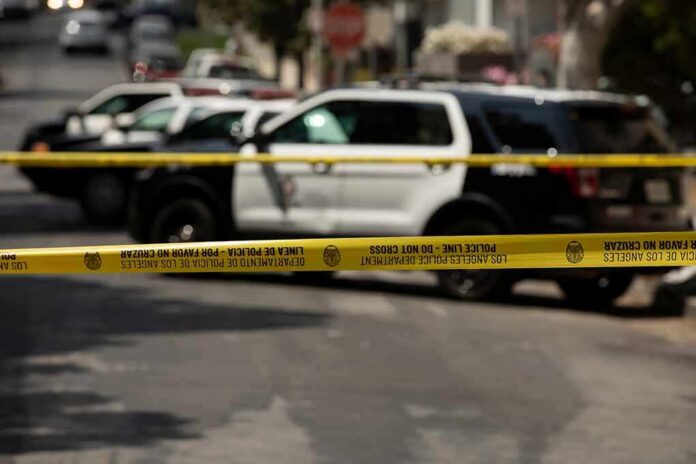
Three people were killed and several others were badly hurt when an SUV drove onto a North Hollywood sidewalk near a busy Metro station during the evening rush.
Story Snapshot
- Police and fire officials reported three pedestrians died at the scene near the North Hollywood Metro area.
- Reports said a southbound SUV went onto the sidewalk and struck vendors and bystanders around 5:55 p.m..
- At least three more people were taken to hospitals with critical injuries, officials said.
- Investigators treated it as a single-vehicle mass-casualty crash; the cause remains under review.
What officials say happened on Lankershim Boulevard
Los Angeles police and fire crews responded around 5:55 p.m. on November 10 after an SUV left the roadway near the North Hollywood B Line station. Officers and medics found multiple victims on the sidewalk and in the street. Three pedestrians were pronounced dead at the scene, according to local reporting that cited police and fire officials. At least three more people were taken to area hospitals with life-threatening injuries, based on statements shared with national outlets.
Witness accounts described a vehicle striking street vendors and bystanders next to the station area near Chandler Boulevard. One outlet reported the vehicle drove onto the sidewalk and hit people who were gathered near food stands. Another report described a white sport utility vehicle traveling southbound that struck pedestrians on the west side of the street. Police did not identify the driver by name. Early reports described the driver as an adult man who survived the crash.
Investigators focus on a single vehicle as casualties mount
Police treated the scene as a single-vehicle mass-casualty crash. Early assessments did not point to a second vehicle, according to reporting that cited investigators on scene. Officials said they were still working to determine why the driver left the roadway. They had not said whether distraction, speeding, a medical emergency, or a mechanical failure played a role. Reporters noted some early differences in address details and injury counts during the first hours after the crash.
The high toll fits a broader pattern seen in dense cities. Federal traffic data show most pedestrian deaths happen in urban areas and often involve a single vehicle leaving its lane or failing to yield. In 2024, 84 percent of pedestrian fatalities were in cities, and 90 percent involved a single vehicle, according to federal safety publications. Nationwide, 7,080 pedestrians died in 2024 as overall pedestrian deaths edged down from 2023 levels.
Why this strikes a nerve across communities
Rush-hour sidewalks should be safe. Yet people selling food, commuting after work, or waiting for a train can be one mistake or one malfunction away from disaster. City leaders often talk about safer streets, but progress feels slow when scenes like this repeat. Many readers on the right and the left see a system that reacts after tragedy instead of preventing it. They want basic competence: clear rules, real enforcement, and quick fixes where risks are obvious.
🚨 LIVE BREAKING — NORTH HOLLYWOOD, CALIFORNIA — AT LEAST 3 DEAD, 3 CRITICALLY INJURED AFTER VEHICLE CRASHES INTO PEDESTRIANS NEAR METRO STATION
📂 Category: Mass Casualty Incident / Fatal Vehicle Crash / Public Safety
📅 Date: November 10, 2026
🕕 Incident Reported:…— WilluChill News. (@Will466513) November 11, 2026
Metro hubs mix cars, buses, cyclists, and crowds. That creates many chances for error. Simple steps help now while the bigger debates continue. Cities can add stronger barriers where vendors and riders gather, tighten turning speeds, improve night lighting, and time signals so people cross with more room. These are not partisan ideas. They are practical tools that save lives when a driver loses control or has a medical episode, no matter the reason behind it.
What to watch next from the investigation
Detectives will review street and transit cameras, map tire marks, and inspect the vehicle. They may download the airbag control module, which can show speed and braking in the final seconds. Hospitals will update injury conditions, and the coroner will confirm causes of death. Police will also check the driver’s health, phone use, and the vehicle’s maintenance. Officials have not released final findings yet, but they said the probe remains active.
The bottom line
Three lives were lost beside a public transit station during the evening commute. The cause is still under review, but the pattern is familiar. Most pedestrian deaths happen on busy urban roads, often in single-vehicle crashes. Communities should not wait for a final report to act on clear risks around crowded sidewalks. Targeted street design, steady enforcement, and basic safeguards can prevent the next family from getting that late-night call.
Sources:
youtube.com, apnews.com, latimes.com, edition.cnn.com, usatoday.com, upi.com, cbsnews.com, boston.com, crashstats.nhtsa.dot.gov