
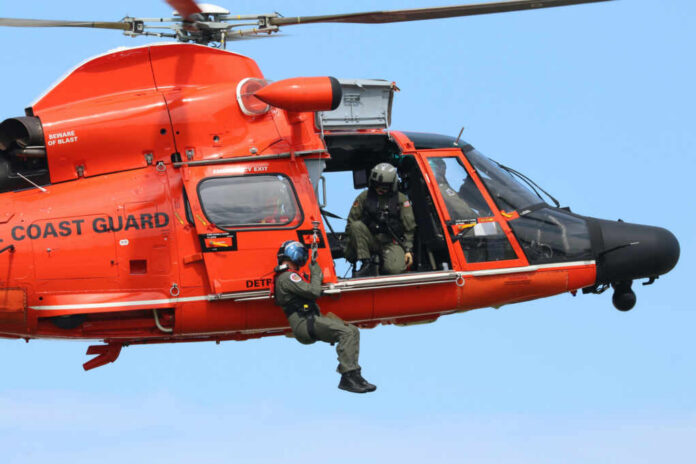
As helicopters plucked terrified campers and families from raging Texas floodwaters, hundreds of ordinary Americans discovered that when disaster strikes, it is often fellow citizens in uniform—not distant leaders—who show up and keep the country’s promises.
Story Snapshot
- More than 700 Texans were rescued, many by helicopter, after catastrophic flash floods swept the Hill Country.
- U.S. Coast Guard rescue swimmer Scott Ruskan saved 165 children and staff from Camp Mystic on his first mission.
- Texas National Guard aircrews helped rescue over 500 people, most of them by helicopter from rooftops and flood zones.
- The disaster exposed both inspiring heroism and growing doubts about whether government is doing enough to protect citizens.
Helicopters Become Lifelines in the Texas Floods
State and federal crews turned the skies over Central Texas into an emergency airbridge after flash floods tore through the Hill Country and along the Guadalupe River. Officials say more than 700 people were rescued from rising water across the region, many hoisted straight into helicopters when roads vanished and bridges failed. Helicopter teams became the main way out for trapped families on rooftops, in trees, and at isolated camps cut off by the flood surge.
At Camp Mystic, an all-girls Christian camp on the Guadalupe River, floodwaters rose so fast that cabins, roads, and escape routes disappeared in the dark. Video and on-scene reports describe campers clinging to buildings and trees as the river jumped its banks and swept through the grounds. Local officials later confirmed that dozens of campers and counselors were dead or missing, even as helicopters and boats pulled survivors from the water and from debris piles downstream.
Coast Guard Swimmer’s First Mission Saves 165 Lives
The U.S. Coast Guard sent a MH-65 Dolphin helicopter crew from Air Station Corpus Christi into the chaos around Camp Mystic as conditions worsened. On board was rescue swimmer Scott Ruskan, on his first operational mission. Over several hours, Ruskan was lowered again and again into violent, debris-filled water and onto flooded structures, helping hoist children, counselors, and staff into the aircraft. Reports say he helped save 165 people during that single mission.
Coverage of the operation describes Ruskan organizing panicked campers into groups, calming them, and deciding who had to be lifted out first based on injuries and risk. Afterward, he rejected the “hero” label, saying the “real heroes were the kids on the ground,” who followed directions, looked out for younger campers, and helped one another survive a night that claimed many lives. His comments struck a chord in a country where many feel leaders talk about sacrifice but rarely share its risks.
Texas National Guard Aircrews Rescue Hundreds More
While the Coast Guard team focused on Camp Mystic and nearby river rescues, the Texas Army and Air National Guard spread out across Central Texas. Guard reports say their soldiers and aircrew rescued at least 525 people from flood zones by Sunday, using helicopters and high-water vehicles across several counties. They flew UH-60 Black Hawk and UH-72 Lakota helicopters into tight canyons, over submerged roads, and above washed-out towns to reach stranded families.
Guard leaders said about 360 of those rescues came by helicopter hoist or rooftop pickup in the first twenty‑four hours alone. Some crews ferried survivors from ad‑hoc landing zones to safer areas, while others dropped off supplies and then flew back into the storms for more rescues. Texas officials noted that more than 1,700 state personnel and close to a thousand vehicles and other assets were eventually deployed as part of the flood response. Still, local sheriffs warned that dozens to more than a hundred people remained missing even after days of searching.
High Death Toll Fuels Questions About Preparedness
Despite the dramatic rescues, the human cost is severe. Various local and national reports put the statewide death toll from this flood disaster at over 100 people, with Kerr County alone losing dozens of residents and campers. Some briefings described at least 82 deaths early on, with numbers rising as search teams reached remote areas and recovered more victims. News from Camp Mystic has been especially painful, with many of the dead and missing being children.
Those numbers have raised hard questions for families who did everything they were told to do and still lost loved ones. Survivors and local leaders are asking how camp operators, counties, and state agencies handled weather warnings, river gauges, and evacuation plans before the water hit. These questions echo earlier disasters where federal reviews praised frontline heroism but criticized planning, coordination, and investment in flood control and emergency systems. Many Texans now want to know why past lessons did not prevent this tragedy.
Heroes on the Front Line, Frustration with the System
The Texas floods highlight a gap many Americans see between the people who wear the uniform and the institutions that command them. Coast Guard crews, National Guard soldiers, game wardens, and local deputies risked their lives and saved hundreds of strangers. Many worked back‑to‑back shifts in dangerous weather, using aging aircraft and strained equipment. Their actions matched the country’s best ideals of courage, duty, and neighbor helping neighbor when the water rises.
🚨Coast Guard rescue swimmer Scott Ruskan saved 165 lives during the catastrophic floods at Camp Mystic. This past year, he received the Legion of Merit from President Donald J. Trump and was just honored with the 2026 ESPY Pat Tillman Award for Service.
A true American hero. ❤️… https://t.co/u5kbOhqe90 pic.twitter.com/q0YM0u0hGT— JAMIE (@CoffeeGirlTX) July 16, 2026
At the same time, both conservatives and liberals who already distrust “the system” see this disaster as more proof that government reacts late instead of planning ahead. Federal reports about disaster relief stress that the military steps in only after civilian systems fail or are overwhelmed. That pattern is playing out again in Texas. Citizens watch heroic rescues on television while also counting the dead and wondering why levees, zoning, siren systems, and evacuation routes were not ready long before the helicopters had to launch.
Sources:
youtube.com, firstpost.com, yahoo.com, dallasexpress.com, ngaus.org, army.mil, verticalmag.com, stripes.com, statedefenseforce.com, nypost.com, people.com, abcnews.com, armyupress.army.mil