
Donald Trump’s full-throated endorsement of Mike Lindell for Minnesota governor is not just another primary skirmish; it is a convergence of loyalty politics, election denialism, and high-stakes defamation litigation that will test both the Republican Party’s risk tolerance and Minnesota’s political center of gravity.
At a Glance
- Trump has given Mike Lindell his “complete and total endorsement,” praising him as “one of America’s greatest and most hardworking patriots” and pledging he will “MAKE MINNESOTA GREAT AGAIN.”
- Lindell enters the August Republican primary as the polling frontrunner, claiming a substantial lead over party-endorsed rivals and attributing much of it to Trump’s backing.
- The MyPillow founder’s candidacy is intertwined with his role as a leading election denier and his exposure to multimillion‑dollar defamation judgments and ongoing suits over false fraud claims.
- Democratic strategists and Minnesota GOP leaders alike question Lindell’s electability, warning that Trump’s endorsement may energize the base while alienating independents and moderates.
- The race exemplifies a broader “defamation renaissance,” in which courts, rather than campaigns, increasingly arbitrate the boundaries of political speech and disinformation.
Trump’s Endorsement: A Loyalty Signal with National Resonance
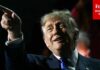
Donald Trump’s support for Mike Lindell is unusually emphatic even by the former president’s own rhetorical standards. In a Truth Social post, Trump lauded Lindell as “one of America’s greatest and most hardworking Patriots” and declared, in all-caps cadence familiar to his followers, that Lindell “WILL MAKE MINNESOTA GREAT AGAIN” and has his “COMPLETE AND TOTAL ENDORSEMENT.” The endorsement did not come in a vacuum; Trump has repeatedly described Lindell as someone who has “sacrificed more than almost anyone else in fighting for our country, especially when it comes to election integrity,” explicitly tying Lindell’s political identity to his efforts to contest the 2020 election results.
Trump’s backing also arrives at a strategically sensitive moment: ahead of an August 11 Republican primary in a state that has been competitive but consistently resistant to Trump himself. Analysts on Minnesota television noted that, in recent cycles, when Trump “steps into races, [he] pretty much decides who’s going to be the Republican nominee,” citing earlier gubernatorial contests in Kentucky and Louisiana as examples of his enduring sway over GOP primaries.[Pi2hg_wY0bA] For Lindell, the endorsement is both validation and lifeline—a public seal of approval from the figure whose narrative he has championed for years.
Mike Lindell’s Case to Voters: Businessman, True Believer, Survivor
Lindell’s public reaction to the endorsement underscores how central Trump is to his political brand. In a full interview with WCCO, Lindell described learning of the endorsement via text from colleagues at Lindell TV, expressing genuine surprise and “excitement” at the news.[Yq2EOnDYpcQ] He quickly linked the endorsement to an internal Big Data Poll that, he said, showed him at 42.6% among Republican voters, compared with 17% for Minnesota House Speaker Lisa Demuth and 7% for Kendall Qualls—a margin he attributed directly to Trump’s backing.[Yq2EOnDYpcQ] Public polling broadly tracks the notion that Lindell leads the Republican field; a SurveyUSA/KSTP poll found him ahead of Demuth and Qualls among GOP primary voters, though at lower absolute numbers, suggesting that the race remains fluid under low-turnout conditions.
In building his case to Minnesotans, Lindell leans heavily on an identity he has cultivated for years: the pragmatic businessman who overcame addiction to build a major Minnesota-based enterprise. He describes himself as someone who “runs things like a business,” promising detailed budget plans to tackle affordability, property taxes, and what he casts as pervasive fraud in state government.[Yq2EOnDYpcQ] That personal narrative—recovery from substance abuse, entrepreneurial success, high-energy persona—is familiar to viewers from MyPillow’s ubiquitous infomercials and Lindell’s frequent appearances at conservative rallies.
Yet Lindell’s platform is not simply economic populism. He repeatedly foregrounds his investment in contesting alleged election fraud, telling local media that he has spent roughly $8 million since 2018 on investigations, legal efforts, and public campaigns related to voting machines and election integrity.[Yq2EOnDYpcQ] For his supporters, that outlay is evidence of commitment; for his critics, it is proof of fixation on a debunked narrative. Either way, it is central to who he is as a candidate.
Election Denial and the Weight of Defamation Judgments
Any serious assessment of Lindell’s candidacy must grapple with the legal architecture surrounding his election claims. Lindell was among the most prominent advocates of the theory that voting machines—particularly those manufactured by Dominion Voting Systems and Smartmatic—were rigged to deprive Trump of victory in 2020. Those claims have been extensively investigated and found to lack evidentiary support; multiple courts have described them as false and defamatory.
In Colorado, a jury concluded that Lindell defamed a former Dominion employee, Eric Coomer, by repeatedly labeling him a “traitor” who helped steal the election, awarding $2.3 million in damages. Lindell is appealing that judgment, but the verdict stands as a formal legal finding that his statements crossed the boundary from political rhetoric into actionable defamation. Separately, a federal judge in Minnesota ruled that Lindell defamed Smartmatic with 51 false statements about the company’s role in the 2020 election; Smartmatic is pursuing “nine‑figure damages” against Lindell and MyPillow. These suits sit alongside a broader pattern of litigation, including a now‑dropped $1.3 billion defamation case by Dominion’s successor company, Liberty Vote, over similar claims.
For Minnesota voters, the practical consequence is that Lindell is campaigning under the shadow of ongoing and potential liabilities that could reach into the tens or hundreds of millions of dollars. Legal exposure of that magnitude is not abstract; it shapes how opponents frame him—as an “election‑denying Trump clone,” in the language of Minnesota Democrats—and it raises concrete questions about how a governor embroiled in such litigation would manage conflicts of interest and public responsibilities.
The GOP’s Internal Rift: Base Energy vs. Electability Concerns
Trump’s endorsement highlights a long‑running tension inside Republican politics: the trade‑off between energizing the MAGA base and maintaining broad electability in swing or lean‑blue states. Minnesota GOP leadership has been notably cool toward Lindell. Party chair Alex Plekish and other leaders have publicly flagged “serious financial baggage,” including delinquent property taxes and the cascade of defamation costs, and urged voters to support the convention‑endorsed candidate instead.[0PPov0uxwh4] Strategists interviewed on local television warned that despite Lindell’s high name recognition and strong appeal to committed Trump supporters, his general election prospects against a seasoned Democrat are weak.
Democratic analyst Abu Amara captured this dynamic succinctly: Trump’s endorsement “fundamentally changes the race on the Republican side,” likely ensuring Lindell’s path to the nomination, but it simultaneously “energizes Democrats” and repels independents who see Lindell as the Minnesota version of Trump.[Pi2hg_wY0bA] Amy Klobuchar, the Democratic‑Farmer‑Labor Party’s presumptive nominee, reinforced that framing with a pointed line: “Mike Lindell is Donald Trump’s choice. I hope to be Minnesota’s.” The contrast is designed to paint Lindell as an outsider imposed by national forces rather than a candidate emerging organically from Minnesota’s political culture.
Polling supports the concern. A Star Tribune survey cited by KARE 11 showed Lindell trailing Klobuchar by around 17 points in a hypothetical matchup.[0PPov0uxwh4] More recent social media chatter from political data analysts places Lindell 17–20 points behind Klobuchar, suggesting persistent skepticism among swing voters despite his dominance within the Republican base.[MarkYorkMN] In effect, Trump’s endorsement may be decisive in the primary yet counterproductive in November—a strategic gamble the national GOP has made before, with mixed results.
Policy Proposals: Immigration, Budgeting, and “Election Integrity”
Beyond personality and legal drama, Lindell has begun sketching policy ideas that reflect his outsider-businessman identity. His most discussed proposal is an immigration plan offering conditional visas to undocumented immigrants who lack criminal records, allowing them to work legally and pay taxes, while deporting those convicted of felonies or serious misdemeanors.[Yq2EOnDYpcQ] He links this to claims that Minnesota spends approximately $110 million annually housing noncitizens with criminal histories, positioning his plan as both humane (reducing dangerous confrontations with immigration enforcement) and fiscally responsible.
As of mid‑summer, however, Lindell has not released the detailed budgetary analysis or implementation framework that such a policy would require. He has promised to publish comprehensive budget plans before the primary, arguing that his business experience equips him to “make Minnesota more affordable” and root out fraud in state spending.[Yq2EOnDYpcQ] Until those documents materialize, voters must evaluate the proposals largely at the level of intention and rhetoric rather than line‑item specifics.
On election administration, Lindell advocates transitioning away from machine counting to hand counting ballots, asserting that electronic systems are vulnerable to manipulation. Election officials and security experts have generally taken the opposite view, arguing that certified voting machines, paired with paper backups and audits, are more reliable and less error‑prone than statewide hand counts. This is one area where Lindell’s policy preferences align closely with the beliefs that produced his defamation exposure, raising the possibility that his gubernatorial platform would keep Minnesota at the center of national debates over election administration.
Defamation Law as a New Arbiter of Political Truth
Zooming out, Lindell’s situation sits squarely inside what legal scholars have called a “defamation renaissance”—a marked increase in libel and slander cases, many of them heavily politicized, as actors across the ideological spectrum turn to courts to police disinformation. Historically, defamation law focused on protecting individual reputations, and landmark cases such as New York Times v. Sullivan established the high “actual malice” standard that public officials must meet to recover damages. In the last decade, however, defamation suits have become tools for corporations, politicians, and media figures to push back against what they regard as harmful falsehoods circulating in the digital ecosystem.
Election technology companies like Dominion and Smartmatic exemplify this trend. Rather than treating false claims of machine rigging as mere political noise, they have aggressively pursued civil damages against high‑profile figures—including Lindell—asserting not only reputational harm but systemic risk to democratic processes. Commentators in law reviews and professional journals have noted that such cases are increasingly framed as vehicles for “truth‑seeking” in a disinformation‑saturated environment, though they also raise concerns about chilling legitimate political expression and fostering so‑called SLAPP suits (Strategic Lawsuits Against Public Participation).
Trump’s endorsement of a candidate at the center of this legal storm shapes the broader narrative: a leading national figure is effectively validating, or at least overlooking, the conduct that courts have repeatedly judged defamatory. For some voters, that alignment is proof of courage against an overreaching establishment; for others, it is evidence that the party remains tethered to a narrative the legal system has already deconstructed.
What It Means for Minnesota’s Political Trajectory
The practical question for Minnesota is straightforward but consequential: does a Trump‑backed, election‑denying businessman with substantial legal baggage represent a viable path to governorship in a state that has consistently chosen more conventional political profiles? Lindell’s supporters point to his grassroots strength—large crowds at events, high favorability among self‑identified Republicans, and an image as a fighter who kept going even as retailers dropped his products and federal agents seized his phone.[u1Lf_iyZX2Y] They see Trump’s endorsement as a culminating reward for loyalty and a signal that the national movement stands behind their candidate.
Opponents, including many within the GOP, worry that the same traits that make Lindell compelling to the base make him toxic to the broader electorate. They cite his lagging numbers against Klobuchar, his fixation on a settled election dispute, and the risk that ongoing litigation could distract from governing or entangle the state in further controversy.[0PPov0uxwh4] Democratic strategists openly cheer the matchup, predicting that Lindell will galvanize their voters and shape down‑ballot outcomes in their favor.[Pi2hg_wY0bA]
Whichever side proves right, the Trump–Lindell alliance will stand as a case study in contemporary American politics: a moment when a major party embraced a candidate defined as much by courtroom records as campaign speeches, and when the line between political messaging and legally sanctionable falsehood ceased to be theoretical. For Minnesota’s voters—particularly the independents who decide statewide races—the choice is not only between two individuals, but between competing visions of how truth, loyalty, and accountability should function in democratic life.
Sources:
theguardian.com, bostonglobe.com, the-independent.com, nytimes.com, yahoo.com, cbsnews.com, nbcnews.com, businessinsider.com, swlaw.com, justia.com, newsweek.com, abajournal.com, knightcolumbia.org, freedomforum.org