
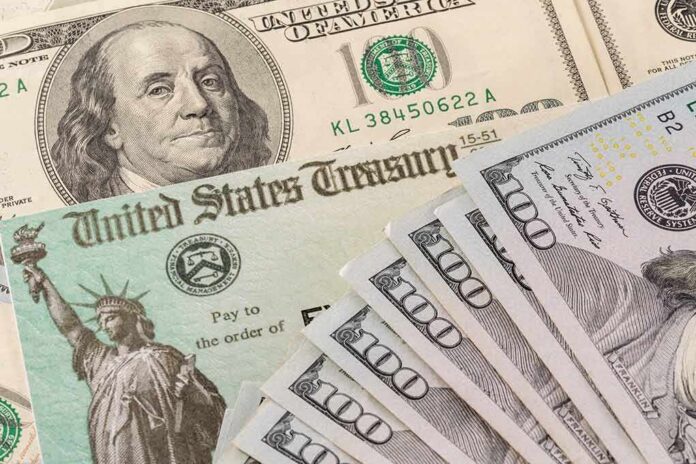
Two Long Island men admitted they helped drain $46 million from taxpayers by filing thousands of fake pandemic tax-credit claims, turning a rescue program into a personal cash machine.
Story Highlights
- Father and son pleaded guilty in a $600 million Employee Retention Credit filing scheme
- Prosecutors say over 8,000 false payroll tax returns were submitted from 2021 to 2023
- Internal Revenue Service paid about $46 million before the scheme was stopped
- Investigators say proceeds funded luxury cars, jewelry, and designer goods
Guilty Pleas Cap a Sweeping Pandemic Tax Case
The Justice Department said Keith Williams and his son, Jamari Lewis, pleaded guilty to conspiracy to defraud the United States and wire fraud in a large Employee Retention Credit case. Prosecutors charged seven people in total and called it the largest Employee Retention Credit scheme in the country. The case centers on false payroll tax filings sent to the Internal Revenue Service that claimed pandemic relief for wages that prosecutors say did not qualify.
Court filings state the group filed more than 8,000 quarterly payroll tax returns between November 2021 and June 2023. Those filings sought over $600 million in credits designed to keep workers on payrolls during the pandemic. The Internal Revenue Service did not pay all of it. Officials say the agency sent about $46 million before the operation was disrupted. Guilty pleas convert the core allegations into admitted crimes by Williams and Lewis.
How the Scheme Worked and Where the Money Went
Prosecutors say Williams used a business called Credit Reset to act as a tax preparer and submit the returns. The filings allegedly overstated wages or claimed shutdown effects that were not real. According to the U.S. Attorney’s Office, more than $44 million of the proceeds flowed into jewelry, electronics, designer clothing, and luxury cars. Those purchases can leave paper trails, which often help investigators trace money and support asset seizures during enforcement.
The Justice Department says the Internal Revenue Service paid approximately $46 million to the defendants and clients they recruited. That figure differs from earlier reporting of about $44 million paid out, which may reflect updated accounting as the case moved from charges to pleas. Prosecutors also stress the gap between the total requested credits and the amounts actually disbursed, underscoring both the scale of the attempt and the government’s partial prevention.
Why This Case Matters Beyond Long Island
This prosecution sits within a national push to clean up Employee Retention Credit abuses. The Financial Crimes Enforcement Network reported 323 investigations tied to more than $2.8 billion in potentially fraudulent Employee Retention Credit claims across tax years 2020 through 2023. The Treasury Inspector General for Tax Administration also flagged wide problems, finding many questionable claims and urging tighter filters and reviews. These numbers show the program’s draw for cheats and the strain on oversight.
Speed beat scrutiny in many relief programs during the crisis. That trade-off helped honest businesses survive, but it also opened doors for fraud. This case shows how a few actors can process filings at industrial scale when checks are weak. It also shows enforcement catching up. Guilty pleas here will likely bring restitution orders, forfeitures, and prison time. They also warn tax preparers and promoters that high-volume schemes face tough penalties when the facts come into focus.
The Bigger Trust Problem for Taxpayers
Taxpayers who played by the rules see stories like this as proof that systems are easy to game. People on the right and the left share that anger when they read that luxury cars were bought with relief money meant to save jobs. Many already feel that insiders profit while regular families struggle with bills and taxes. Cases like this harden that view and raise a basic demand: if Washington can move fast to spend, it should move just as fast to guard the till.
The government has started to tighten reviews and slow down refunds that look risky, but that brings another tension. Honest employers face delays while the Internal Revenue Service sorts the bad from the good. That balance will define how people judge pandemic-era programs in hindsight. For now, the facts are clear in this case: two defendants admitted to crimes, the money trail points to lavish spending, and federal agencies are pushing broader crackdowns to protect public funds.
Sources:
newsday.com, therealistjuggernaut.com, justice.gov, westchester.news12.com, tigta.gov