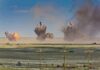


Federal monitors reported zero airborne lead an hour after the Iowa Army Ammunition Plant detonation, easing immediate fears while longer-term tests continue.
Story Snapshot
- The Environmental Protection Agency said real-time air monitors showed zero lead about one hour after the blast.
- Monitors ran through the event and logged data every five minutes across the projected plume path.
- The U.S. Army coordinated broad pre-, during-, and post-blast sampling of air, soil, and water.
- Initial “no detection” does not rule out later findings from soil or water testing.
What Officials Reported After The Blast
The Environmental Protection Agency (EPA) said that one hour after the controlled detonation near Middletown, Iowa, all its real-time air monitors showed zero detection of airborne lead across the region. EPA said the instruments never stopped collecting data during the event and were set to post readings in five-minute steps, giving a time series and not a single snapshot. Local outlets relayed those early zeros as of mid-morning Central Time.
The U.S. Army led the operation to destroy nearly five tons of degraded lead azide at the Iowa Army Ammunition Plant, saying a controlled blast reduced the risk of an uncontrolled explosion. The Army said federal, state, and local teams supported the work, including emergency management and health agencies. The plan included fixed sensors and mobile teams to check air during and after the blast, as well as follow-up checks on land and water around the site.
How The Monitoring Worked
EPA said the monitoring network ran before, during, and after detonation, and was designed to record a new data point every five minutes. The agency placed real-time air monitors around the area, including along the predicted path of any plume, so results would reflect conditions downwind and not only at the blast zone. NBC Chicago cited EPA’s statement showing no readings above 0.0 by about one hour after the event, in line with the agency’s update.
EPA also described a wider campaign that included more than 1,200 samples across air, land, and water in the run-up to the detonation. That baseline data matters because it can show changes after the event. The Army said post-blast checks would continue with stationary sensors and mobile teams, building a fuller picture of where any material might have traveled or settled once the plume dispersed.
What “Zero Detection” Means For Health And Next Steps
EPA’s initial “zero detection” update addresses early air exposure risk and suggests no lead was measured in air at the monitor sites one hour after the blast. That is a positive sign for people nearby who worried about breathing in lead dust. Still, “not detected” in real time does not answer longer-term questions about soil, dust, vegetation, or water, which require separate sampling and lab analysis already planned by the Army and EPA.
1/ The U.S. Army completed a controlled detonation of nearly five tons of unstable lead azide at an Iowa ammunition plant today.
Trump administration officials called the operation a success, reporting that initial air monitoring detected no airborne lead, according to…
— Retro Report (@RetroReport) November 25, 2026
EPA lead guidance notes that very low measurements can be shaped by method limits and instrument variability, so a reported zero should be read as “not detected under this method” rather than proof of absolute absence. Officials will need to release detailed station data, methods, and lab results to show the full picture. For families downwind, that means today’s air news reduces immediate worry, while final reassurance depends on follow-up soil and water results in the days ahead.
Sources:
americanpartisan.org, epa.gov, cbs2iowa.com, army.mil, nbcchicago.com, desmoinesregister.com