

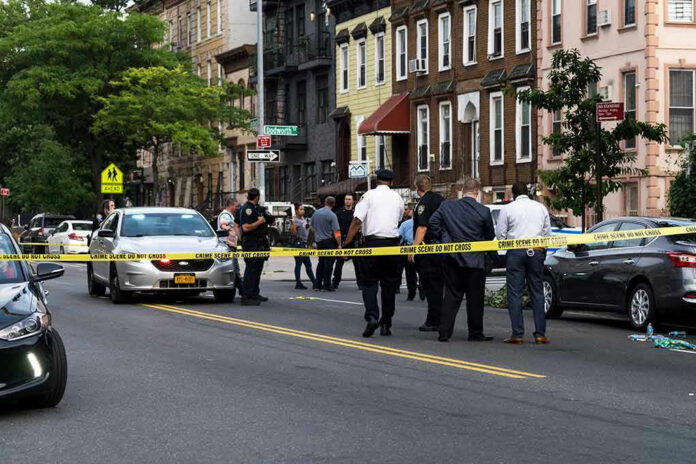
A 62-year-old woman was found dead in her Chinatown apartment one day after a repeat offender was released under New York’s bail rules, sharpening fears that the system is failing public safety.
Story Highlights
- Police charged a 25-year-old man with murder after a 911 call led officers to the scene.
- Reports say the victim had neck and facial trauma; a 66-year-old man was also injured.
- The suspect was released on a petit larceny case the day before the killing, per reports.
- Court summaries list multiple pending 2026 cases for the suspect before the homicide.
Police Response and Charges Filed
New York Police Department officers said they arrived at 27 Catherine Street in Manhattan’s Chinatown after a 911 call on November 20. Officers found a 62-year-old woman unconscious and unresponsive inside a residence. Police later charged 25-year-old Florentino with murder. Reported charges included attempted murder, two counts of strangulation, assault, attempted assault, and burglary. Authorities said the investigation is ongoing, and no plea or verdict has been entered at this time.
Police reports described signs of a violent attack. The woman had trauma to her face and neck. A 66-year-old man at the scene had a head injury and a cut to his face after being struck with a glass bottle, according to coverage of the police account. Officials said emergency responders pronounced the woman dead at the scene. The Office of the Chief Medical Examiner would formally determine how she died, according to local reporting.
Timeline Before the Homicide
News reports state police arrested Florentino on a petit larceny charge on November 16. He was released on November 19 because the charge was not eligible for bail under state law. The alleged killing occurred on November 20, creating a tight window between release and the fatal attack. These reports also cite earlier arrests and pending cases in 2026, though they do not reproduce the underlying court records.
A Chinese-language court-summary report described at least five matters on the suspect’s 2026 docket before the homicide. The summary cited charges involving stolen property, criminal mischief, arson, controlled substance possession, and petit larceny. It also noted a bench warrant issued October 21 in a September 28 case, executed November 13, followed by a non-monetary release about a week before the killing. The report did not publish the dockets or orders themselves.
Public Safety Fears and What Data Shows
This case arrives amid a long-running fight over bail and pretrial release. Supporters of tougher detention point to severe crimes after release as proof that the system is broken. Supporters of current law answer with city data that shows such events are rare. The New York City Comptroller’s office reported that roughly 95 to 96 percent of people awaiting trial were not rearrested in the measured months, and about 99 percent were not rearrested for a violent felony.
The Chinatown killing allegation will likely fuel calls from both sides. Conservatives see a repeat offender walking free and a neighbor dead. Liberals see pressure to roll back reforms that aimed to end wealth-based detention. Many Americans, across party lines, see a system that seems unable to sort high risk from low risk in time to prevent tragedy. They worry that government choices favor process over safety and leave communities to pay the price.
What Is Confirmed and What Is Not
Police have publicly named the suspect and listed specific charges. Reporters at the scene described the injuries to the woman and the wounded man. News outlets also reported the recent release on a petit larceny case and the cluster of pending matters. Authorities have not charged a sex crime, and outlets said the medical examiner would finalize cause and manner of death. The charges are allegations, and the courts will determine guilt or innocence.
Policy Questions Raised by the Case
City leaders now face hard choices. Lawmakers can review how courts weigh risk when charges are not bail eligible. Courts can examine whether better screening, supervision, or treatment could flag danger sooner. Police and prosecutors can assess how quickly they share risk details with judges. The public wants simple answers, but the law must balance safety, fairness, and cost. One case should not set policy by itself, yet victims deserve more than thoughts and prayers.
Sources:
nypost.com, newsbreak.com, cbsnews.com, yahoo.com, abc7ny.com, worldjournal.com