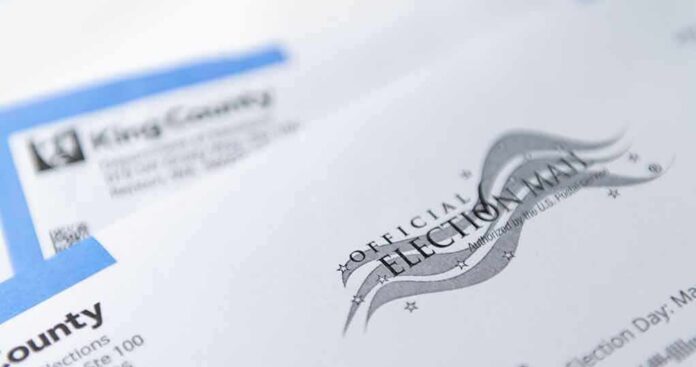
The Justice Department asked a federal court to stop California from counting mail ballots flagged as likely cast by noncitizens, forcing a showdown over how the state verifies voter citizenship.
Story Snapshot
- The Justice Department sued California, alleging about 20,000 likely noncitizens are on voter rolls.
- Federal officials asked the court to set aside those mail ballots until citizenship is verified.
- California leaders say the list lacks proof and refuse to withhold ballots without evidence.
- Prosecutors charged 28 people in related voting cases, but those do not prove all 20,000.
What The Federal Lawsuit Seeks To Do
The Justice Department filed a complaint on October 15, 2026, against California officials. It alleges that more than 20,000 “likely” noncitizens are registered and that some may have voted in federal elections. The department asked the court to order the state to set aside vote-by-mail ballots from those listed voters until each person’s citizenship is verified. The filing aims to pause counting those ballots in the coming federal election while status checks occur.
Federal officials say they built a list by matching state voter data with federal immigration records. They delivered a spreadsheet to California with names, birth dates, and addresses. A department spokesperson said the roughly 20,000 entries had been “manually verified,” and the number could rise. Los Angeles County reportedly received the file on a password-protected drive. County officials raised data security and privacy concerns about opening it.
Why California Is Pushing Back
California Secretary of State Shirley Weber said the federal government has not provided evidence proving the people on the list are noncitizens. She said the state will not disenfranchise voters based on what she called an unsupported and likely inaccurate claim. California Attorney General Rob Bonta also criticized the federal approach and said the state will not withhold ballots. State officials said they would review specific proof if it is supplied with workable detail and method.
State leaders also pointed to past overcounts by federal teams. They cited a shift from an earlier figure of up to 190,000 possible noncitizens to about 20,000 now, calling that change evidence the first estimate was wrong. Independent election experts quoted in state media questioned the matching methods. Critics say late timing and unclear documentation risk errors that could strip valid voters of their rights if the court grants the request.
What Is Proven, What Is Not, And What Comes Next
Federal prosecutors have charged 28 people in California with voting-related crimes this month. Reports say the defendants are tied to the same data effort by the department. These cases are proof that some unlawful activity can occur, but they do not show that the remaining thousands on the list are noncitizens or voted illegally. Each charge will move through court. The larger list still lacks public, voter-by-voter documentation at this stage.
The clash exposes a core weakness that angers both left and right: basic systems do not talk to each other well. The Justice Department wants fast, federal checks to protect election integrity. California insists that due process and accurate records must come first to protect legal voters. A court could order a careful audit, with a neutral review of records, error rates, and which listed people actually returned ballots. That step could bring clarity without mass disenfranchisement.
Why This Fight Matters Beyond California
Election integrity and voter access both rely on trust in clear rules and clean data. When the federal government claims a large list but does not show its work, the public doubts grow. When a state relies on self-attested citizenship without fast, independent checks, doubts also grow. The path forward is not partisan. It is about transparent matching methods, timely verification before ballots are counted, and a fair chance for any voter to correct an error.
Sources:
thegatewaypundit.com, justice.gov, usatoday.com, abcnews.com, newsweek.com, latimes.com, apnews.com, calmatters.org, yahoo.com, kqed.org, brennancenter.org