

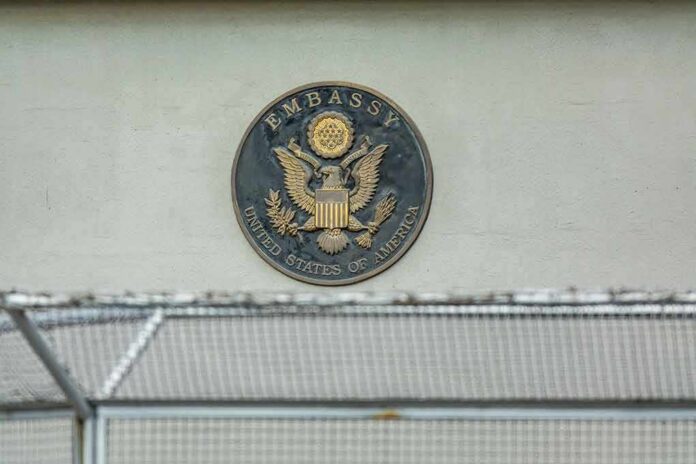
Washington ordered non-emergency U.S. embassy staff and families to leave Saudi Arabia after Red Sea-linked Houthi attacks raised safety risks, marking a rare, rapid drawdown with regional stakes.
Story Snapshot
- State Department ordered departure for non-emergency employees and families in Saudi Arabia
- Embassy notice ties risks to recent Houthi attacks on Red Sea shipping
- Spokesperson says order applies to Saudi Arabia only, narrowing broader reports
- Security alerts followed deadly strikes, including on Riyadh’s airport, per reporting
What Washington Ordered And When
On March 8, 2026, the U.S. Embassy in Saudi Arabia said the Department of State ordered non-emergency employees and family members to leave the country due to safety risks. The notice amended a March 3 move that had only allowed voluntary departure. The embassy cited a worsening security environment. The update is an official public record from the mission. It sets the status change and the rationale but does not list how many people must depart or the timelines involved.
State Department spokesperson Tommy Pigott later confirmed the scope on the record. He said the ordered departure applied to non-emergency personnel and family members in Saudi Arabia only. That statement pushed back on broader media claims that suggested a wider, Gulf-wide evacuation. The specific language matters. An ordered departure is a technical status that requires certain categories to leave. Essential staff can remain to keep core diplomatic functions running.
Why The Security Picture Shifted
The embassy notice connects the risk to recent Houthi attacks against vessels in the Red Sea. Pigott said the Iranian-supported group also attacked civilian airports and other key sites in Saudi Arabia, causing casualties and travel disruption. These threats shift fast and can spill across borders and sea lanes. Reuters reporting described a security alert from the embassy warning of more attacks after deadly strikes, including one on Riyadh’s airport, which raised fear of follow-on hits.
Houthi activity in and around the Red Sea has harmed shipping and strained air travel. Attacks on tankers and ports can raise energy prices and slow freight. Airlines may reroute or pause flights when missiles and drones threaten major hubs. When risk spikes near a capital city airport, standard playbooks kick in. That often includes drawing down families and non-essential staff first to reduce exposure while keeping core services open to support citizens and partners.
How “Ordered Departure” Differs From “Evacuation”
Media reports often use “evacuation” to describe any embassy drawdown. But the government uses specific terms tied to law and policy. Authorized departure lets people choose to leave. Ordered departure requires them to leave if they are in the named groups. Essential operations continue with a smaller team. During past crises, such as Afghanistan and Ukraine, Washington used these steps in stages to keep services running while lowering risk for families and non-essential staff.
This distinction explains why some accounts seemed broader than the official line. Agence France-Presse cited a diplomatic source saying all American staff and families were told to leave Saudi Arabia. Reuters cited unnamed officials saying departures were being prepared at Gulf posts. Pigott then narrowed it, saying the order applied to Saudi Arabia only and only to the listed categories. Such gaps often reflect different terms, changing plans, or early sourcing before public guidance is final.
What It Means For Americans And U.S. Policy
American citizens in Saudi Arabia face higher travel and shipping risks as Houthi attacks continue in the Red Sea corridor. The embassy’s reduced footprint may slow some services, like routine visas or public events, while emergency help remains. Families of U.S. government workers now must leave, which disrupts schools, housing, and daily life. These steps carry real costs for normal people, not just officials. They also show how regional wars and drone warfare can reach civilians far from front lines.
For U.S. policy, the move fits a common crisis pattern. Washington signals concern, limits exposure, and keeps enough staff to protect citizens and coordinate with partners. Saudi Arabia is a major energy and security partner. The Red Sea is a key trade route. Each new Houthi strike adds pressure on supply chains and air travel. Americans across the political spectrum worry when government actions feel reactive. Clear terms and public updates help, but classified threats mean some details will remain withheld.
Sources:
insiderpaper.com, nampa.org, sa.usembassy.gov, worldisraelnews.com