
Donald Trump turned a routine programming choice by ABC and NBC into a new license threat, again putting the power of the federal government over the press in the spotlight.
Story Snapshot
- Trump said ABC and NBC should lose their broadcast licenses after they did not air his speech live.
- He called the networks biased and said they gave him mostly negative coverage.
- The dispute fits a longer pattern of Trump attacking broadcasters that challenge him.
- Federal law and broadcast rules make license revocation for news coverage a very hard case to win.
What Trump Said About the Networks
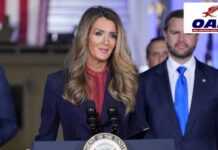
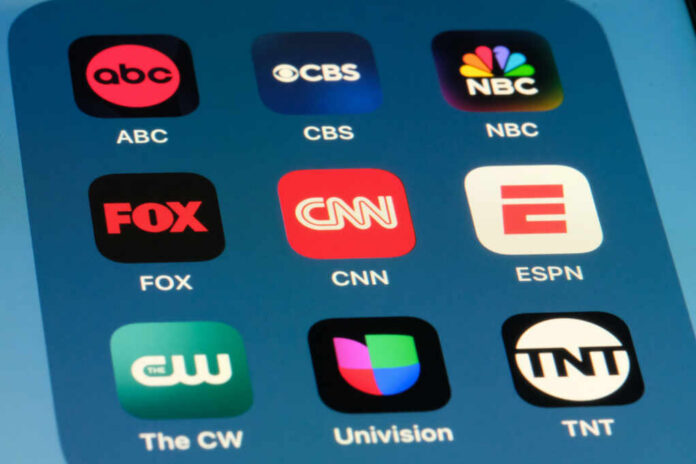
Trump used his remarks to single out ABC and NBC for not carrying his primetime address live. Reuters reported that he said the networks should lose their licenses and described their coverage as misleading and inaccurate. NPR also reported that Trump called ABC and NBC two of the worst and most biased networks and claimed 97 percent of their coverage of him was bad stories.
That message mattered because Trump did not frame the issue as a simple scheduling choice. He treated it as a punishment problem, saying the networks were using public airwaves while failing to show his speech in the way he wanted. The result was a sharper fight over media access, one that turns a broadcast decision into a test of loyalty in the eyes of his supporters.
A Familiar Fight Over Broadcast Power
This was not Trump’s first push to punish broadcasters over coverage he disliked. Reuters reported that he has repeatedly urged the Federal Communications Commission to revoke ABC and NBC licenses, while CNBC noted that he has also made similar threats against other stations and networks. CNN has reported that Trump has made such threats many times over the past two years.
That pattern helps explain why the latest episode drew attention fast. Trump’s supporters often see the press as hostile and disconnected from ordinary voters, while critics see his comments as an attempt to scare newsrooms into softer coverage. Both views point to the same basic problem: a president using regulatory threats to answer criticism.
What the Law Allows
Broadcast licenses are not handed out on a president’s personal preference. Brookings said the Federal Communications Commission does not have the power to revoke a station’s license just because a political candidate dislikes a newscast. The same source noted that the First Amendment is a core barrier to using licensing as punishment for news coverage.
That legal limit makes Trump’s threat more political than practical. CNBC explained that a station can lose a license only through a formal federal process tied to the public interest, not because a network airs or skips one speech. In plain terms, Trump can pressure broadcasters, but he cannot simply order their licenses taken away because they refused to carry his address live.
Why the Fight Resonates Beyond Media Circles
The clash lands at a time when many Americans already distrust both government and large news companies. Trump’s base sees strong media criticism as proof that elites still control the narrative, while many opponents see his threats as another sign of abuse of power. Either way, the episode feeds a broader sense that public institutions are being pulled into political warfare instead of serving the public plainly.
The immediate issue is still simple: major networks chose not to air Trump’s speech live, and he responded by calling for punishment. Reuters, NPR, and CNBC all show the same basic sequence, while the legal record points in the opposite direction on license revocation. That gap between political outrage and legal reality is what keeps this story alive.
Sources:
mediaite.com, reuters.com, youtube.com, internazionale.it