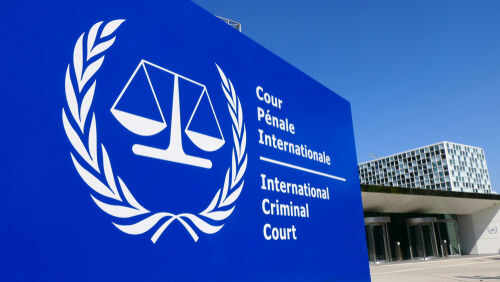
Washington has declared the International Criminal Court a national security threat and is using sanctions to stop it from targeting Americans and key allies.
Story Highlights
- The United States is not a party to the Rome Statute, and the White House says the court lacks treaty-based power over Americans.
- Executive Order 14203 declared a national emergency and authorized sanctions to block ICC actions against protected persons.
- The administration sanctioned the prosecutor and several judges, and set conditions related to Israel and Afghanistan probes.
- European Union officials and rights groups condemned the campaign, while three ICC judges filed a legal challenge.
White House Defines the Threat and Cites U.S. Sovereignty
Executive Order 14203 states the United States is not a party to the Rome Statute and rejects any attempt to prosecute Americans without U.S. consent. The order declares a national emergency, citing an unusual and extraordinary threat from the court’s efforts against protected persons. The policy frames this as a defense of the Constitution, command authority, and service members deployed abroad. The stance rests on a clear point: no treaty binds Americans to the court’s reach absent U.S. approval.
Secretary of State Marco Rubio described a whole-of-government effort to limit the court’s ability to act against U.S. personnel. Officials say the mission is to protect American sovereignty and stop foreign bodies from second-guessing battlefield decisions. The administration links this push to concerns that global institutions can pressure U.S. troops and leaders for political reasons. The White House underscores that accountability for Americans belongs in U.S. courts, not in foreign tribunals.
Sanctions Target Prosecutors and Judges, With Clear Red Lines
The State Department imposed sanctions on top court figures, including the chief prosecutor and multiple judges. Sanctions restrict travel and access to the U.S. financial system. A June 2025 report confirmed penalties on four judges, while an August 2025 release detailed designations for officials tied to efforts against U.S. and Israeli nationals. These steps aim to raise costs for any move against Americans and to warn others who would assist such cases.
U.S. officials also set conditions for easing pressure. Reports say Washington asked the court to shut down the Afghanistan inquiry focused on earlier years and to halt efforts against Israeli leaders. The administration also asked for safeguards so probes cannot be aimed at the president or top U.S. officials. If the court refuses, more penalties could follow. The message is simple: stop targeting non-party states, or face isolation by the United States.
Supporters See Defense of Troops; Critics Claim Assault on Justice
Backers argue the policy shields service members and affirms that American courts answer for American actions. They note the United States never ratified the treaty and say foreign prosecutors should not judge U.S. battlefield choices. They also point to the 2024 warrant against Israel’s prime minister as proof of political drift, which the administration called a moral outrage and a false equivalence with terrorists, fueling this campaign to protect an ally under fire.
You are pushing to dismantle the ICC because:
1) The ICC is prosecuting Israel and Netanyahu for war crimes.
2) The Trump administration committed war crimes against Iran by blowing up an elementary school.
3) The US wants to continue to commit war crimes with impunity.
— Echoes Of history (@AuthorianEchoes) July 15, 2026
Opponents, including European Union officials and major rights groups, call the U.S. push unacceptable and dangerous for global accountability. They argue the court only acts where countries signed the treaty, or where crimes occur on member territory, and say sanctions are an abuse meant to bully justice seekers. Three court judges also sued the administration, pressing a legal test of the emergency order and the reach of U.S. sanctions policy in this fight.
What Has Not Happened Yet, and What Comes Next
No cited evidence shows an actual prosecution of a U.S. citizen by the court. The Afghanistan file shifted focus in 2021, and the court has not brought a case on American soil. That gap does not move the White House. Officials say the threat is real because the court claims power to act when alleged crimes touch treaty members, which could implicate Americans deployed overseas. Expect the administration to tighten sanctions if red lines are crossed.
Sources:
gatewayhispanic.com, whitehouse.gov, aljazeera.com, state.gov, hls.harvard.edu, foreignpolicy.com