

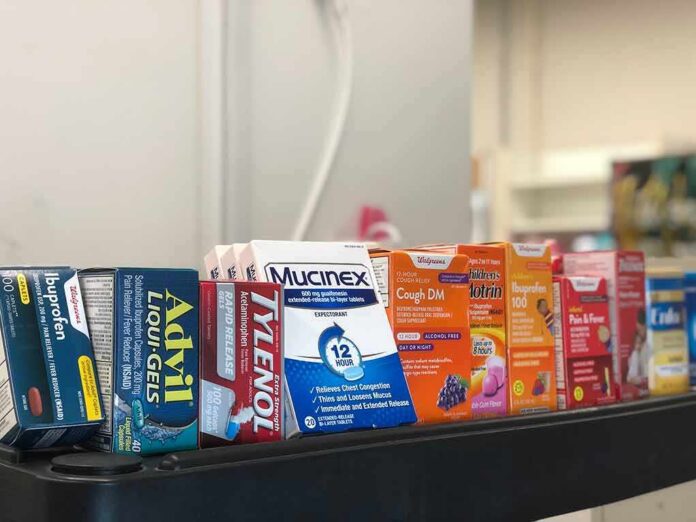
Common painkillers like ibuprofen send thousands to hospitals each year when people exceed doses or mix drugs the wrong way.
Story Snapshot
- Health services warn that too much ibuprofen can cause bleeding, kidney damage, and emergencies.
- Poison and safety data show thousands of serious ibuprofen exposures, including hospital stays.
- Most overdoses cause mild symptoms, but severe cases do occur, especially at very high doses.
- Clear dose limits and early help can prevent many of these harms.
Clear Warnings On A Common Drug
National health guidance says taking too much ibuprofen can be dangerous and may need urgent care. The advice explains that extra tablets, liquids, or granules beyond the label can trigger stomach bleeding, chest pain, or breathing trouble. People are told to seek help fast if they pass black stools or vomit blood, since those are signs of internal bleeding. These warnings come from official guidance for adults and for products that combine ibuprofen with codeine.
Drug makers and public health posters set firm daily limits. One national dosing guide caps adult ibuprofen at 2,400 milligrams per day. Package inserts tell people to contact a doctor or go to the hospital if they take more than the label allows, or if a child takes the drug by accident. The leaflets also list nausea, stomach pain, and vomiting, which can include blood, as overdose symptoms that need prompt medical assessment.
What The Data Shows About Serious Harm
Safety reviews that draw on poison control reports count large numbers of ibuprofen exposures, with thousands flagged as serious. A United States Food and Drug Administration medical review reported 76,751 ibuprofen exposure cases in one period, including 8,926 hospitalizations and 23 deaths, many tied to intentional overdoses. These data sets mix accidental and intentional cases, but they confirm that severe outcomes do happen and that hospitals treat many of them each year.
Toxicology reviews describe a split picture. Most people who overdose have no symptoms or only mild stomach issues and get better with basic care. But very high doses can lead to seizures, dangerous acid levels in the blood, kidney injury, and collapse. Experts advise watching patients for several hours and admit children who may have taken 400 milligrams per kilogram or more, since they face higher risk at that level. Early evaluation helps doctors prevent worse outcomes.
Why Easy Access Fuels Risk For Families
People trust over-the-counter pills because they are sold in every store. That ease can hide real risks when someone doubles up brands, mixes drugs, or uses alcohol. When labels are small or when pain is severe, people may take extra doses to push through work or care for family. Health systems then absorb avoidable costs as emergency rooms treat bleeding ulcers or dehydration from vomiting. The pattern repeats across many common pain relievers, not only ibuprofen.
Simple steps reduce harm. Read the front and back labels each time, even if you have used the product before. Track total milligrams per day, not just tablets, and respect the 2,400 milligram daily ceiling for typical adult use unless a clinician tells you otherwise. Do not stack ibuprofen with other nonsteroidal anti-inflammatory drugs. Call a nurse line or your doctor early if you think you took too much. If you see blood in vomit or black stools, seek emergency care at once.
Sources:
mirror.co.uk, nhs.uk, assets.publishing.service.gov.uk, medicines.org.uk, clearchemist.co.uk, express.co.uk