
Federal prosecutors say a father-and-son network billed private insurers more than $1.6 billion by funneling vulnerable people into sham addiction treatment programs.
Story Snapshot
- Justice Department charges four people tied to a massive private-insurance fraud case.
- Prosecutors say claims topped $1.6 billion, with more than $210 million paid out.
- Alleged recruiters targeted homeless people and support-group attendees for kickbacks.
- Charging documents describe fake symptoms and nonexistent or scant therapy sessions.
Federal Charges Center on Expansive Private-Insurance Billing
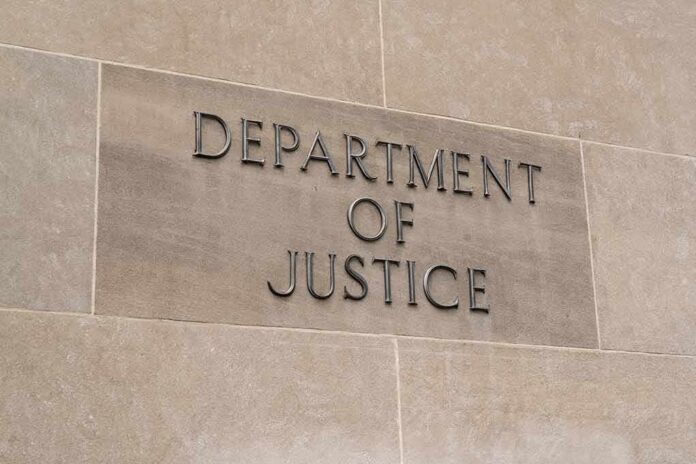
The Department of Justice announced charges against four defendants in a case that is part of a larger Los Angeles health care fraud takedown. Prosecutors say the group submitted more than $1.6 billion in claims to private insurers, and that insurers paid over $210 million. The indictment lists conspiracy to commit health care fraud and wire fraud, health care fraud, and alleged violations of the Eliminating Kickbacks in Recovery Act. These are charges, not findings, and the defendants are presumed innocent unless proven guilty.
The indictment alleges that David Young and Nathan Young controlled dozens of companies that presented as substance-abuse treatment providers in Los Angeles and other locations. Prosecutors say the operation relied on recruiters, often called body brokers, who focused on people with addiction and those who were homeless or attending support meetings. Reports based on the case say recruiters sought patients with insurance policies that paid higher rates, which drove the scheme’s size and reach.
Alleged Patient Brokering and Fabricated Care
According to reporting on the case, the group allegedly invented symptoms and billed insurers for services that were not delivered or were far below medical standards. One account says some patients were told they could relax at the beach while insurers were billed for therapy sessions. Another report states that some patients were blocked from leaving or sedated to keep the billing going, claims attributed to prosecutors’ filings in the case. These allegations will be tested in court.
The case sits within a broader enforcement push against addiction-treatment fraud in Southern California. Federal officials have targeted patient-brokering and kickbacks that treat people as commodities rather than patients, using the Eliminating Kickbacks in Recovery Act as a key tool. Past cases under this effort led to convictions for illegal referral payments and related crimes, showing repeated patterns of recruiter fees and inflated or fake treatment claims. Officials say this focus aims to protect vulnerable patients and reduce waste that drives up premiums.
Scale, Oversight Gaps, and What Comes Next
The dollar figures draw attention because they show how private insurance can be exploited when oversight fails. The $1.6 billion number reflects claims submitted, while reports place insurer payouts at more than $210 million, which is still large by any measure. Regulators and insurers will likely comb through claim files to sort billed versus paid amounts and to recover funds as allowed. Courts may also order restitution if prosecutors prove losses at trial.
DOJ announces $1.8 BILLION healthcare fraud crackdown in California, says rehab clinics drugged patients to keep billing insurers | The Post Millennial
Federal prosecutors announced charges Thursday against 15 defendants, including six medical professionals, in a Los Angeles… pic.twitter.com/fk6ao0QbcY
— Owen Gregorian (@OwenGregorian) October 23, 2026
For families seeking real help, schemes like this cut deep. They prey on the sick, waste resources, and erode trust in treatment programs. For taxpayers and policyholders, they can mean higher premiums and fewer options. Both conservatives and liberals can agree on this point: when bad actors game the system, the most vulnerable pay the price while institutions look slow to act. This case challenges leaders to tighten rules, track referrals, and insist on proof of real care before money flows.
Sources:
washingtontimes.com, justice.gov, sgvtribune.com, nypost.com, westsidecurrent.com, dailynews.com