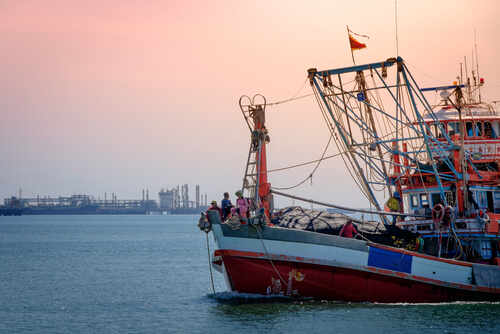
A once-locked stretch of Pacific Ocean is open again to American fishermen, and the left is already racing to shut it back down.
Story Snapshot
- President Trump’s proclamation reopens key Pacific monument waters to U.S.-flagged commercial fishing vessels.
- Obama-era rules had blocked American fleets from over 400,000 square miles of U.S. Pacific waters.[7]
- Western Pacific fishing leaders say this is about sustainable access, not scrapping marine protections.[2]
- Environmental groups have sued, claiming Trump exceeded his authority under the Antiquities Act.[5]
Trump Reopens Locked U.S. Pacific Waters to American Fleets
President Trump’s proclamation, “Unleashing American Commercial Fishing in the Pacific,” targets years of ocean lockups that shut U.S. fishermen out of massive portions of their own waters.[7] The White House fact sheet explains that over 400,000 square miles in the Pacific were withdrawn from all forms of entry under past monument proclamations, including commercial fishing by American boats.[7] Trump’s order restores access for U.S.-flagged vessels inside the Pacific Islands Heritage Marine National Monument, reversing a key piece of the Obama-era fishing ban.[7][3]
The restored access focuses on waters 50 to 200 nautical miles around Wake Island, Jarvis Island, and Johnston Atoll, all within the Pacific Islands Heritage Marine National Monument.[2] Nearshore zones from 0 to 50 nautical miles remain closed, keeping sensitive coastal areas under strict protection.[2] The Western Pacific Regional Fishery Management Council describes this as returning long-range tuna and pelagic fleets to historical grounds, not opening untouched wilderness to reckless new development.[2] Fishing will still operate under federal permits, gear rules, and species protections.[2]
America First Fishing Policy and Seafood Competitiveness
The proclamation is part of a larger “America First Fishing Policy” aimed at cutting red tape and boosting American seafood production. According to the White House, the United States imports about 90 percent of the seafood it consumes, feeding a roughly 20 billion dollar seafood trade deficit.[6] The administration argues that overregulation and monument closures forced U.S. boats off productive grounds while foreign fleets harvest the same ocean.[6] Restoring access in the monument is meant to reduce this import dependence and help American workers instead of offshore competitors.
Trump’s Pacific action works alongside Executive Order 14276, “Restoring America’s Seafood Competitiveness,” which directs agencies to review fishery barriers and modernize rules.[4][2] The National Oceanic and Atmospheric Administration launched an agency-wide effort to collect public input on burdens facing the seafood industry, including outdated regulations and limits that do not reflect current science.[4] Council leaders in the Pacific say their recommended openings rely on decades of management experience and are tailored to allow fishing only in specific, heavily regulated zones.[2]
Western Pacific Council: Sustainable Access, Not a Free-For-All
At its 206th meeting, the Western Pacific Regional Fishery Management Council voted to restore commercial fishing in parts of several marine national monuments, including Pacific Islands Heritage, Rose Atoll, Marianas Trench, and Papahānaumokuākea.[2][1] Executive Director Kitty Simonds stressed that “this is not about removing monument protections – it’s about restoring sustainable fishing in limited areas.”[1][2] Under the plan, monument core areas, fragile reefs, and nearshore habitats remain off limits, while offshore waters reopen to long-managed federal fisheries.[2]
For Pacific Islands Heritage, the council recommends allowing commercial fishing only from 50 to 200 nautical miles seaward of the three islands, while keeping the inner 0 to 50 miles unchanged.[2] In other monuments, new access is similarly narrow: 12 to 50 nautical miles at Rose Atoll, 0 to 50 nautical miles in the Marianas Trench Islands Unit, and 3 to 200 nautical miles in Papahānaumokuākea, limited to bottomfish and pelagic fisheries.[2] All activity must still follow permit rules, catch limits, gear restrictions, existing area closures, and protected-species safeguards.[2][1]
Legal Clash: Antiquities Act, Conservation Politics, and the Courts
Environmental groups immediately went to court to block Trump’s order, claiming it illegally strips protections from a national monument.[5] Earthjustice, representing the Conservation Council for Hawai‘i and the Center for Biological Diversity, argues the Antiquities Act lets presidents create and protect monuments, but not remove core protections like the commercial fishing ban.[5] Their lawsuit says opening Pacific Islands Heritage to commercial fishing threatens marine life such as sharks, turtles, and other species through catch and bycatch.[5]
🎣🇺🇸 President Donald Trump signed a proclamation restoring commercial fishing access to large portions of protected Pacific waters as part of the administration's "America First Fishing Policy."
The White House says the move will support American fishermen, create jobs and… pic.twitter.com/vYQYrnohUl
— THE INFORMANT (@TheInformantUSA) June 11, 2026
The lawsuit also targets steps by the National Marine Fisheries Service, which notified permit holders that they could fish commercially inside the monument following Trump’s proclamation, even while older monument regulations still listed a ban.[5] Critics claim this is executive overreach and an attack on conservation, mirroring earlier battles where President Biden moved to restore full protections in other marine monuments. Supporters counter that prior bans lacked solid science, punished U.S. fishermen, and let foreign fleets benefit from America’s own waters.[7]
Sources:
[1] Web – Restoring American Commercial Fishing in the Pacific
[2] Web – Shrinking Oceanic Protections and the Expansion of Commercial …
[3] Web – Press Release-Clarifying Impact of President Trump’s Action on …
[4] Web – Presidential Proclamation — Pacific Remote Islands Marine …
[5] X – Trump issues proclamation restoring American commercial fishing in …
[6] Web – WPFMC recommends reopening marine monuments to commercial …
[7] Web – President Trump Restores Pacific Fishing Waters