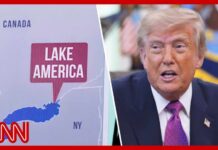
President Trump said the United States secured majority control of 65 billion barrels of Venezuelan oil, a claim that could reshape energy and politics at home and abroad.
Story Snapshot
- Trump announced a U.S.-Venezuela oil agreement involving 65 billion barrels in reserves.
- Reuters reported talks to lock in multiple Venezuelan oil fields for American development.
- Associated Press cited a Venezuelan statement on 17 fields and potential long-term rights.
- Trump said the deal would lower gas prices and not cost taxpayers, though terms were not released.
What The Announcement Said And Who Is Involved
On August 28, President Trump said the United States reached an agreement with Venezuela for “majority U.S. control” of more than 65 billion barrels of proven oil reserves. He credited Secretary of State Marco Rubio and Secretary of War Pete Hegseth, and referenced work with Venezuelan leader Delcy Rodríguez and private companies. Trump said the deal would “more than double” U.S. oil reserves and would cut gasoline prices for Americans over time.
Trump’s post described the agreement as coming at no cost to U.S. taxpayers. He framed the outcome as a national win on energy security and prices. The statement did not include a signed contract, specific revenue shares, or a federal financing plan. Press accounts repeated the reserves figure and the pledge on prices, while noting the structure likely runs through private operators rather than direct U.S. government ownership of the fields.
What Independent Reporting Adds On Deal Structure
Reuters reported that U.S. officials were close to a deal that would secure long-term access to a group of Venezuelan oil fields. The plan would allow American private companies to develop those fields and deliver guaranteed supply to the United States. That reporting said talks covered more than a dozen productive sites and aimed to “lock in” access for years, suggesting a concession-style approach managed through corporate ventures rather than a treaty alone.
The Associated Press, via regional coverage, cited a Venezuelan government statement describing development of 17 fields with a proven potential of about 65 billion barrels. It reported projections of up to $100 billion in private investment and more than $200 billion in tax revenue for Caracas over time. A U.S. official described a structure where an American partner would help create a new private company with rights to develop the fields for up to 100 years.
How This Could Affect Americans And Global Energy
If American firms gain steady access to large Venezuelan output, U.S. refiners could see more heavy crude supply. That can lower blending costs and ease pressure on pump prices, which is a top pocketbook issue for families and small businesses. Trump tied the deal to cheaper gas for drivers and to long-term U.S. energy security. The scale, if realized, would also shift trade flows in the Americas and reduce reliance on riskier suppliers in other regions.
TRUMP ANNOUNCES U.S. VENTURE TO TAKE OVER VENEZUELAN OIL FIELDS
President Trump has announced the U-S will be partnering with a private company and take over the oil fields in Venezuela.
NewsNation's Vinay Simlot reports -: “The president says it will give the US control of…— Worldwide News Network (@WorldwideNNX) August 29, 2026
This move also fits a yearslong pattern in Venezuela policy, where oil access, sanctions policy, and politics intertwine. Past actions used licenses and workarounds to move oil under U.S. oversight or through approved channels, with proceeds often held in controlled accounts. The reported structure here echoes that approach by relying on private companies, long-term rights, and government permissions rather than a simple state-to-state handover.
What We Still Do Not Know From Public Documents
Public reports do not include the signed agreement, full financial terms, or any U.S. government guarantees. The Venezuelan reserves figure appears in different ways across outlets, variously as proven potential, field potential, or control claims, which are not the same measure. Agencies have not released licensing files or a detailed term sheet. One brief caveat is important: news reporting describes negotiations and statements, but not the full legal text of the arrangement.
Why This Resonates Across The Political Divide
Conservatives see cheaper fuel and more domestic leverage as a win after years of high energy costs. Liberals see a chance to cut price spikes that punish working families and widen inequality. Many Americans in both camps worry that powerful interests write the rules while regular people pay the bill. Clear terms, transparent oversight, and proof of taxpayer protection will decide whether this deal eases those fears or deepens them over time.
Sources:
nypost.com, reuters.com, venezuelanalysis.com