
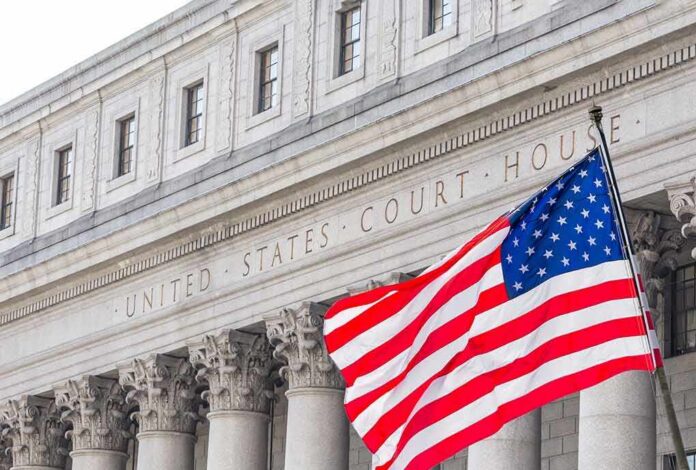
The Supreme Court cleared parts of President Trump’s mail-in voting order to take effect nationwide just weeks before the midterms, shifting who controls key election rules.
Story Snapshot
- The Court’s action lets parts of the executive order move forward while legal fights continue.
- Other rulings still block the U.S. Postal Service from enforcing major pieces of the plan.
- The White House order directs new voter checks and ballot tracking to curb fraud, supporters say.
- States and voting groups argue the Constitution leaves these choices to states and Congress.
What The Supreme Court Did And What It Didn’t Do
The Supreme Court paused part of a lower-court ruling, which lets some elements of the administration’s mail voting order take effect while appeals proceed. The action does not end the lawsuits. It also does not lift a separate nationwide injunction that bars the U.S. Postal Service from carrying out key directives. That Boston ruling on August 11 still blocks the Postal Service from enforcing the new mail ballot limits across all states.
The Court’s limited move creates a split picture for election officials. Some federal directives can advance at agencies besides the Postal Service, but the Postal Service remains sidelined by court order. That means states will still run mail ballot operations under existing rules in many places. The practical impact will depend on which parts agencies try to implement without Postal Service involvement and how quickly states can respond.
What The Executive Order Seeks To Change
The White House described a plan to verify voter citizenship and tighten mail ballot handling. The order directs the Department of Homeland Security, with the Social Security Administration, to compile and share with states a “State Citizenship List” of eligible citizens. It also pushes for unique tracking barcodes on ballot envelopes and state-provided mail voting participation lists to control who receives and returns ballots, according to the official fact sheet.
Supporters say these steps help prevent illegal voting and strengthen ballot security. They argue that clear lists, barcodes, and delivery rules make fraud harder and audits easier. The administration frames the plan as standard data matching and logistics work that the federal government can do to support secure federal elections. The White House has emphasized that these tools aim to protect trust in results after years of conflict over mail voting rules.
Why States And Voting Groups Are Fighting This
States and voting-rights groups argue the president cannot rewrite election rules on his own. They cite the Constitution’s assignment of “time, place, and manner” authority to states and Congress. They asked the Supreme Court to leave in place lower-court limits, stressing that mail voting rules belong to state law, not executive orders. Their filings describe the order as a separation-of-powers breach and warn it could wrongfully block eligible voters from receiving or returning ballots.
Federal judges have already sided with these challengers in several rulings this summer. One Boston-based judge found the Postal Service has no legal authority to control mail voting and issued a nationwide block on Postal Service action tied to the order. An appeals court kept in place a separate halt on enforcement against two dozen states. Those orders remain important guardrails even after the Supreme Court’s partial relief for the administration.
How This Fits A Larger Power Struggle
American elections often pit state control against federal pressure. Mail voting has become the latest fault line in that long fight. Policy debates center on whether the bigger risk is fraud or wrongful exclusion. Security advocates press for tighter checks. Access advocates warn about red tape that can stop lawful votes from counting. Legal experts note that, in practice, states run elections and the Postal Service delivers mail rather than decides who can vote.
President Trump just scored a major Supreme Court victory on mail-in voting ahead of the midterms.
In a 6-3 decision, the justices are allowing the administration to move forward, at least for now, with key parts of Trump’s March executive order after they were blocked by a… pic.twitter.com/BSYCNdH2ci
— Fox News (@FoxNews) August 25, 2026
The result is confusion for voters and clerks who just want clear rules well before ballots go out. The Supreme Court’s move adds urgency for state officials to explain what has changed and what has not. With Congress divided over national standards and the executive branch testing its limits, many citizens on the left and right see the same pattern: Washington power plays first, practical help last. Clear guidance and transparent timelines will matter most in the weeks ahead.
Sources:
lawforward.org, aclu.org, masslawyersweekly.com, cnn.com, npr.org