

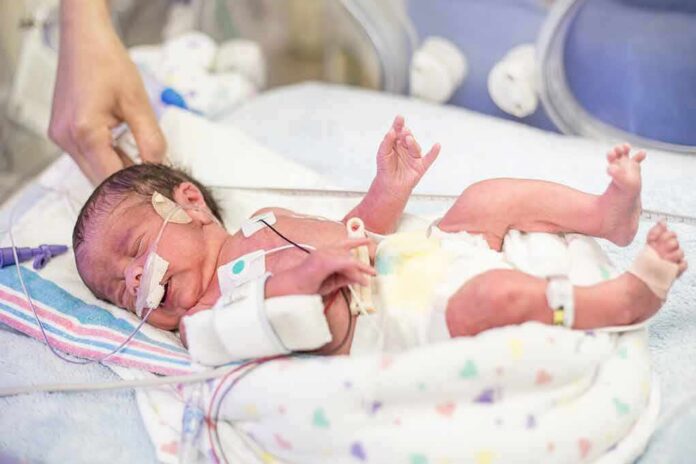
Federal civil-rights officials warned two major Dallas hospitals that denying a disabled newborn life-saving care would break federal law, raising the stakes for infant patients and their families.
Story Snapshot
- Health officials told two Dallas hospitals they cannot withhold life-saving care because of disability.
- The warning cites federal disability protections that apply to medical treatment for infants.
- Texas Attorney General Ken Paxton echoed that discrimination in care decisions is unlawful.
- The move highlights rising federal enforcement on disability rights in health care.
What HHS Told The Dallas Hospitals
The Department of Health and Human Services’ Office for Civil Rights said it sent a letter to Children’s Medical Center of Dallas and the University of Texas Southwestern Medical Center. The agency warned that federal law bars hospitals from denying medically indicated treatment because of a disability, including life-sustaining care. The agency’s message followed reports about a newborn with a severe heart defect. Officials said value judgments about a disabled life do not justify withholding treatment.
Federal civil-rights staff pointed to existing rules that protect infants born alive. Proposed updates, published by the department, explain that Section 504 of the Rehabilitation Act and other federal rules preclude denial of care due to disability in neonatal cases. The draft text ties the duty to treat to clear, medical need. It also stresses that hospitals receiving federal funds must follow these standards when they make decisions about infant care.
The Laws In Play And Why They Matter
Section 504 of the Rehabilitation Act bars disability discrimination in programs that get federal funds. Many hospitals do. This means disability cannot be the reason to deny needed care. The Office for Civil Rights has recently emphasized this principle in health settings, including complex triage and end-of-life choices. Hospital policies and ethics panels must align with these rules or face enforcement, which can include investigations and corrective actions.
Health groups also flagged that the department finalized a rule in 2024 that strengthens disability protections in care. The rule clarifies duties for hospitals and other providers. It aims to stop policies that reduce support for people with disabilities who need serious treatment. That includes cases in neonatal units. The final rule signals that federal oversight on bedside decisions is growing and will focus on equal access to indicated care.
How This Affects Families, Doctors, And Hospitals
Parents need clear answers when a baby faces a life-threatening defect. This letter tells them that disability alone cannot limit treatment options. It pushes teams to base choices on sound medical judgment and the infant’s condition, not on life-value scoring or cost. It also pressures hospitals to document their reasons for treatment plans and to offer pathways for families to raise concerns without delay.
Doctors still make complex calls. Not every intervention helps, and some can cause harm. The law does not force non-beneficial care. It does require that disability is never the reason for saying no. By drawing that line in writing, the department is trying to prevent bias from creeping into high-stress decisions. Hospitals that take federal funds must train staff, review ethics policies, and ensure their neonatal care rules reflect these standards.
What To Watch Next In Texas And Beyond
Texas hospitals already follow many infant care rules, such as screenings and reporting for critical heart disease. But federal civil-rights oversight adds a second layer that reaches how decisions are made, not only what tests are done. Expect hospitals to check their policies, update ethics committee charters, and improve how they explain care options to parents of newborns with serious conditions.
This action also fits a larger national pattern. During the past few years, federal officials have warned that discrimination in treatment planning is a repeat problem. The Dallas letter shows officials will step in early, not wait for a court case. For families and clinicians, this may reduce confusion in the moment. For leaders on both left and right, it echoes a shared concern: big systems often forget the person at the bedside, unless rules force them to focus.
Sources:
foxnews.com, hhs.texas.gov, statutes.capitol.texas.gov, dol.gov