

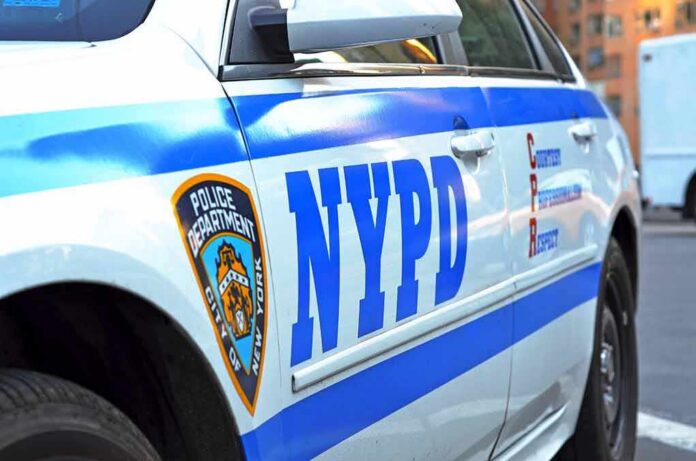
New York City police cracked down hard on public urination, open liquor bottles, and illegal street vending last year — then city bureaucrats tossed out nearly half of those tickets before a single violator paid a dime.
Story Snapshot
- The NYPD issued 98,000 civil quality-of-life tickets last fiscal year, and roughly 46,000 — 47 percent — were dismissed.
- Most dismissals came from paperwork defects, including “defective service” and “defective notice of violation.”
- Officials blame the fact that officers still write 100 percent of these tickets by hand.
- An NYPD deputy commissioner admitted the department “needs to fix” the broken process.
- Records show this same failure rate has plagued the city for over a decade.
A Crackdown That Never Reached Court
New York police stepped up enforcement of quality-of-life violations over the past year, writing tickets for public urination, open containers, unlicensed vending, and dumping construction material on sidewalks. Reporting from Gothamist found that of the 98,000 civil tickets issued, roughly 46,000 were thrown out by hearing officers at the city’s Office of Administrative Trials and Hearings. That means nearly half the enforcement effort produced nothing but paperwork.
The dismissals were not scattered across random causes. The vast majority fell into two categories: “defective service” and “defective notice of violation,” both signs of sloppy administrative work rather than any dispute over whether the violation happened. For a city that loves to tout tough enforcement numbers, the actual result looks a lot more like a paperwork factory than a justice system.
Handwritten Tickets Blamed for the Mess
City officials pointed to a surprisingly low-tech culprit. NYPD officers still fill out every single civil ticket by hand, and an Office of Administrative Trials and Hearings spokesperson said handwritten summonses “will inevitably create a higher likelihood of dismissal due to human errors”. Common problems included spelling mistakes, wrong legal citations, illegible handwriting that trips up data entry, and missing information about how the ticket was served.
NYPD Deputy Commissioner of Legal Matters Michael Gerber conceded the obvious at a city council oversight hearing. “We need to fix that,” Gerber said, adding the department was “not happy about that for obvious reasons”. He said the tickets were not dismissed because the underlying violations were bogus, but because “the paperwork is not being done properly, it’s not being filled out properly, handwriting issues”. That is a remarkable admission from a department that claims to be serious about restoring order.
City Hall’s Excuse Doesn’t Hold Up
The NYPD also argued that many dismissed tickets could have been issued as more serious criminal summonses instead, framing the outcome as officers exercising discretion to hand out a lighter penalty. That spin conveniently ignores that a dismissed ticket, whatever its original severity, means zero consequences for the violator and zero deterrent for the next person who fouls a sidewalk or blocks foot traffic with an illegal stand.
The department’s own patrol guide requires officers to legibly print information in block letters using black or blue ink and fully complete a service affidavit, warning that failing to do so means “the summons will be dismissed”. In other words, the rules already exist to prevent this exact failure. The problem is enforcement of the enforcement rules themselves.
Not a New Problem for the City
This is not the first time New York’s paper-based ticket system has collapsed under its own weight. A New York State Attorney General report found that 47.7 percent of NYPD summonses issued between 2009 and 2012 were dismissed for being legally insufficient or containing serious defects. A separate court record from earlier citywide summons litigation described a two-step defect review process that routinely tossed out large batches of paperwork before any hearing ever happened.
That means for well over a decade, city administrators have known handwritten, paper-based tickets fail at nearly the same rate, and little has changed. Taxpayers keep funding officer time, court processing, and administrative overhead for a system that throws away close to half its own output. For a city government that constantly demands more funding and more regulation, this is Exhibit A of basic competence failing before politics even enters the picture.
WHAT DOES NYPD ENFORCEMENT ACTUALLY BUY NEW YORK?
New York City knows how to count police activity. Arrests. Summonses. Pedestrian stops. Deployments. Overtime.
But activity is not the same thing as performance.
From 2021 to 2024, NYPD pedestrian stops increased from 8,947 to… pic.twitter.com/HHy14M9pn1
— Eric Sanders, Esq. (@esq_sanders) September 21, 2026
Conservatives have long argued that big-city bureaucracies waste resources while dodging accountability, and this episode fits the pattern perfectly. Quality-of-life enforcement matters to residents who want clean, safe streets, but a broken paperwork pipeline guts that effort before it reaches a courtroom. Modernizing the process with digital tickets seems like an obvious fix, yet city officials are only now admitting the problem publicly after reporters exposed the numbers.
Sources:
zerohedge.com, tollbit.gothamist.com, nyc.gov, pix11.com