
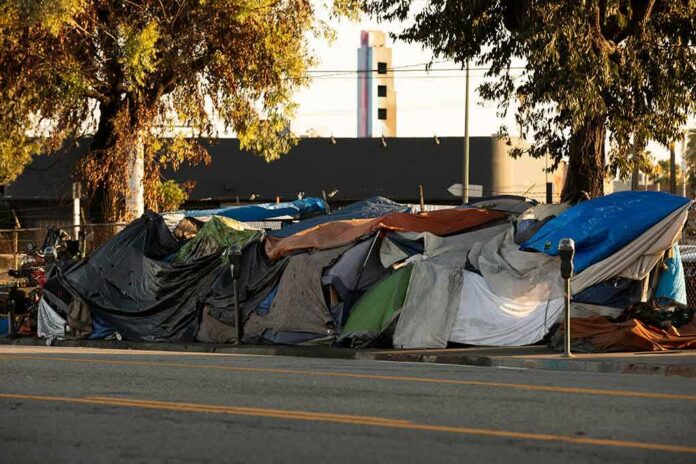
A rat-infested RV near a Berkeley homeless camp spread a deadly disease that killed one person, forcing officials to finally clear a tent city that lawsuits had protected for years.
Story Snapshot
- Two people living in a filthy RV near Berkeley’s Harrison Street encampment caught leptospirosis, and one died after months in the hospital.
- Rats and dogs tested positive for the disease starting in late 2025, and crews later found nearly 200 rats breeding in the area.
- Berkeley declared the encampment a fire hazard and public nuisance, then sent hazmat crews to clear it in September 2026.
- A homeless advocacy group sued to stop the cleanup, and a federal judge weighed a restraining order even as crews kept working.
Disease Traced to Rat-Infested RV
Two people who shared a cramped recreational vehicle near a large homeless encampment in North Berkeley got sick with leptospirosis this summer. One of them died after a long hospital stay. The RV sat about a mile from the Harrison Street encampment, which had been the center of a rat and dog outbreak of the same disease since late 2025.
Health officials found close to 200 rats living inside the RV, calling it a filthy breeding operation. Leptospirosis spreads through urine from infected animals. It can cause kidney failure, liver damage, or death in people and dogs who touch contaminated water, mud, or soil.
City Declares Encampment a Public Health Hazard
Berkeley’s health department first spotted the disease in December 2025, after veterinarians treated sick dogs at the encampment. By January 2026, the city issued a public alert saying rats near Harrison Street tested positive and that the area had become “unsafe for human encampment conditions”.
Officials later declared the site a fire hazard and public nuisance. On September 15, 2026, city crews in hazmat suits began tearing down the encampment, months after the first warnings went out. The city says leptospirosis risk to the general public stays very low, and there is no person-to-person spread.
Legal Fight Slowed Efforts to Clear the Camp
The Berkeley Homeless Union sued to block the sweep, arguing residents deserved more protection before being forced out. A federal judge, Edward Chen, considered a temporary restraining order even as the cleanup moved forward. Union members said the city ignored the ongoing court hearing. “Right now, we’re literally having a court hearing for a temporary restraining order to stop this, and the city’s choosing not to stop,” a union spokesperson said.
California forced to tear down a homeless camp after a deadly rat disease outbreak 🐀
Leptospirosis spreads, one person dies, and Berkeley finally clears the encampment.
Full breakdown with @Timcast: https://t.co/qqrpvkDrgm#Homelessness #California #Berkeley #TimPool pic.twitter.com/YIzl6XojT1
— Mangekyō Info (@Mangekyoinfo) September 17, 2026
Mayor Says Removal Alone Won’t Fix Homelessness
Berkeley Mayor Jesse Arreguín acknowledged that tearing down the camp does not solve the underlying problem. “Clearing an encampment is not by itself a solution,” he said, adding that the city’s real goal is “getting people into long-term stable housing”. Advocates at the scene also pointed to a judge’s earlier order requiring the city to offer services to residents unable to care for themselves.
The Harrison Street saga captures a fight playing out in cities nationwide: how to balance public health and safety against the rights of homeless residents when courts, advocates, and city halls disagree on the fix. Berkeley’s outbreak shows the health risk was real, but the years-long legal battle shows removing an encampment is rarely simple, fast, or free of dispute.
Sources:
nypost.com, berkeleyca.gov, sfgate.com, sfist.com, ktvu.com, berkeleyscanner.com, sfstandard.com