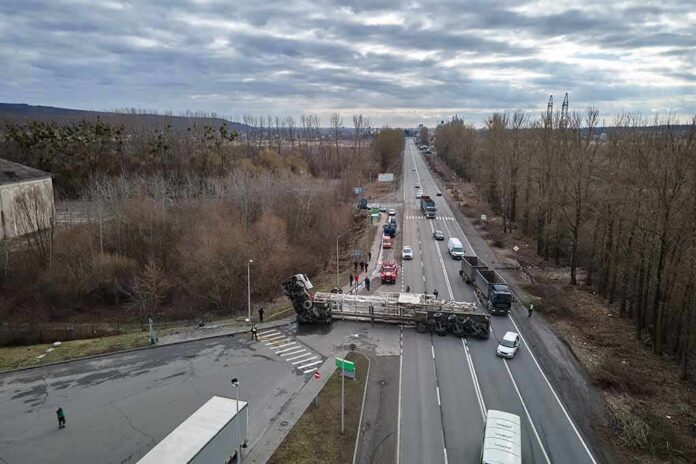
A grieving mother told Congress she is “ashamed” of her party after a newlywed couple was killed and another family’s child was left disabled in crashes tied to an allegedly undocumented commercial truck driver licensed in California, forcing a fresh look at who the system protects—and who it fails.
Story Highlights
- Congress heard sworn testimony linking a deadly truck crash to licensing and sanctuary-policy failures.
- A father said an undocumented driver with a California commercial license caused life-changing injuries to his daughter.
- California says federal orders forced it to pause and cancel non‑domiciled commercial licenses.
- Another witness argued data show authorized immigrant truckers have lower crash rates.
What Triggered the Hearing and Why It Matters
House lawmakers on the Subcommittee on Immigration Integrity held a hearing titled “Sanctuary Policies, Tragic Consequences.” They focused on whether state licensing and local policies let unqualified drivers operate heavy trucks. The hearing record lists Marcus Coleman, who testified under oath about a crash that left his daughter with severe injuries. He tied the wreck to an undocumented driver who held a California commercial license. He urged Congress to close gaps before people are hurt, not after.
Coleman told lawmakers the truck driver should never have been on the road. He argued the government failed to check eligibility before licensing and hiring took place. Fox News coverage identified the driver as undocumented and said authorities cited unsafe speed and failure to stop in a work zone. Coleman’s central point was simple: policy and verification must block ineligible operators from driving 80,000-pound rigs on public roads. He asked for accountability across agencies and states.
Claims About California Licensing and the Federal Response
California’s Department of Motor Vehicles said it stopped issuing non‑domiciled commercial licenses because of a directive from the Federal Motor Carrier Safety Administration. The agency also said it canceled about 13,000 such licenses at federal direction. California added that pending applications would be held while the federal pause remained. These actions show federal pressure on states to tighten screening and proof of status for commercial drivers. That fight sits at the core of Congress’s review.
The federal government issued a formal finding of “substantial noncompliance” against California’s commercial licensing program, which raised the stakes for state‑federal coordination. Congress is probing whether past rules, administrative errors, or weak verification let unqualified drivers gain licenses. Without the individual license file or the full crash report in public view, the exact failure point in Coleman’s case is not confirmed. Lawmakers are pressing for those records to test cause and fix process gaps.
Emotional Testimony Meets Competing Safety Data
Witnesses offered different readings of the risk picture. Policy analyst David J. Bier told the committee that immigrants with temporary work authorization were less likely to be in crashes and fatal crashes in California data. He also said fatal large‑truck crashes per miles traveled fell sharply over three decades. He argued broad crackdowns can miss the mark if the goal is safer roads. He focused on verified status and training over blanket bans.
Those statistics do not erase the families’ grief or the duty to close obvious holes. Parents on both sides of the aisle see a system that reacts only after tragedy. Coleman’s plea was about timing and trust: find the problem before the truck moves. Many readers—left and right—share that concern. They see agencies trade memos while victims face hospital bills and funerals. Congress now has sworn testimony, agency findings, and public pressure to force faster fixes.
What We Know, What We Don’t, and What Comes Next
We know Congress took testimony tying a catastrophic crash to an undocumented driver with a California commercial license. We know federal officials pressed California to pause and cancel many non‑domiciled licenses during a compliance fight. We also know some data suggest authorized immigrant truckers have lower crash rates, so the core issue may be status verification and training, not nationality. What we do not have yet are the full crash file and the driver’s licensing record.
Next steps are concrete. Lawmakers can subpoena the crash investigation, the California licensing file, and employer records. Agencies can require real‑time status checks before licensing and hiring. States can audit past issuances and training schools. Carriers can verify documents at onboarding and during renewals. These moves respect due process and public safety. They also answer a shared demand across America: stop the buck‑passing, fix the process, and keep unqualified drivers off our roads.
Sources:
presidentialwire.com, redstate.com, courts.oregon.gov, foxnews.com, opb.org, dmv.ca.gov, transportation.gov, calmatters.org