
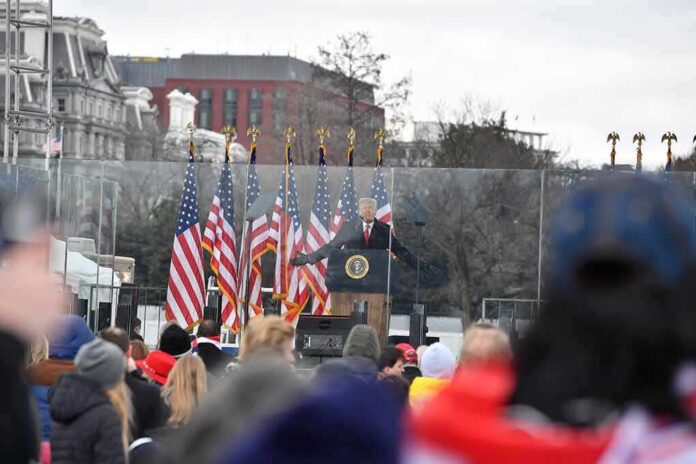
President Trump will use his United Nations speech to press world leaders to stop Iran from getting a nuclear weapon and to rally action against other global threats.
Story Highlights
- The White House and the United States ambassador say Iran and nonproliferation will headline the address.
- Trump is set to speak during the United Nations General Assembly’s high-level week on Tuesday.
- The speech fits a long pattern of tough UN messaging on Iran and sanctions enforcement.
- Iran’s president is also scheduled to address the assembly, setting up sharp, back-to-back messaging.
What The White House Says Will Be In The Speech
White House previews say President Trump will focus on Iran’s nuclear ambitions, the administration’s Gaza plan, and Western Hemisphere security. Officials frame the remarks as a call to block Iran from ever getting a nuclear weapon and to tighten pressure on Tehran’s network. Reports add that drug cartel violence and other threats will appear as supporting themes tied to American power and deterrence. These elements match past Trump priorities at the world body.
United States Ambassador to the United Nations Mike Waltz told reporters that Trump will highlight major conflicts, with Iran front and center. Waltz said Trump will make the case that Iran must be prevented from obtaining a nuclear weapon, and will press partners to align on enforcement. The preview signals a coordinated push for tougher compliance by allied and non-aligned states that trade with or support Tehran’s programs.
When And Why This Stage Matters
Trump is scheduled to address the General Assembly on Tuesday during the annual high-level debate, which draws heads of state and government from around the world. This timing maximizes visibility and invites direct replies by rivals and partners. United Nations week often functions as a megaphone for pressure, not just policy rollouts, making it a venue where leaders test lines that shape sanctions, diplomacy, and coalition behavior in the months ahead.
Analysts note that United States policy speeches on Iran at the United Nations usually aim to prove that pressure works, while critics argue it fails or backfires. That divide has persisted across years of sanctions fights and nuclear steps by Tehran. Trump’s past United Nations addresses leaned on sanctions and isolation to curb Iran’s behavior, and this year’s preview shows the same core approach with updated stakes due to ongoing conflict and regional spillover effects.
How This Fits Trump’s Prior Iran Posture
Trump’s earlier United Nations remarks stressed economic pressure to deny Iran funds for hostile actions. He promoted reimposed sanctions after exiting the nuclear deal, and urged other nations to isolate Tehran until its conduct changed. The current preview echoes that line. It seeks collective action on enforcement, which United States officials long argue is the missing link when countries seek loopholes or soft-walk penalties that keep Iran’s programs financed and supplied.
BREAKING | TRUMP’S UN SPEECH TO LAY OUT HOW AMERICA’S POWER WILL CONFRONT GLOBAL THREATS
President Donald Trump’s upcoming United Nations address is expected to make the case for how his administration is using American military, economic and diplomatic power to confront Iran,… pic.twitter.com/ZnZn4bwLqA
— CSB News USA (@csbnewsus) September 22, 2026
The diplomatic calendar also places Iran’s leadership in New York this week, with Iran’s president scheduled to take the podium after Trump. That back-to-back setup has, in past years, produced dueling speeches and clashing claims of international support. The sequence can shape headlines, market risk, and alliance politics. It also sharpens choices for nations trying to stay neutral while balancing energy needs, shipping security, and nonproliferation norms at the same time.
What To Watch For Next
Watch for concrete asks that go beyond rhetoric, such as calls for tighter export controls, secondary sanctions, and joint maritime steps. Listen for any references to cartel networks, missile transfers, or oil shipments that link Iran policy to broader security and economic concerns. Track how European and regional partners respond in their own speeches. Immediate reactions will hint at whether the United States can turn a forceful message into shared action or faces pushback that blunts enforcement.
Sources:
facebook.com, foxnews.com, iranintl.com, wionews.com, thedailystar.net, aljazeera.com