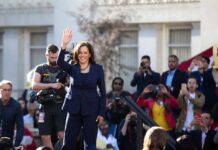

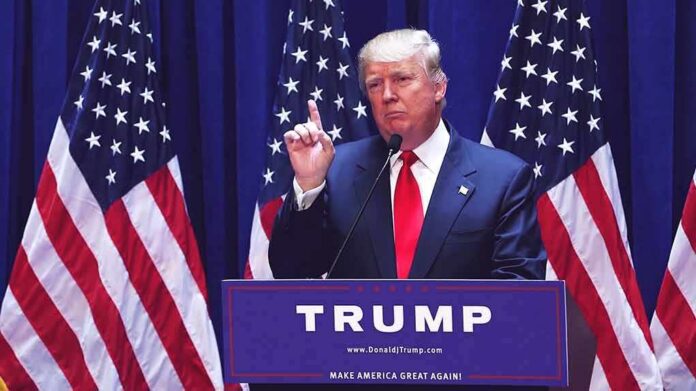
At the United Nations, President Trump declared there is no global government and vowed there will be no global taxes while he is in office, drawing a clear line on sovereignty and money.
Story Highlights
- Trump told the United Nations that “there is no global government” and rejected global taxes.
- He said his team blocked a maritime plan he called a secret global carbon tax.
- United Nations bodies are negotiating a framework on international tax cooperation, not a binding global tax.
- Shipping emissions pricing talks have been real but have faced delays and disputed labels like tax, levy, or fee.
What Trump Said And Why It Resonates
President Trump used his United Nations General Assembly speech on September 22, 2026 to reject any move toward a global tax. He said there is no global government and promised that, while he serves, there will be no global taxes. He tied the warning to a recent maritime plan, saying his administration stopped a first-ever global carbon tax. Reuters and the White House release captured the core lines, placing them inside a broader pushback on multilateral control.
Trump also attacked what he called a far-left agenda from unelected globalist bureaucrats. He urged the United Nations to respect national sovereignty. This message lands with many voters who feel distant institutions add costs to daily life without consent. Supporters hear a defense of borders, jobs, and energy choice. Critics hear a dismissal of shared rules needed to solve cross-border problems like climate change. But the speech’s main point was simple: no global taxes on his watch.
What The United Nations Is Actually Doing On Tax
The United Nations General Assembly voted in 2023 to set up an ad hoc committee to draft terms for a framework convention on international tax cooperation. That process aims to improve cooperation among countries, not to create a taxing power over them. United Nations pages describe an Intergovernmental Negotiating Committee working on a proposed framework and early protocols, including cross-border services and dispute issues.
United Nations materials argue that taxation helps fund development and climate action. They promote environmental taxes as one tool for net-zero goals. Advocacy inputs urge a stronger United Nations role, even calling for a United Nations tax body. But none of this gives the United Nations the power to tax countries on its own. Past legal analysis shows global taxes gain force only by treaty, with each nation using its own laws to collect any agreed levy.
Shipping Emissions: Tax, Fee, Or Pricing Rule?
Trump’s claim centered on the International Maritime Organization shipping plan. That plan sought a global carbon pricing mechanism tied to emissions from large ships. Industry and legal summaries describe a mix of tools, including intensity standards and a possible levy. An October 2025 decision delayed a key vote by a year, pushing back any binding price and leaving labels like tax, fee, or hybrid in dispute. Analysts called it a novel mix rather than a pure tax.
This is where definitions matter. Supporters saw a price signal to cut pollution and spur cleaner fuels. Opponents saw a de facto global tax on trade that would raise costs for goods and energy. The delay gave space for both narratives. Trump framed the pause as a win for sovereignty and affordability. Backers warned that every delay makes the transition harder and more costly later. The core fact is the proposal has not been fully adopted as a binding global tax.
Why This Fight Taps A Shared Frustration
Americans across party lines feel that distant elites set rules that raise prices and limit choice. Conservatives worry about green rules that hike energy and shipping costs. Liberals worry about inequality and fear rules set by corporations and rich nations. Trump’s speech hit that nerve by casting the United Nations and related bodies as unaccountable rule-makers. The pushback from United Nations officials stresses cooperation and fairness but still leaves many voters uneasy.
Global bureaucrats actually thought they could slip an international carbon shipping tax past the United States.
Then Donald Trump walked straight into the UN and nuked their entire agenda in ten seconds: "There is no global government. And while I'm President, there will be no… pic.twitter.com/KY0wjNdUgQ
— NOBUNAGA🇯🇵🏯_夏樹蒼依 (@japan_nobunaga) September 23, 2026
The key takeaway for readers is practical. The United Nations cannot tax Americans without United States law agreeing to it. Any global price or levy needs a treaty or domestic action to bite. Negotiations on tax cooperation are real, and shipping carbon pricing talks have occurred. But they are not the same as a world government with its own tax collector. Watch the documents, the votes, and the fine print to see what, if anything, becomes law at home.
Sources:
insiderpaper.com, reuters.com, cmsapi.theepochtimes.com, nbcnews.com, siasat.com, mediaite.com, tvcnews.tv, nampa.org, whitehouse.gov, qazinform.com, menafn.com, tag24.com, academic.oup.com, financing.desa.un.org