
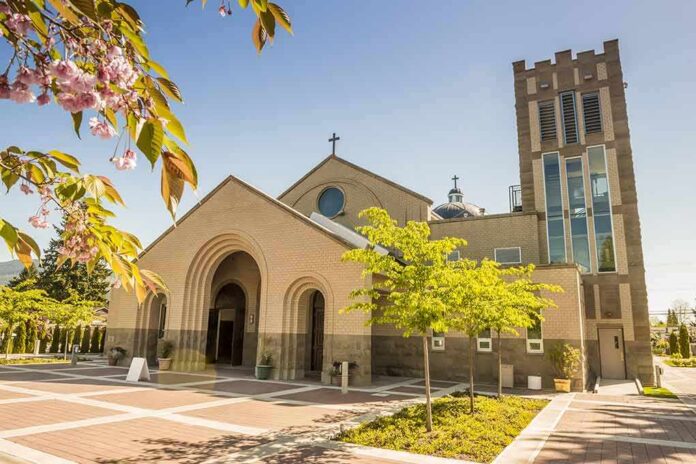
An undercover video and a resurfaced interview now place a Texas church at the center of a live question: when does “sanctuary” become illegal harboring under federal law?
Story Highlights
- A minister allegedly called the congregation a “sanctuary church” and said a Guatemalan man lived and worked there for years.
- James Talarico previously said his church housed an undocumented mother and son facing deportation.
- Civil-liberties guidance says “sanctuary” has no special legal shield under federal law.
- Federal opinions describe church housing of undocumented immigrants as likely harboring under 8 U.S.C. § 1324.
What the New Video and Past Remarks Show
Texas Scorecard reported that undercover footage captured a minister describing the congregation as a “sanctuary church.” The minister allegedly said an undocumented man from Guatemala had “worked here for 8 years” and lived inside the church. In a separate 2023 clip that resurfaced this summer, Texas Democrat James Talarico said his church “stirred some controversy” by housing an undocumented mother and son who were near deportation by Immigration and Customs Enforcement. Together, the accounts raise legal and political stakes.
Talarico’s remarks framed the church’s actions as part of its public witness, not a secret act. He linked the housing decision to the church’s history on social issues and said it sparked debate in the community. The Texas Scorecard video suggests the practice was ongoing and structured, since the man allegedly lived and worked at the church over several years. Those claims, if accurate, would meet elements critics say could trigger harboring scrutiny.
What Federal Law Says About “Sanctuary” and Harboring
The American Civil Liberties Union explains that there is no legal right to church “sanctuary” in federal law. The guidance defines harboring as sheltering an undocumented immigrant and helping that person remain in the country unlawfully. It adds that prosecutors must prove knowledge or reckless disregard of unlawful status. A Department of Justice opinion similarly says providing church sanctuary to undocumented immigrants probably violates the federal harboring statute, 8 U.S.C. § 1324.
Legal scholarship notes a long debate over where “helping” becomes “harboring.” Courts have differed on whether simple shelter is enough or whether concealment is required. The public statements here acknowledge awareness of undocumented status and proximity to deportation. That aligns with the knowledge element. But only investigators can decide whether other elements, like intent to evade detection, are present in this case. The available reports do not resolve that finer point.
What We Know — and the Gaps That Remain
The reporting ties two strands together: a 2023 account of housing a family facing removal and a 2026 video claim about a man living and working at the church for eight years. Those are related, but not the same situation. The articles do not provide the immigrant’s identity, immigration file, or church records that would confirm dates, wages, or housing terms. Without those details, the public record rests mainly on statements caught on camera and later summaries.
Pastor at James Talerico's 'Sanctuary Church' Admits to Harboring Illegal Alien for 8 Years, Says 'We're Not a Belief-Based Church' (Video) https://t.co/uYk2iuB4RR
— Terry Sater (@sater_terry) September 22, 2026
That evidence is enough to spark concern across the spectrum. Many conservatives see open defiance of law and unequal rules for elites. Many liberals worry about human dignity and the power of the state. Both sides increasingly agree that leaders often dodge hard fixes and let conflicts fester. This case shows the cost of that drift: faith groups step in, laws push back, and people fall between the cracks while Washington argues.
Why This Matters Beyond One Church
Across the country, churches have long offered short-term refuge. Federal guidance and opinions make clear that “sanctuary” carries no legal shield. That reality sets up a clash of values, not just parties. Local congregations see neighbors in need. Federal law sets bright lines. When politicians score points instead of solving problems, communities bear the risk, and trust in fair enforcement erodes over time.
Policy clarity could reduce these showdowns. Congress can define limits on harboring for faith-based care, and set narrow humanitarian safe harbors that do not invite abuse. Agencies can publish simple, public rules for enforcement at houses of worship. Clear rules would protect due process, deter exploitation, and give churches a lawful way to serve. Until then, stories like this will keep fueling the belief that the system serves the powerful and punishes everyone else.
Sources:
thegatewaypundit.com, texasscorecard.com, libertysons.org, foxnews.com