
Ukraine says it captured a Russian position using only drones and ground robots for the first time in the war, marking a milestone in the growing use of unmanned systems on the battlefield.
Story Snapshot
- Ukraine says it captured a Russian position using only robots and drones, with no troops in direct danger.
- Video interviews show Russian soldiers waving a surrender sign and being taken prisoner by a ground robot.
- Over 22,000 robot missions in three months hint at a quiet race to replace human soldiers at the front.
- Analysts say the operation highlights how rapidly unmanned systems are reshaping modern warfare and raising new ethical and military questions.
How Ukraine’s “Robot-Only” Assault Actually Worked
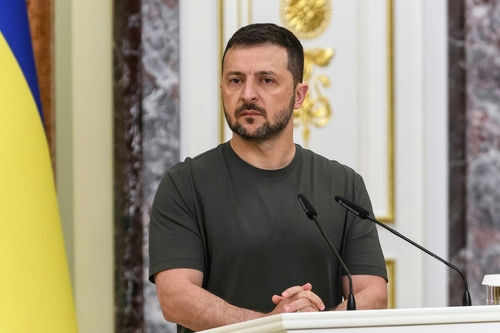
Ukrainian President Volodymyr Zelenskyy told weapons makers that, for the first time in this war, an enemy position was taken “exclusively” by unmanned platforms, meaning ground robots and drones. His office later tied that claim to a National Guard operation near the city of Kupiansk in the Kharkiv region, where robots destroyed a fortified Russian position without sending soldiers directly into the kill zone. The operation combined armed ground robots with aerial drones to attack fortified positions.
Troops from Ukraine’s 3rd Army Corps, speaking to the outlet Current Time, said they faced a strong Russian defensive line that they could not break with normal infantry tactics. Commanders chose kamikaze drones instead of sending in living soldiers, striking dugouts until Russian troops panicked. After the first drone hit, the Russians grabbed a white piece of paper; when the second drone approached, they ran out holding a handwritten surrender sign to the sky. One tracked robot then rolled forward and took them prisoner without firing a shot.
Robots Took the Position, But Humans Still Closed the Loop
The most dramatic image from the operation is that robot rolling up to surrendering Russians, proving machines can now handle tasks once reserved for human infantry. However, the same video report shows that Ukrainian infantry later moved into the area and “secured the fortified position,” meaning people still had to occupy, search, and hold the ground after the robots finished the assault. That detail undercuts the simple slogan that robots alone “captured and held” the position, and reminds us that human control and risk did not vanish, only shifted.
Independent researchers at the Center for Strategic and International Studies note that Ukraine’s current combat robots are mainly remote-controlled, not fully independent killers. Operators sit behind screens and steer ground vehicles and drones, keeping humans “in the loop” for navigation and targeting. In other words, this was not a science fiction battle where machines made every choice on their own. It was a battle where human decisions were pushed farther from the front line, with technology taking on more of the dirty work and danger.
From One Battle to 22,000 Missions: A New Kind of War Machine
Zelenskyy said in his April remarks that robotic and drone systems have already carried out more than 22,000 missions in just three months. That is a massive number, and it shows this was not a one-off stunt for television. Ukraine is quietly building a large robot force for logistics, evacuation, and combat across the front. Ukrainian leaders now plan to buy at least 50,000 unmanned ground vehicles in 2026, calling robots the “next step after drones” in modern warfare. This scale makes it harder to pretend the robot assault was just a novelty.
At the same time, Western military thinkers warn that the more precise and powerful these war machines become, the more tempting it is for governments to use them. Robots can lower the political cost of war by keeping national casualties down. Some analysts argue that reducing military casualties could change the political calculus surrounding future military operations. For many Americans who already feel the “deep state” cares more about defense contracts than kitchen-table bills, a robot army looks less like progress and more like a new way to dodge accountability.
Shared Concerns: Elites, Ethics, and a “War Without Soldiers”
Researchers note that operators increasingly conduct combat from remote locations while unmanned systems perform many frontline tasks. That distance can dehumanize the enemy and numb the public to the costs of war. Ethical scholars point out that robots are not legal “persons,” so they cannot be punished for mistakes, leaving governments and manufacturers to quietly shift blame when civilians die. Both left and right worry that in such a system, elites can wage cleaner, cheaper wars while ordinary people lose trust, money, and sometimes their lives.
For conservatives angry about globalist wars, and liberals angry about growing inequality, Ukraine’s robot victory is a warning, not just a headline. It shows how quickly advanced tools move from theory to battlefield while most citizens are shut out of the debate about rules and limits. Pentagon planners and NATO allies are “closely studying” these tactics, but there is little open talk about who decides when machines can kill, or how ordinary people can push back if those systems go too far. That silence feeds the feeling that a small group of insiders is quietly rewriting the laws of war.
Sources:
defenseone.com, wearethemighty.com, facebook.com, csis.org, globaltimes.cn, mwi.westpoint.edu, instagram.com