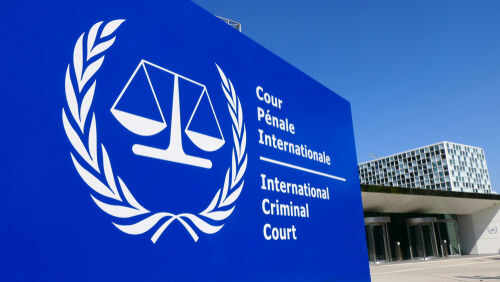
The Trump Department of Justice just told the International Criminal Court, in writing, that it has zero authority over any American — and the legal ground they’re standing on is stronger than critics want you to believe.
Story Snapshot
- Acting Attorney General Todd Blanche sent a formal letter to the International Criminal Court on June 29, 2026, rejecting its jurisdiction over all Americans.
- The U.S. never signed the Rome Statute, the treaty that created the court, and federal law already bars any cooperation with it.
- This is not a new fight — every administration since 2002 has taken the same basic position, though Trump’s team is the most aggressive about it.
- The ICC argues it can still investigate crimes committed on the soil of member nations, even if the suspect is American — a legal clash that has no easy resolution.
What the DOJ Letter Actually Says
Acting Attorney General Todd Blanche addressed his June 29 letter directly to International Criminal Court President Tomoko Akane. The message was short and blunt. The U.S. rejects any claim of ICC authority over Americans — anywhere in the world. Blanche called the court’s recent conduct “increasingly lawless and illegitimate” and accused it of selective enforcement and internal misconduct. The Department of Justice made the letter public on July 2, 2026.
The legal backbone of the U.S. position rests on three pillars. First, the U.S. never ratified the Rome Statute, the founding treaty of the ICC. Under a bedrock principle of international law, a treaty cannot bind a country that never agreed to it. Second, the U.S. Constitution places all judicial power in domestic courts, not foreign ones. Third, Congress passed the American Servicemembers’ Protection Act in 2002, which explicitly forbids cooperation with the ICC and even authorizes the President to use force to free any American held under an ICC warrant.
This Fight Is Older Than Most People Remember
The U.S. helped negotiate the Rome Statute in the 1990s but refused to sign it in 1998. President Bill Clinton signed it in 2000 but never sent it to the Senate. President George W. Bush formally “unsigned” it in 2002. In 2018, then-National Security Adviser John Bolton declared the ICC had “no jurisdiction, no legitimacy, and no authority” over the U.S. Even President Biden’s Secretary of State Antony Blinken maintained the objection, calling ICC claims over American personnel illegitimate. Jennifer Trahan, a clinical professor at New York University’s Center for Global Affairs, said plainly: “The position really isn’t new.”
Trump Went Further With Sanctions
Trump did not stop at a letter. In February 2025, he signed a presidential order declaring ICC actions an “unusual and extraordinary threat” to the United States and imposed sanctions on ICC officials. The order warned that the U.S. would block the property and assets of ICC staff and bar them from entering the country. No prior administration had gone that far. Whether that pressure changes the court’s behavior remains to be seen, but it signals that this White House treats the ICC as an active adversary, not just an irrelevant body.
The ICC’s Counter-Argument Has Real Weight
The court’s position is not simply made up. The Rome Statute includes a territorial jurisdiction rule — if a crime happens on the soil of a member nation, the ICC can investigate it, even if the suspect comes from a non-member country. Several Caribbean nations are ICC members. If U.S. military strikes occurred there, the court argues it has a legal foothold regardless of what Washington says. The ICC has never actually issued an arrest warrant for any U.S. official, which suggests it is moving carefully, not recklessly.
🚨 Trump DOJ Rejects International Criminal Court Authority as They Refuse ALL Cooperation with Globalist Overreach
President Trump and AG Todd Blanche’s Department of Justice told the ICC to stand down — they have zero jurisdiction over the U.S. This bold move rejects… pic.twitter.com/euS9zLOtwK
— Morse Report (@MorseReport) July 3, 2026
The honest read here is that both sides have a legal argument, but only one side has enforcement power on American soil. The ICC cannot compel the U.S. to hand over anyone. It has no police force. Its leverage is reputational and diplomatic, not practical. The U.S. position — that a treaty cannot bind a country that rejected it — is grounded in customary international law that predates the Rome Statute by centuries. Critics who frame this as lawlessness are skipping over the part where America never agreed to these rules in the first place.
What Comes Next Will Matter
The ICC is still conducting a preliminary investigation into alleged war crimes connected to Caribbean military strikes. Congressional committees are pressing for video footage of those strikes. A former military lawyer has been subpoenaed for testimony. None of those proceedings are resolved. If evidence of serious wrongdoing surfaces, the pressure on the U.S. position will grow. If it does not, the DOJ letter may be remembered simply as the moment America drew its clearest line yet against international legal overreach — and dared anyone to cross it.
Sources:
facebook.com, aljazeera.com, justice.gov