
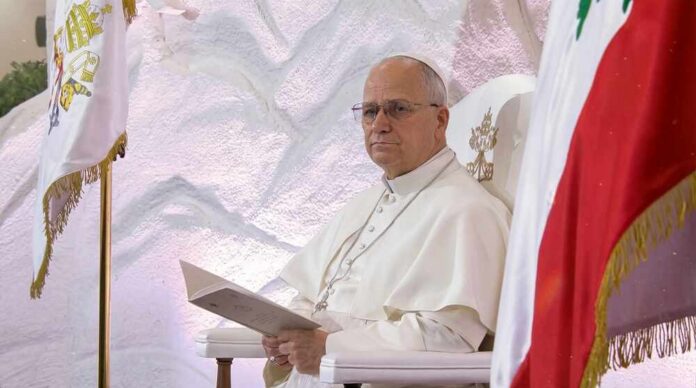
Pope Leo XIV has issued what is being called a historic apology for the Vatican’s own role in legitimizing slavery — a stunning institutional admission that raises as many questions as it answers about what the Catholic Church actually said, and what it is now prepared to own.
Story Snapshot
- Pope Leo XIV apologized on May 25, 2026, for the Holy See’s role in legitimizing slavery, calling it “a wound in Christian memory.”
- The apology marks a rare instance of the Vatican acknowledging institutional complicity — not just the actions of individual Catholics — in one of history’s gravest moral failures.
- Papal history on slavery is complicated: multiple popes issued condemnations across five centuries, yet scholars debate whether those texts opposed slavery broadly or only its most extreme abuses.
- No full Vatican transcript or official press release has been widely circulated, leaving the exact scope and wording of the apology subject to media interpretation.
What the Pope Said and Why It Matters
On May 25, 2026, Pope Leo XIV made a public apology for the role the Holy See itself played in legitimizing slavery and for having failed to consistently oppose the institution across centuries of Catholic history. The Associated Press reported the statement the same morning, and multiple outlets characterized it as historic. The pope reportedly described the Church’s complicity as “a wound in Christian memory,” signaling that the admission was framed in moral and spiritual terms rather than purely diplomatic ones.
The significance of the word “legitimizing” cannot be overstated. Previous papal statements on slavery — including those from John Paul II and Benedict XVI — expressed sorrow and acknowledged that Catholics participated in the slave trade. This apology, as reported, goes further by placing institutional responsibility on the Holy See itself, not just on the behavior of individual Catholics or colonial-era actors operating in the Church’s periphery.
A Complicated Doctrinal History
The Catholic Church’s relationship with slavery spans more than five centuries of official teaching. Pope Eugene IV’s 1435 document Sicut Dudum condemned the enslavement of newly converted Christians in the Canary Islands. Pope Paul III, Pope Gregory XIV in 1591, Pope Urban VIII in 1639, and Pope Gregory XVI in his 1839 document In Supremo Apostolatus each issued condemnations of the slave trade or forced servitude in varying degrees. One passage from that era declared that no one should “reduce to slavery … Indians, Blacks or other such peoples.”
However, scholars and Catholic commentators, including those at Eternal Word Television Network (EWTN), have long debated whether those documents condemned slavery as an institution or only its most unjust applications — such as enslaving free people or those who had converted to Christianity. That distinction matters enormously when evaluating what the Holy See is now apologizing for. If past condemnations were narrow, the current apology may be acknowledging a much wider failure than those earlier texts ever admitted.
What Remains Unverified
Despite widespread reporting, a full Vatican transcript, official press office bulletin, or verbatim text of Pope Leo XIV’s remarks had not been widely published as of the time of this writing. That gap matters. Papal statements carry legal, theological, and diplomatic weight, and the difference between “the Holy See legitimized slavery” and “some within the Church failed to oppose slavery” is not trivial. Without the primary text, readers are relying on journalist summaries of what was said, not the institutional record itself.
“Pope Leo XIV made a historic apology on Monday for the role the Holy See played in legitimizing slavery and for having failed to condemn it for centuries, calling the Vatican’s record a ‘wound in Christian memory.’” https://t.co/i0km2Sy1Ae
— Rᴏʙᴇʀᴛ L. Tsᴀɪ (@robertltsai) May 25, 2026
This is not a reason to dismiss the apology — multiple credible outlets including the Associated Press reported on it, and the consistency of coverage suggests a real event took place. But it is a reason for caution. Papal apologies have historically been complex documents that media headlines compress into simple narratives. The Church’s own history shows that what gets called an apology can range from a full institutional admission of wrongdoing to a carefully worded expression of regret that stops short of conceding doctrinal error. Americans across the political spectrum — those who hold the Church in deep reverence and those who have long demanded accountability from powerful institutions — deserve to see the actual words before drawing firm conclusions about what this moment truly represents.
Sources:
[1] Web – Pope Leo XIV apologizes for the Holy See’s own role in legitimizing …
[2] Web – Pope Leo XIV apologizes for the Holy See’s own role in legitimizing …
[3] Web – The Popes and Slavery: Setting the Record Straight | EWTN
[4] Web – Pope Leo XIV apologizes for the Holy See’s own role in legitimizing …