
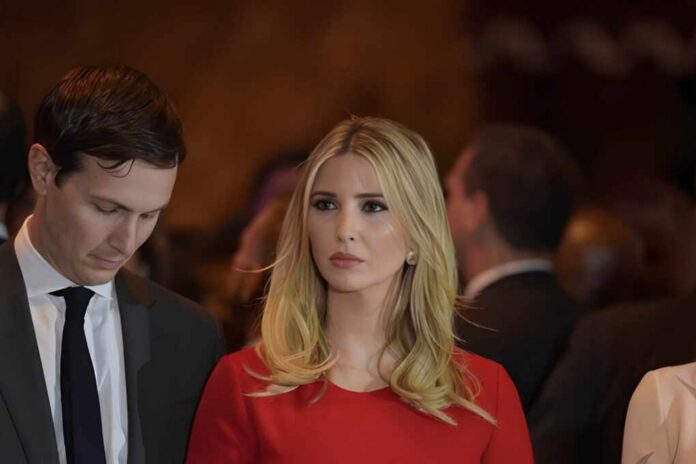
A reported Iran-linked plot to assassinate Ivanka Trump underscores how opaque threat claims, scarce public evidence, and political mistrust now collide in America’s security debate.
Story Snapshot
- Reports allege an Iran-aligned militant planned to target Ivanka Trump in apparent retaliation for Qasem Soleimani’s killing [1][5][6].
- Some outlets claim the suspect shared or referenced a “blueprint” tied to a Florida residence, but verifiable primary documents have not been provided [1].
- Coverage reflects a familiar cycle: serious threats, partial disclosures, and rapid amplification on social media [1][6][7].
- Uncertainty fuels bipartisan frustration that government transparency and accountability are inadequate.
What Is Being Alleged About The Threat
Media reports attribute to an Iran-linked operative, identified as Mohammad Baqer Saad Dawood Al-Saadi, a threat against Ivanka Trump tied to revenge for the United States strike that killed Qasem Soleimani [5][6]. A video segment summarizing foreign reporting alleges Al-Saadi or an affiliated figure vowed to assassinate her, citing a militia connection [1]. Separate reporting frames the motive as part of an ongoing proxy contest involving Iran-backed networks that have targeted American interests and symbols since 2020 [5][7].
Some stories further assert that a “blueprint” or plan linked to a Florida property surfaced in connection with the threat, presented as a sign of operational intent [1]. However, the publicly available materials in these reports do not include a court filing, affidavit, or verified exhibit that would confirm the existence, provenance, or chain of custody of any such document [1]. Claims about detailed knowledge of a residence therefore remain unverified in the record accessible to the public at this time.
What Has Been Confirmed And What Remains Unclear
Outlets with international reach have reported on the arrest or targeting allegations involving Al-Saadi and his association with Iran-backed groups, portraying him as operationally active across multiple arenas [5][7]. These accounts suggest a hostile intent toward high-profile figures in the Trump family orbit, framed as retaliatory messaging after the Soleimani strike [6]. The verifiable core is the media coverage itself, while key pieces of direct evidence—such as charging documents with specific plots against Ivanka Trump—have not been placed into the public domain in these sources [1][5][6].
The information environment around terrorism cases often blends official statements, selective disclosures, and rapid social media diffusion, creating a gap between what investigators may know and what the public can validate [1]. That gap breeds two predictable reactions: some treat reported details as settled fact, while others dismiss the entire story as hype or manipulation. The lack of accessible primary documentation on the alleged “blueprint” keeps this dispute in that gray zone, where judgment relies heavily on outlet credibility and sourcing rather than hard, reviewable evidence [1][6].
Why This Resonates With Voters Across The Spectrum
Americans who distrust entrenched power centers see a pattern: high-stakes national security claims emerge, press conferences and headlines follow, but granular proof is slow to appear or stays classified. Conservatives point to recurring foreign threats and the need for decisive protection of public figures. Liberals emphasize the risk of politicized narratives and limited oversight. Both camps worry that government gatekeepers reveal too little, too late—fueling suspicion that elites manage information to protect institutions rather than citizens.
My heart is heavy and angry today.
Last night I learned of a serious assassination plot against Ivanka Trump — President Trump’s daughter and a mother of three. The suspect had blueprints of her home. This comes just one month after the shooting at the White House Correspondents’…— Amanda Szulc (@SzulcAmanda) May 23, 2026
When media amplification outpaces documentary evidence, citizens are left to choose which institution to trust. That dynamic is unstable in a climate where social media rewards sensational fragments and where official processes move deliberately. The result is a widening credibility gap that weakens consensus on how to deter terrorism, protect civil liberties, and hold agencies accountable for accuracy. Without timely, verifiable disclosures—indictments, affidavits, or exhibits—the public cannot fully assess claims about targets, motives, or operational readiness.
What To Watch Next
Watch for formal documents that test the strongest assertions. Clear signals would include a Department of Justice indictment naming a specific plot against Ivanka Trump, an affidavit detailing operational steps, or court-admitted exhibits corroborating any “blueprint” or surveillance materials. Short of that, new on-record statements from investigators with verifiable identifiers and timeline details would raise confidence. Absent these, the story will remain in a liminal state where national security gravity coexists with unresolved evidentiary gaps [1][5][6][7].
How To Read Claims In A Fog-Of-Information Moment
Treat motive reporting as plausible when it aligns with established adversary intent, but reserve judgment on tactical specificity until documents surface. In this case, Iran-linked hostility to the Trump orbit after Soleimani is well-documented in public narratives, which supports the possibility of threats [5][6][7]. Claims about detailed targeting materials require higher proof. This disciplined approach keeps citizens alert to real dangers without becoming captive to either complacency or certainty driven by incomplete public evidence [1][6].
Sources:
[1] YouTube – Iran Proxy TO ASSASSINATE Ivanka Trump? Kata’ib Hezbollah …
[5] Web – ‘Kill Ivanka’: Chilling Iran Revenge Plot Against Trump … – Times …
[6] Web – Ivanka Trump assassination attempt: Why Mohammad Al-Saadi …
[7] Web – Full Story of Al-Saadi’s Arrest; an Iraqi who Coordinated Attacks …