
As Russia and Belarus rehearse simulated nuclear strikes on NATO’s doorstep, Americans who remember the Cold War are watching a dangerous new game of nuclear chicken unfold in Eastern Europe.
Story Snapshot
- Russia and Belarus used their Zapad‑2025 war games to practice nuclear planning and a simulated nuclear strike near NATO borders.[2][3]
- The drills showcased hypersonic Oreshnik missiles and Iskander systems, deepening Moscow’s nuclear footprint in Belarus.[2][3][4]
- Belarus calls the exercises “defensive” and even invited NATO observers, but the 2022 Ukraine precedent fuels serious doubts.[2][3][4]
- Nuclear posturing in Europe raises real security and energy risks that the United States cannot ignore while also guarding against globalist overreach.
Russia and Belarus Rehearse Nuclear War on NATO’s Flank
Russian and Belarusian forces spent mid‑September conducting Zapad‑2025, a large joint exercise that included a simulated nuclear strike and explicit practice in planning the use of non‑strategic nuclear weapons.[2][3] Around thirteen thousand troops participated, far fewer than the massive 2021 drills but still enough to put NATO countries on alert as the war in Ukraine drags into a fourth year.[1][2][4] Maneuvers took place in Belarus, western Russia, and the Baltic and Barents seas.[1][2]
Belarusian Defense Minister Viktor Khrenin said the scenario focused on repelling an enemy attack and retaking lost territory, with smaller units training near the borders of Poland and Lithuania against a “hypothetical enemy.”[1][2] That choice of geography and language makes the message to NATO obvious, even if no country is named. Exercises around the city of Barysaw, roughly forty‑six miles from Minsk, were backed by additional activity near Belarus’ western frontier.[1]
Nuclear Planning, Oreshnik Missiles, and Tactical Warfighting
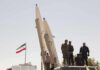
Belarusian chief of staff Pavel Muraveiko acknowledged that the drills included “planning and the consideration of the application of non‑strategic nuclear weapons” and the “evaluation and deployment of a mobile missile complex Oreshnik.”[3] The Oreshnik is a Russian intermediate‑range, hypersonic ballistic missile first used operationally in a November 2024 strike on Dnipro, Ukraine, which many analysts viewed as political theater as much as a weapons test.[2][3][4] Its presence in Zapad‑2025 signals Moscow’s intent to normalize such systems in Belarusian training.
Arms‑control reporting notes that Russian forces also practiced with the nuclear‑capable Iskander‑M short‑range ballistic missile system in Kaliningrad, the heavily militarized enclave wedged between Poland and Lithuania.[3] Belarusian President Alexander Lukashenko confirmed that his country’s forces rehearsed the launch of tactical nuclear weapons with Russian counterparts as part of the exercise.[3] That means this was not just staff tabletop work; it was a rehearsal of real nuclear warfighting procedures on NATO’s edge, with Russia retaining ultimate control of the warheads.[3][4]
“Defensive Drill” or Strategic Nuclear Signal?
Belarus insists Zapad‑2025 was a defensive readiness event held within the pattern of recurring quadrennial exercises.[2][3] Officials stress planning, command‑and‑control, and decision‑making rather than live nuclear use, and they highlight that this year’s drills were “scaled back and held deeper inside the country” compared with earlier Zapad events.[2][3] They also point to invitations for observers from nine North Atlantic Treaty Organization (NATO) states and others, including a carefully filmed handshake between two United States Air Force lieutenant colonels and Khrenin, as proof of transparency.[2]
Those talking points collide with recent history. In 2021, large Russia‑Belarus exercises preceded Russia’s full‑scale invasion of Ukraine by months, and Western defense outlets openly recall how earlier drills were used to mask troop movements.[3][4] The current exercise explicitly rehearsed nuclear operations, involved systems Moscow plans to station in Belarus, and took place near NATO borders.[2][3][4] There is no public evidence the drills prepared a specific offensive attack plan, but there is ample reason for skepticism about Minsk’s purely “defensive” narrative.[1][2][3][4]
What It Means for American Security and Sovereignty
Deepening nuclear integration between Moscow and Minsk matters for American readers because it hardens a hostile nuclear arc from the Arctic through the Baltic region down toward Ukraine.[1][3][4] Belgium, Poland, and the Baltic states are already nervous; reporting notes that Poland and neighboring countries ran their own exercises earlier in the summer in response to the deteriorating security environment.[2][4] When Europe edges toward crisis, Washington elites often reach for the same playbook: more spending, more deployments, and more power to international bureaucracies.
Conservatives should draw two clear lessons from Zapad‑2025. First, Russia and Belarus are deliberately normalizing nuclear signaling, and the United States must stay militarily strong and technologically ahead without handing a blank check to permanent war planners.[3][4] Second, any American response must protect constitutional authority and the prosperity of working families. That means resisting globalist schemes that use European tensions to push new climate commitments, energy restrictions, or open‑ended security guarantees that drive up prices at home while unaccountable international institutions gain leverage over our sovereignty.
Sources:
[1] YouTube – Zapad 2025 | Russia & Belarus Unleash Massive Nuclear-Linked Drill
[2] Web – Russia and Belarus Stage Simulated Nuclear Strike During Zapad …
[3] Web – Belarus, Russia Practice Nuclear Operations
[4] Web – Russia-Belarus military drills start this week. Here’s what to know