
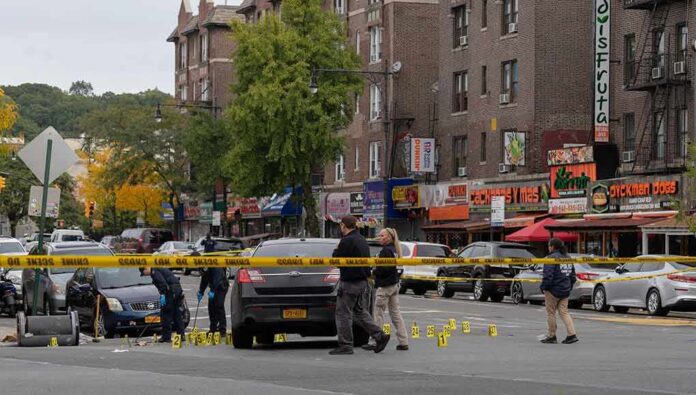
Hours after a San Diego mother begged police to find her suicidal, armed son, worshippers at a nearby mosque were gunned down while authorities were still piecing her warning together.
Story Snapshot
- Police say a mother reported her teenage son suicidal and missing with guns shortly before the Islamic Center of San Diego shooting.
- Two teen suspects killed three men at the mosque, then died from apparent self-inflicted gunshot wounds nearby, according to officials.
- Authorities are investigating the attack as a possible hate crime, citing anti-Islamic writings and federal involvement.
- Early “hate crime” headlines risk outrunning confirmed evidence, raising due-process and narrative concerns for conservatives.
Timeline From a Mother’s Warning to a Mass Shooting
San Diego police say the chain of events began when a mother called around 9:42 a.m. to report her teenage son as a runaway and possibly suicidal, later adding that several of her firearms and a vehicle were missing.[5] As officers continued questioning her, she reported that her son was with a companion and that both teens were dressed in camouflage, a detail police noted was unusual for a typical suicide report.[4][5] Less than two hours later, 911 calls reported gunfire at the Islamic Center of San Diego.
Authorities say the two suspects, described as teenagers, entered the mosque late that morning and opened fire, killing three men at the center, which also houses an Islamic school.[2][5] Officers and federal agents responded to the active-shooter calls, evacuating children and staff from the adjacent school buildings.[5] Shortly afterward, police located the suspects a short distance away, where both were found dead from what investigators believe were self-inflicted gunshot wounds, though final forensic reports are still pending.[2][5]
Hate-Crime Investigation and Federal Scrutiny
San Diego Police Chief Scott Wahl and federal officials have said the case is being investigated as a possible hate crime, not yet a confirmed one.[2][5] The Federal Bureau of Investigation (FBI) is assisting local authorities, a move consistent with federal review protocols when religious sites are attacked.[2][5] Law enforcement sources told reporters that at least one firearm bore hate speech and that anti-Islamic writings were found in a vehicle linked to the suspects, prompting heightened concern about motive and community safety.[5]
Officials emphasize that evidence collection is ongoing and that initial labels remain preliminary, even as headlines focus heavily on the hate-crime angle.[2][5] No public record yet includes a manifesto, social media posts, or detailed communications from the suspects spelling out their motive.[2] Investigators are reportedly examining digital devices, reviewing surveillance footage, and interviewing relatives and classmates to determine whether the attack was driven primarily by ideological hatred, mental health crisis, or some mix of factors that led two teenagers to storm a house of worship.[2][5]
Missed Signals, Law-Enforcement Limits, and Conservative Concerns
Police acknowledge they were actively working the “runaway juvenile” call when the shots rang out at the mosque, raising hard questions about how much officers can realistically do, and how quickly, once a warning comes in about an armed, suicidal teen.[4][5] The mother did what officials and parents across the country are told to do: call immediately, report missing guns and vehicles, and share every detail, including the camouflage clothing and companion.[4][5] Yet within hours, three worshippers were dead, and both suspects had taken their own lives.
For many conservatives, the episode highlights two recurring frustrations. First, government often seems slow and procedural when families sound the alarm about dangerous behavior, even as the same institutions move quickly to regulate speech, guns, or faith-based schools after a tragedy. Second, early media framing can harden into permanent narrative before facts are fully known, particularly when the word “hate” is involved.[2] Officials here carefully say “being investigated as a hate crime,” yet headlines and commentators often drop the qualifier entirely.
Balancing Justice for Victims With Guardrails on Narrative
Three men are dead, families are shattered, and an entire faith community in San Diego is grieving and frightened, which rightly demands prayer, compassion, and a serious investigation.[2][5] At the same time, Americans who care about due process and equal justice need clarity, not pre-written scripts. If anti-Islamic writings on weapons and in the suspects’ vehicle prove central to their motive, prosecutors should present that evidence plainly and pursue the appropriate hate-crime charges in any related cases.[5]
But until the full forensic record is released, including digital history, surveillance footage, and final ballistics and autopsy reports, citizens should be cautious about accepting any narrative—whether driven by legacy media, activist groups, or political operatives—that outruns the available facts.[2] The Trump administration’s Justice Department will face pressure from all sides on how to characterize and respond to this attack. The best safeguard for constitutional rights, including the Second Amendment and free speech, is a commitment to transparency, evidence-based conclusions, and equal treatment under the law, rather than policy made in the heat of grief and headlines.
Sources:
[2] Web – Police: Two suspects kill 3 people at a San Diego mosque before …
[4] YouTube – 5 dead after shooting at San Diego mosque
[5] Web – Police: Three adults killed in shooting at San Diego …